
Read the first chapter
The whole of chapter one, free. About 4 min. Turn the pages with the arrows, your keyboard, or a swipe.
Chapter 1
Meet Your ADHD Superpower Brain
Picture This: Toby’s pencil problem (and the big question in his chest)
Toby, 9, fourth-grade, loves drawing so much that he can’t stop making new ideas. But every day at school, something small steals his focus. He forgets his pencils. Then he forgets what he was doing. Then his teacher says, “Get ready,” and Toby’s stomach feels twisty.
One day, Toby sits there with empty hands. He tries to act like it’s fine, but inside he’s thinking, “I’m bad at school. Everyone else seems to know what to do.” His brain feels like a busy room with toys everywhere - and his thoughts jump like popcorn.
Are you ready to see your ADHD as a strengths-based brain style instead of a “you’re doing it wrong” story?
The Mindset Shift: Old story vs new story about your brain
Old Belief: “ADHD means I mess up more, so I’m not good enough.”
New Reality: “ADHD means my brain works differently - and I can spot my strengths and steer my day.”
This shift matters because your brain believes your story. If your story says “I’m bad,” you might stop trying before you even begin. You’ll feel smaller, even if you’re trying hard. But if your story says “My brain works differently,” you can start looking for what helps you - like a flashlight finding the good path.
Think about Toby. When he forgets pencils, he used to hear, “I ruined everything.” Then we tried a new self-story: “My brain gets scattered sometimes. That’s not me being bad. That’s my brain asking for a new plan.” So he didn’t just sit. He asked for a spare pencil and drew a quick “starter sketch” while his class got moving. He still got in the work - because his story helped him act.
Going Deeper: Why the Strength-Spotting Story Map helps
Your brain is like a backpack. When you only carry “I’m bad,” it feels heavy. When you add “My strengths” and “My plan,” it becomes lighter. The Strength-Spotting Story Map is a simple way to tell yourself a helpful story - one that shows what your brain does well and what you can do next.
Here’s what it looks like in real life: you notice what happened, you name your brain style (not your worth), and you pick one small strength to use right now. That’s how you grow confidence. Not by pretending things are easy. By learning how you work.
Signs this pattern is running your life
• You blame yourself fast, even when you’re trying.
• You forget the easy steps and then think it “means something is wrong with you.”
• You feel embarrassed, so you hide instead of asking for help.
• You only focus on what went wrong, not what worked even a little.
Strength-Spotting means your story helps you move, not freeze.
Think About It!: Quick drawing and talking with grown-ups
Draw a picture of your brain like a room. What toys or things are in it when you get distracted?
Circle one thing in your room that could be a strength (like energy, creativity, fast ideas, or big feelings).
Now talk with a grown-up: “When my brain gets scattered, what’s one kind thing I can say to myself?”
Finally, point to one small action you could do next (like asking for a pencil, using a checklist, or taking a deep breath).
Challenge: Draw your “new story sentence” on a sticky note and show it to someone.
Growth Challenge: Start the Strength-Spotting Story Map today
Challenge Title: The 10-Minute Strength-Spotting Story Map
• Pick one moment from today (even a tiny one).
• With crayons or marker, draw a simple box for: What happened? (like forgetting a pencil)
• Draw another box for: What’s my brain style doing? (like “getting scattered” or “lots of ideas”)
• Draw one small box for: My strength I used (like “I kept trying,” “I asked for help,” or “I made a plan”)
• End with a final box: Next time, I will… (one step only)
Strength Spoting Story Map
What happened?
What’s my brain style doing?
My strength I used:
Next time, I will…
,
Difficulty Rating: Easy
You'll know it's working when...
• You can say your new story out loud without feeling silly.
• You pick one next step instead of giving up.
• Your picture looks like a plan, not just a complaint.
Key Takeaway: Your brain isn’t broken - it’s built different
Your ADHD superpower shows up when you spot your strengths and choose a story that helps you act.
• Your story can make you freeze - or help you move.
• ADHD is a brain style, not a “you” problem.
• The Strength-Spotting Story Map turns big feelings into one small plan.
Next, we’ll build on your new story so you can feel steadier at school - especially when your brain gets busy again.
What’s one strength you already have that you want your new story to remember? (Draw it as a star.)
End of chapter one. 4 more chapters in the full book.
Swipe or use the arrows to turn the page
What's inside: 5 chapters
- 1. Meet Your ADHD Superpower Brain
- 2. Turn Big Feelings into Calm Signals
- 3. Build a Backpack System You Can Use
- 4. Make Focus Stick with Tiny Start Steps
- 5. Bounce Back After Mistakes Like a Champ
About this book
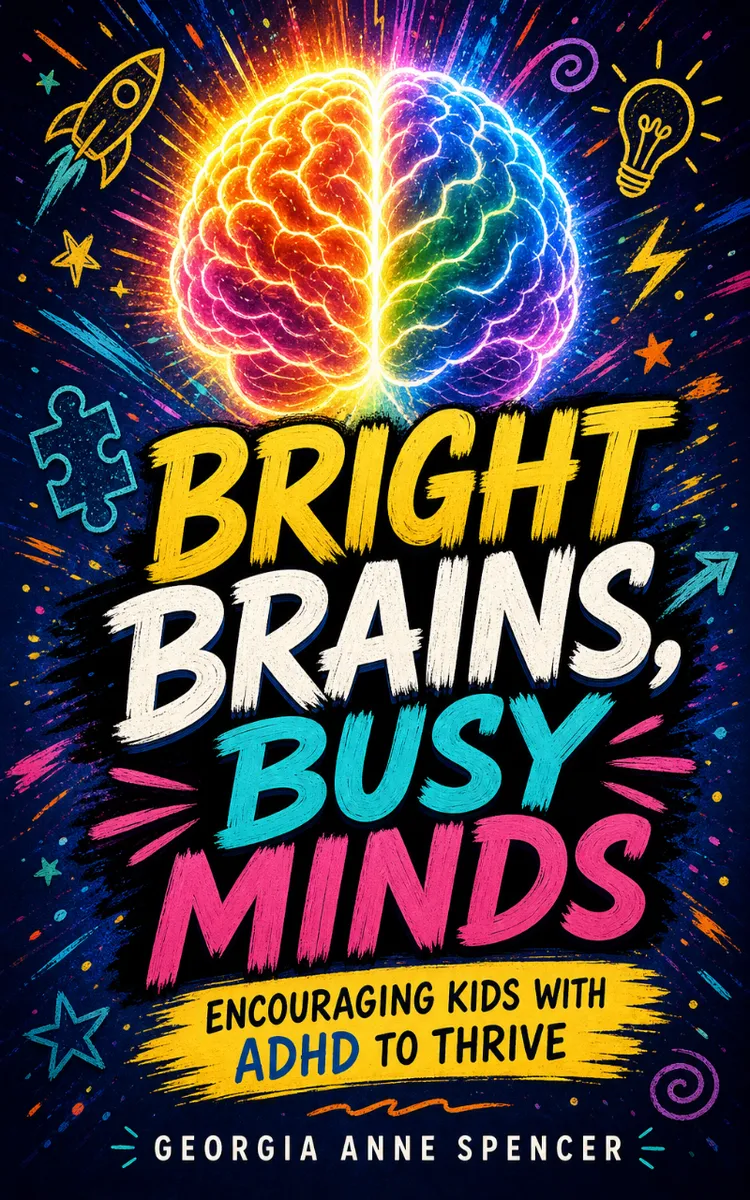
"Bright Brains, Busy Minds" is a self-help book by Anonymous with 5 chapters and approximately 3,929 words. What if the reason your child feels “bad at school” is not a character flaw, but a brain style that can be trained? Meet Toby, 9, whose focus slips the moment pencils vanish, and whose stomach tightens when the teacher says, “Get ready.” His thoughts race like popcorn, and the old story wins: “I mess up, so I’m not good enough.
This book was created using Inkfluence AI, an AI-powered book generation platform that helps authors write, design, and publish complete books. It was made with the AI Self-Help Book Writer.
Frequently Asked Questions
What is "Bright Brains, Busy Minds" about?
What if the reason your child feels “bad at school” is not a character flaw, but a brain style that can be trained? Meet Toby, 9, whose focus slips the moment pencils vanish, and whose stomach tightens when the teacher says, “Get ready.” His thoughts race like popcorn, and the old story wins: “I mess up, so I’m not good enough.” This book flips that script. You will learn how to spot strengths in an ADHD brain, turn big feelings into calm signals, and use practical classroom-friendly tools that reduce panic and build confidence. If you have an elementary to Middle school aged child with ADHD, or you support one, this is the fast, motivating path from overwhelm to steadier days, one plan at a time. Included at the end are extra tips from a veteran teacher to help make school days a little more organized. A Fun Facts list of Famous People with ADHD is also included. This author looks at ADHD as a Super Power to be trained, rather than a character flaw to be hidden.
How many chapters are in "Bright Brains, Busy Minds"?
The book contains 5 chapters and approximately 3,929 words. Topics covered include Meet Your ADHD Superpower Brain, Turn Big Feelings into Calm Signals, Build a Backpack System You Can Use, Make Focus Stick with Tiny Start Steps, and more.
Who wrote "Bright Brains, Busy Minds"?
This book was written by Anonymous and created using Inkfluence AI, an AI book generation platform that helps authors write, design, and publish books.
How can I create a similar self-help book?
You can create your own self-help book using Inkfluence AI. Describe your idea, choose your style, and the AI writes the full book for you. It's free to start.
Write your own self-help book with AI
Describe your idea and Inkfluence writes the whole thing. Free to start.
Start writingCreated with Inkfluence AI


