
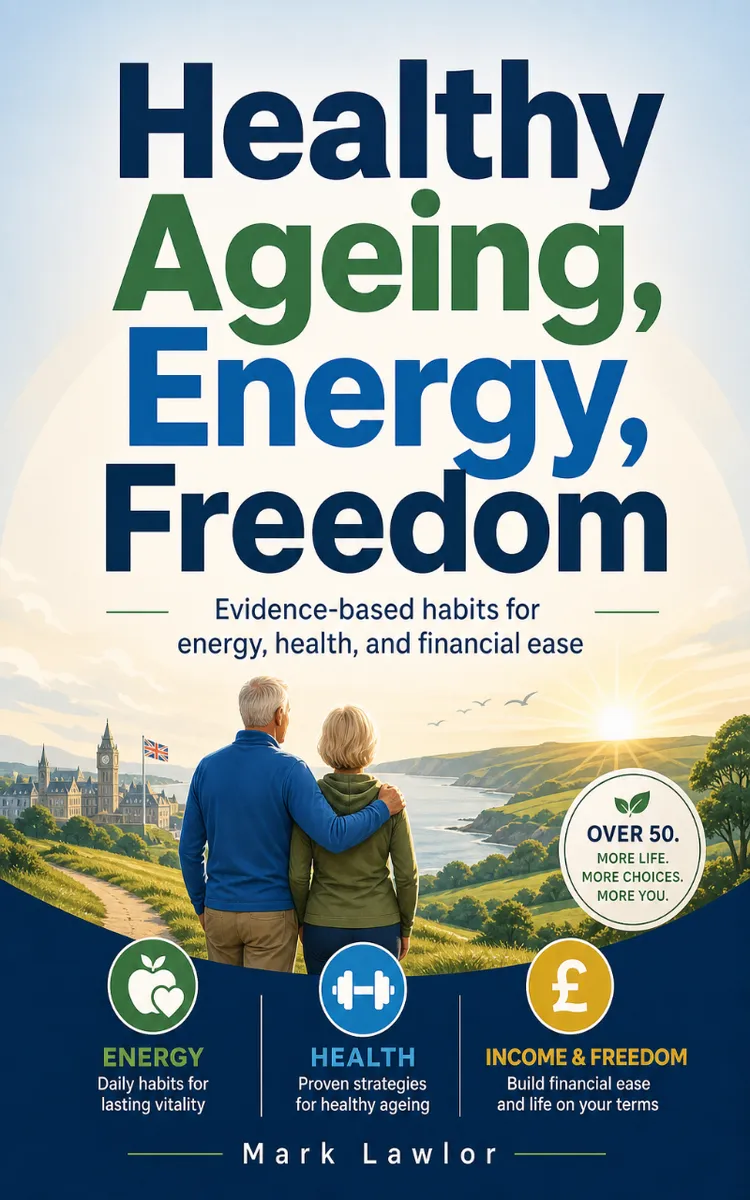
Healthy Ageing, Energy, Freedom
Created with Inkfluence AI
Feel your energy dip and wonder what you are doing wrong? This evidence-based guide shows you how healthy ageing really works, with practical protein, omega-3, and Mediterranean meal strategies that support strength, joint comfort, and steadier blood sugar. Build a repeatable plan you can actually follow, with clear targets, safety boundaries, and troubleshooting. Healthy Ageing, Energy, Freedom for people who want more capacity and more choice.
Table of Contents
- 1. Protein Targets for Muscle Maintenance
- 2. Omega-3 for Inflammation Control
- 3. Mediterranean Eating for Energy
- 4. Sleep Hygiene and Recovery Windows
- 5. Strength Training for Functional Longevity
- 6. Zone 2 Cardio for Aerobic Energy
- 7. Stress Reset with Breath and Mindfulness
- 8. Income Freedom via Health-Optimised Habits
Preview: Protein Targets for Muscle Maintenance
A short excerpt from “Protein Targets for Muscle Maintenance”. The full book contains 8 chapters and 15,180 words.
Protein is the “construction material” your body uses to keep muscle strong - and after midlife, the window to build and maintain that muscle gets smaller. A practical way to think about it: if you’re aiming to stay steady on your feet, carry your shopping, and keep your energy for the day, protein timing and targets matter as much as total calories. For Doreen, 67 and retired nurse, the turning point wasn’t a magic exercise - it was getting her protein right on the days she felt most “sluggish” and least like cooking.
In this chapter, you’ll learn evidence-aware protein ranges and a simple timing plan that supports muscle maintenance as you age. You’ll use the LeanMass Ladder Protocol - a repeatable approach to spread protein through your day so your body has more chances to use it for muscle repair and strength. You’ll also get clear boundaries for safety, plus warning signs for when it’s worth checking in with a clinician or dietitian.
Health Foundations: Why Protein Targets Change as We Age
Muscle doesn’t just “stay put.” Your body is constantly breaking down and rebuilding muscle tissue. As we age, that balance shifts: muscle protein breakdown tends to rise, and muscle protein synthesis (how well your body builds new muscle protein) becomes harder to trigger. The result is that strength and function can decline even when you’re doing “enough” activity - especially if your protein intake is too low or bunched into one meal.
Here are the key pieces in plain language:
1. Aging muscle needs a stronger signal. Protein is the signal and the raw material. When you eat too little, or you only eat protein once or twice a day, the “signal strength” may not be enough to keep up repair and maintenance.
2. Leucine matters. Leucine is an amino acid (building block) that helps switch on muscle protein building. Many protein sources contain leucine, but the amount you get per meal matters - this is why spreading protein can work better than “saving it” for dinner.
3. Energy intake and appetite changes. Many people eat less as they age due to changes in appetite, busy schedules, or dental issues. That can reduce protein even if your meals feel “about the same.”
4. Lower activity often follows lower energy. If your energy dips, you may move less. Less movement plus low protein is a common combo for faster muscle loss - so protein targets support the whole system, not just the plate.
If you want a quick comprehension check, ask yourself: Do I get a decent protein dose at more than one meal each day? If the answer is “usually not,” timing is your lever.
Protein targets for older adults (practical ranges):
- A commonly used evidence-based target for muscle maintenance is ~1.0 to 1.2 grams of protein per kilogram of body weight per day.
- If you’re older, less active, or intentionally trying to protect strength with more structure, ~1.2 to 1.6 g/kg/day is often used in guidance for muscle preservation - especially when paired with resistance training or regular strength work.
- If you’re already eating well and maintaining strength, you may not need the upper end.
Important safety boundary: if you have kidney disease, protein targets should be set with a licensed clinician or dietitian. More protein isn’t automatically better for everyone - your best range depends on your health situation.
Practical takeaway: Muscle maintenance is about meeting your daily protein target and distributing it across the day so your body gets repeated chances to build and repair.
Reflection prompt: Think about yesterday’s meals - how many of them included a meaningful protein portion?
Practical Protocol: The LeanMass Ladder Protocol for Daily Targets and Timing
Doreen told me she “didn’t eat that much differently,” but she noticed her strength slipping and her energy dipping by early afternoon. The fix wasn’t buying supplements - it was changing meal structure. She shifted from “protein at dinner” to a ladder: consistent protein doses across the day, using simple portions she could repeat.
Step 1: Set your daily protein target (choose a range)
Use your weight in kilograms (kg). If you only know pounds, divide by 2.2 to get kg.
Then pick one of these daily targets based on your current situation:
- Maintenance and steady strength: aim for 1.0-1.2 g/kg/day
- More protection during strength work / lower appetite / noticeable decline: aim for 1.2-1.6 g/kg/day
If you’re unsure, start at the lower end of the range for 10-14 days, then adjust upward if you’re still not seeing the function/energy improvement you want - without pushing so high that you feel heavy or struggle to hit calories.
Step 2: Split it across the day using the LeanMass Ladder Protocol
A key timing idea: don’t rely on one big protein meal. Instead, aim for 3 protein “rungs” per day, with optional support if you prefer.
...
About this book
"Healthy Ageing, Energy, Freedom" is a health & wellness book by Mark Lawlor with 8 chapters and approximately 15,180 words. Feel your energy dip and wonder what you are doing wrong? This evidence-based guide shows you how healthy ageing really works, with practical protein, omega-3, and Mediterranean meal strategies that support strength, joint comfort, and steadier blood sugar. Build a repeatable plan you can actually follow, with clear targets, safety boundaries, and troubleshooting.
This book was created using Inkfluence AI, an AI-powered book generation platform that helps authors write, design, and publish complete books. It was made with the AI Health Book Generator.
Frequently Asked Questions
What is "Healthy Ageing, Energy, Freedom" about?
Feel your energy dip and wonder what you are doing wrong? This evidence-based guide shows you how healthy ageing really works, with practical protein, omega-3, and Mediterranean meal strategies that support strength, joint comfort, and steadier blood sugar. Build a repeatable plan you can actually follow, with clear targets, safety boundaries, and troubleshooting. Healthy Ageing, Energy, Freedom for people who want more capacity and more choice.
How many chapters are in "Healthy Ageing, Energy, Freedom"?
The book contains 8 chapters and approximately 15,180 words. Topics covered include Protein Targets for Muscle Maintenance, Omega-3 for Inflammation Control, Mediterranean Eating for Energy, Sleep Hygiene and Recovery Windows, and more.
Who wrote "Healthy Ageing, Energy, Freedom"?
This book was written by Mark Lawlor and created using Inkfluence AI, an AI book generation platform that helps authors write, design, and publish books.
How can I create a similar health & wellness book?
You can create your own health & wellness book using Inkfluence AI. Describe your idea, choose your style, and the AI writes the full book for you. It's free to start.
Write your own health & wellness book with AI
Describe your idea and Inkfluence writes the whole thing. Free to start.
Start writingCreated with Inkfluence AI


