
Read the first chapter
The whole of chapter one, free. About 8 min. Turn the pages with the arrows, your keyboard, or a swipe.
Chapter 1
Rewriting Your Nighttime Identity
The Night You Feel Like You’re “Supposed” to Be Afraid
There’s a particular kind of quiet that shows up after you’ve already brushed your teeth and turned the lights off. Not the peaceful kind - more like the room is holding its breath. You can almost hear your brain start to bargain: Just one more minute. Maybe I can fall asleep with the hallway light on. If I don’t look, it can’t be real.
Talia, 34 and a shift nurse, knows that feeling too well. On long shifts, she can handle emergencies without blinking. But when the day ends and the hallway light fades, her mind flips a switch. She’ll lie there thinking she should be calmer by now, as if fear is something she “failed” to overcome. Then the darkness arrives, and with it comes a familiar identity: I’m the kind of person who gets scared at night.
Isn’t it time you stopped treating nighttime fear like it’s your personality?
Rewriting the Identity That Shows Up When the Lights Go Out
Here’s the core shift for the way your night mind works: you’re not just afraid of darkness - you’re attached to a story about yourself that darkness “proves.” That story keeps getting reinforced every time you brace, scan, avoid, or negotiate with the dark.
Old Belief: Darkness means I’m not safe, and I’m the kind of person who has to fear it. New Reality: Darkness is a condition, not a verdict - and I’m the kind of person who can handle it.
Think about how different your body feels when you believe the old one. It’s not only fear - it’s responsibility. Like you have to prove you’re tough enough to tolerate something you don’t trust. But when you adopt the new reality, the goal changes. You’re not trying to “not be afraid.” You’re practicing being the person who stays steady while fear shows up.
For Talia, the reframe didn’t magically erase the feeling in one night. What changed first was the sentence she used when she noticed the familiar wave. Instead of “Here we go again, I hate this,” she tried: “My brain is doing its night thing. I can still handle this.” That small rewrite mattered because it pulled her out of the identity trap. She wasn’t trapped inside the role of “scared person.” She was back in the driver’s seat, even if her heart was still racing a little.
Before vs After: What “Handling Darkness” Actually Means
The reason this identity shift matters is simple: your mind learns faster from repeated meaning than from repeated effort. If every night ends with the belief “Darkness proves I can’t handle this,” your brain files darkness under danger and you under helpless. Even if you “manage” it with lights on or extra checking, the message still lands: You needed protection, so you must be vulnerable.
Now flip it. When you see yourself as someone who can handle darkness, you give your brain a different message to learn. Not “nothing is happening.” More like: Something is happening, and I’m still okay. That’s how confidence builds here - through lived proof, not wishful thinking.
A concrete example from Talia: one evening she woke up to that half-second jolt, the one where you sit up before your brain fully catches up. In the old pattern, she would have immediately turned on a light, checked the room, and slipped back into the identity story. This time she didn’t. She kept the light off, put her hand on her chest like she was grounding herself, and told herself, “I can handle this moment.” The fear didn’t vanish instantly - but it softened sooner. And the next night, her brain remembered: Handling is possible.
Signs This Pattern Is Running Your Life
1. You treat fear as evidence of who you are, not a feeling that’s passing through. If the thought “I’m scared” automatically becomes “I’m unsafe,” you’re living inside the identity. 2. You keep negotiating with the dark instead of relating to it. Lights on, checking corners, scanning the ceiling - those actions might help short-term, but the deeper message stays the same. 3. You judge yourself for having the feeling. The shame makes the fear louder. When fear comes with self-criticism, your brain learns “nighttime equals failure.” 4. You’re waiting for a feeling to change before you act brave. Confidence becomes conditional: I’ll handle it when I feel ready. Identity flips that: I handle it even while I feel it.
The Night Identity Reframe (One Sentence)
When you stop using darkness to define you, you start using it to build steadiness.
The Night Identity Reframe: How Your Mind Gets Rewired
Your brain is always making meaning. It’s not trying to be cruel - it’s trying to predict what will happen next. When bedtime arrives, it takes cues from your past nights: the tension in your body, the urge to check, the relief when you turn something on. Over time, it learns a shortcut: Darkness → danger → I need protection → I’m the kind of person who can’t relax.
But fear isn’t only about the dark. It’s also about what you assume the dark means. That’s why the Night Identity Reframe focuses on identity first. Feelings rise and fall. Identity sticks. And when identity sticks, your choices start to change - even if your heart still beats fast.
Here’s the psychology part in plain language: your brain doesn’t only learn “the dark is scary.” It learns “I’m the person who must respond like it’s scary.” So the reframe isn’t just a nicer thought. It’s a new rule for how you interpret what’s happening. It gives your nervous system permission to stay in the room without panicking.
Talia noticed something important: the nights when she felt most trapped weren’t always the darkest ones. They were the nights she got stuck in the identity story - “I can’t do this.” The moment she replaced that with handling language, even quietly, her body followed. Not perfectly. But enough to shift the momentum.
And that’s the differentiator here: you’re not aiming for “bravery without fear.” You’re aiming for “belonging in the dark with fear present.” That’s a different skill. It’s a night skill. And it’s trainable.
Reflection & Self-Assessment: Spot the Identity Story in Real Time
Try these questions like you’re checking in with yourself mid-night, not like you’re taking a test. You’re looking for patterns, not flaws. The goal is honest clarity: What story am I believing that makes the fear louder?
1. When I feel the fear spike, what’s the exact sentence my mind uses about me? An honest answer might sound like: “I’m not safe,” or “I can’t handle this,” or “Something is going to happen.” Write the sentence exactly as it lands.
2. What do I do next - light, check, scroll, negotiate - and what does that action “teach” my brain about who I am? If you turn on a light immediately, your brain may learn: “I was right to panic.” If you stay still, your brain learns a different message.
3. Where do I blame myself - like I should be over it by now - and how does that shame change my fear? Sometimes the fear isn’t just darkness. It’s fear plus embarrassment. Notice what happens when you remove the “I should” layer for a moment.
4. If my fear is a visitor, what does it want from me - attention, reassurance, control, escape? Your answer might be: “It wants me to fix it right now.” Naming the “want” helps you stop treating it like a command.
5. What’s one moment in the last week where I handled a piece of darkness better than usual? Even small counts: staying in bed for 30 seconds longer, not checking the closet, or not turning on the overhead light. Identify what you did differently.
Growth Challenge: 7 Nights of “Handling Language” Instead of Identity Proof
This is where the reframe stops being an idea and becomes a skill. For the next 7 days, you’ll practice a specific identity phrase during the first wave of nighttime fear - before you slip into the old “I must fear this” story.
Challenge Title: The First-Wave Reframe (7 Days)
• Pick your Night Identity Reframe phrase (keep it simple and repeatable). For example: “My brain is reacting. I can handle this moment.” Choose one phrase and stick with it for the week. - When fear hits at bedtime (or after waking), say the phrase once - out loud or in your head. Then keep your body in the same position for 60 seconds. No checking. No scanning. Just stay. - After the 60 seconds, do one “handling” action. Pick one: slow breathing for one minute, put your hand on your chest, or relax your jaw and shoulders. - Write one line in your phone before sleep ends: “I felt, I said, I did ___.” (No essays. One line.) - Keep the lights the same for these 7 days if possible. The goal is identity, not major environmental changes.
Expected difficulty: Medium (because you’re interrupting a habit, not starting a new one from scratch)
You’ll know it’s working when… - You catch the first-wave fear sooner instead of getting dragged into it. - Your inner sentence shifts from “I’m the scared one” to “I can handle this moment.” - You notice less urgency to fix the fear immediately, even if fear still shows up. - Your bedtime feels slightly more yours - like you’re choosing your response instead of reacting on autopilot.
Key Takeaway: You Don’t Have to Become Fearless - You Have to Become the Kind of Person Who Handles It
The Night Identity Reframe isn’t about pretending darkness is harmless. It’s about refusing to let fear assign you a permanent role. You’re not rewriting your personality overnight - you’re rewriting your nighttime meaning. And that meaning is what changes your choices, your body, and eventually your confidence.
If you can handle the first wave - just for 60 seconds - you’re teaching your brain something powerful: darkness doesn’t decide who you are. You do.
Fear can show up, and you can still be the person who stays steady.
• You’re not only afraid of darkness - you’re attached to an identity story that darkness “proves.” - The reframe changes meaning: darkness becomes a condition, not a verdict. - Confidence grows through repeated handling language and small actions, not instant calm. - Your job isn’t to eliminate fear first - it’s to stop letting fear define you.
Next, we’ll build on this by making your night response more automatic - so you’re not negotiating with yourself every time the lights go out.
End of chapter one. 7 more chapters in the full book.
Swipe or use the arrows to turn the page


What's inside: 8 chapters
- 1. Rewriting Your Nighttime Identity
- 2. Challenging Catastrophic Dark Stories
- 3. Building a Bedtime Safety Ritual
- 4. Designing a Comfort-First Sleep Setup
- 5. Practicing Gradual Darkness Exposure
- 6. Using the 90-Second Calming Reset
- 7. Talking to Kids Without Feeding Fear
- 8. Turning Night Fear Into Purpose
About this book
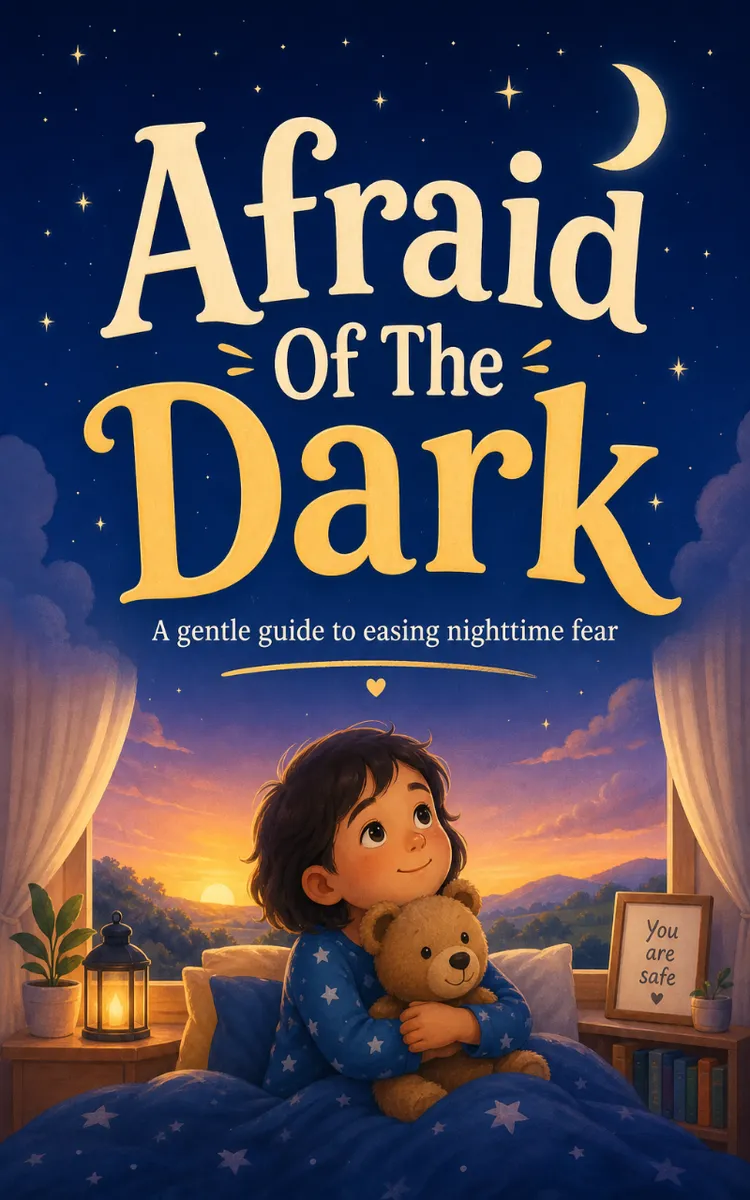
"Afraid Of The Dark" is a self-help book by Kisha with 8 chapters and approximately 13,717 words. Overcoming fear of darkness and bedtime anxiety.
This book was created using Inkfluence AI, an AI-powered book generation platform that helps authors write, design, and publish complete books. It was made with the AI Self-Help Book Writer.
Frequently Asked Questions
What is "Afraid Of The Dark" about?
Overcoming fear of darkness and bedtime anxiety
How many chapters are in "Afraid Of The Dark"?
The book contains 8 chapters and approximately 13,717 words. Topics covered include Rewriting Your Nighttime Identity, Challenging Catastrophic Dark Stories, Building a Bedtime Safety Ritual, Designing a Comfort-First Sleep Setup, and more.
Who wrote "Afraid Of The Dark"?
This book was written by Kisha and created using Inkfluence AI, an AI book generation platform that helps authors write, design, and publish books.
How can I create a similar self-help book?
You can create your own self-help book using Inkfluence AI. Describe your idea, choose your style, and the AI writes the full book for you. It's free to start.
Write your own self-help book with AI
Describe your idea and Inkfluence writes the whole thing. Free to start.
Start writingCreated with Inkfluence AI


