
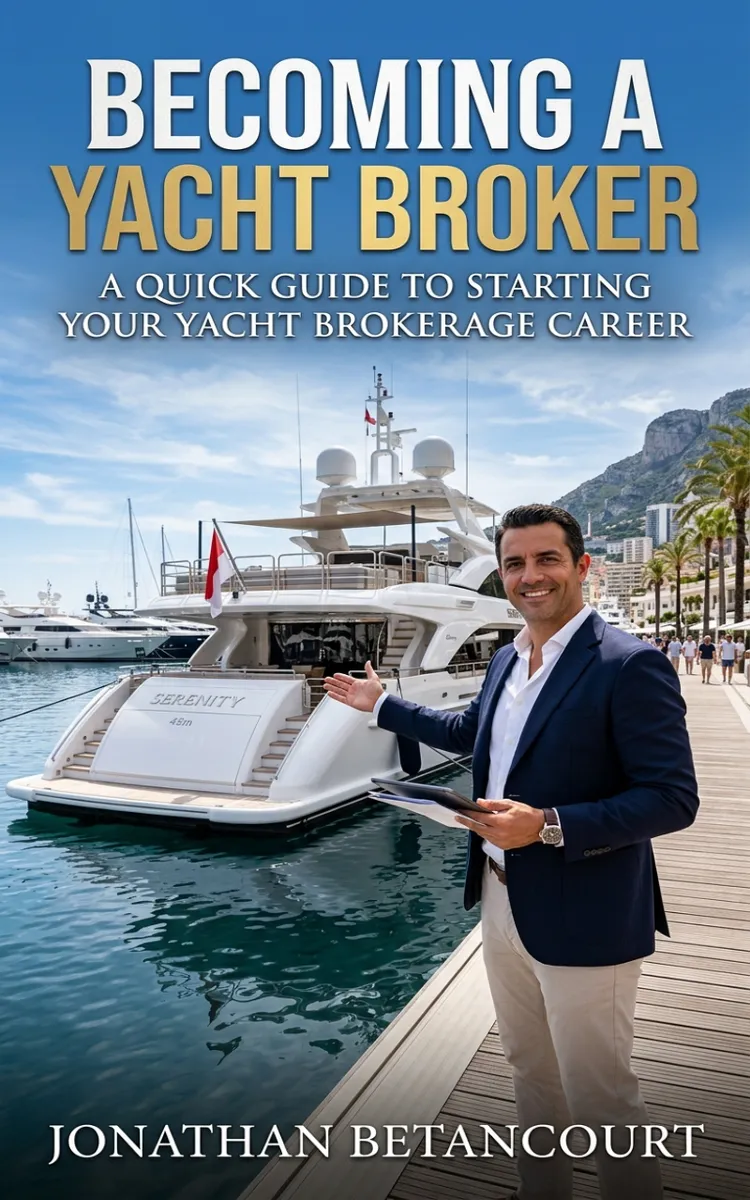
Becoming A Yacht Broker
Created with Inkfluence AI
Steps and basics for becoming a yacht broker
Table of Contents
- 1. Understanding Yacht Broker Roles
- 2. Licensing, Certifications, and Compliance
- 3. Building Your Yacht Broker Network
- 4. Sourcing Listings and Seller Leads
- 5. Pricing Yachts Using Comparable Sales
- 6. Creating Listing Packages Buyers Trust
- 7. Running Showings and Handling Sea Trials
- 8. Closing Deals with Clear Next Steps
Preview: Understanding Yacht Broker Roles
A short excerpt from “Understanding Yacht Broker Roles”. The full book contains 8 chapters and 17,170 words.
A buyer’s first question after they tour a yacht usually isn’t “What’s the engine model?” It’s “Why should I trust you?” You earn that trust in the messy middle: the weeks of emails, the quick calls to clarify paperwork, the moment someone spots a scuff on a deck and asks, “Is that just wear - or a bigger problem?” Yacht brokerage looks glamorous from the dock, but the real work happens when details matter and timelines tighten.
Talia, 24, pivoted from hospitality sales into yachting sales because she liked talking to people and running listings. Her first week on the job showed her the truth fast: she didn’t need more charm - she needed a clear picture of what a yacht broker actually does, who they serve, and what you must get right every time you touch a listing or a deal. When you understand those responsibilities, you stop guessing and start repeating what works.
By the end of this chapter, you’ll be able to explain the broker role in plain language, map your responsibilities to the people involved in a transaction, and run the core listing workflow without missing the key steps that protect your reputation. You’ll also know what to watch for when a “simple” deal starts turning complicated.
Set the context: what brokers do, who they serve, and why it matters
In yacht brokerage, you sit between two worlds: the owner who wants the best outcome, and the buyer who wants confidence. Your job isn’t to “sell a boat.” Your job is to run a process that helps the right people make the right decisions, with the right information, at the right time - so the transaction finishes cleanly.
That matters because most deal problems don’t start with the yacht. They start with unclear expectations. An owner thinks “as-is” means the broker will handle everything. A buyer thinks “recent service” means proof exists and the costs are covered. Then the deal slows down, paperwork gets messy, and everyone’s patience gets tested. When you understand what brokers actually do, you can prevent that spiral.
This chapter solves a specific problem: it gives you a practical, repeatable understanding of the broker’s core responsibilities behind every listing and deal. You’ll learn what you do before you advertise, what you do during showings, what you verify before offers, and what you coordinate until the close. You’ll also learn which person you serve at each step - so you don’t accidentally act like you’re on the wrong side of the table.
Practical takeaway / reflection prompt: After you finish reading, write one sentence you could say to an owner that defines your role without using hype. If you can’t do it yet, that’s your cue for more clarity in the next section.
Learn what yacht brokers actually do: the Broker Role Map
The fastest way to stop feeling lost is to use a simple mental map of the broker role. In this book, we call it the Broker Role Map. It breaks your work into four responsibility zones that show up in nearly every listing: Intake & Positioning, Exposure & Qualification, Verification & Negotiation Support, and Coordination to Close. Each zone has a “who you serve” and a “what you must produce” so you always know what “good” looks like.
Start by understanding the people involved. On the owner side, you serve the seller’s goals: price, timing, privacy, and minimizing stress. On the buyer side, you serve the buyer’s goals: clarity, confidence, and fewer surprises after survey. In the background, you coordinate with brokers, captains, surveyors, lenders, insurers, and sometimes marinas - because yacht deals run on schedules and documents.
Here are the four zones, with concrete outputs you should create or manage every time:
1. Intake & Positioning (owner goals → listing reality)
Collect the facts that will shape the listing and protect you later. You confirm specs, identify what’s strong, and flag what might scare buyers. You also align on timing and boundaries (showing rules, confidentiality, and how you handle questions).
Concrete example: If the yacht has a “new” generator installed six months ago, you don’t write that as a vibe. You record the install date and any service invoice details you can access, because buyers will ask.
2. Exposure & Qualification (buyers → right matches)
You market the yacht and you screen interest so you spend time with serious buyers. Exposure includes photos, description, and where you post. Qualification includes questions that sort out budgets, timeline, and readiness to move.
Concrete example: If a buyer asks about a 30-foot yacht but your listing is 42 feet, you don’t keep them in your pipeline “just in case.” You qualify once, redirect fast, and keep your listing energy for buyers who fit.
3. Verification & Negotiation Support (confidence → fewer deal breaks)
You support the deal with accurate information and organized next steps....
About this book
"Becoming A Yacht Broker" is a how-to guide book by The Read Vault with 8 chapters and approximately 17,170 words. Steps and basics for becoming a yacht broker.
This book was created using Inkfluence AI, an AI-powered book generation platform that helps authors write, design, and publish complete books. It was made with the AI Ebook Generator.
Frequently Asked Questions
What is "Becoming A Yacht Broker" about?
Steps and basics for becoming a yacht broker
How many chapters are in "Becoming A Yacht Broker"?
The book contains 8 chapters and approximately 17,170 words. Topics covered include Understanding Yacht Broker Roles, Licensing, Certifications, and Compliance, Building Your Yacht Broker Network, Sourcing Listings and Seller Leads, and more.
Who wrote "Becoming A Yacht Broker"?
This book was written by The Read Vault and created using Inkfluence AI, an AI book generation platform that helps authors write, design, and publish books.
How can I create a similar how-to guide book?
You can create your own how-to guide book using Inkfluence AI. Describe your idea, choose your style, and the AI writes the full book for you. It's free to start.
Write your own how-to guide book with AI
Describe your idea and Inkfluence writes the whole thing. Free to start.
Start writingCreated with Inkfluence AI


