
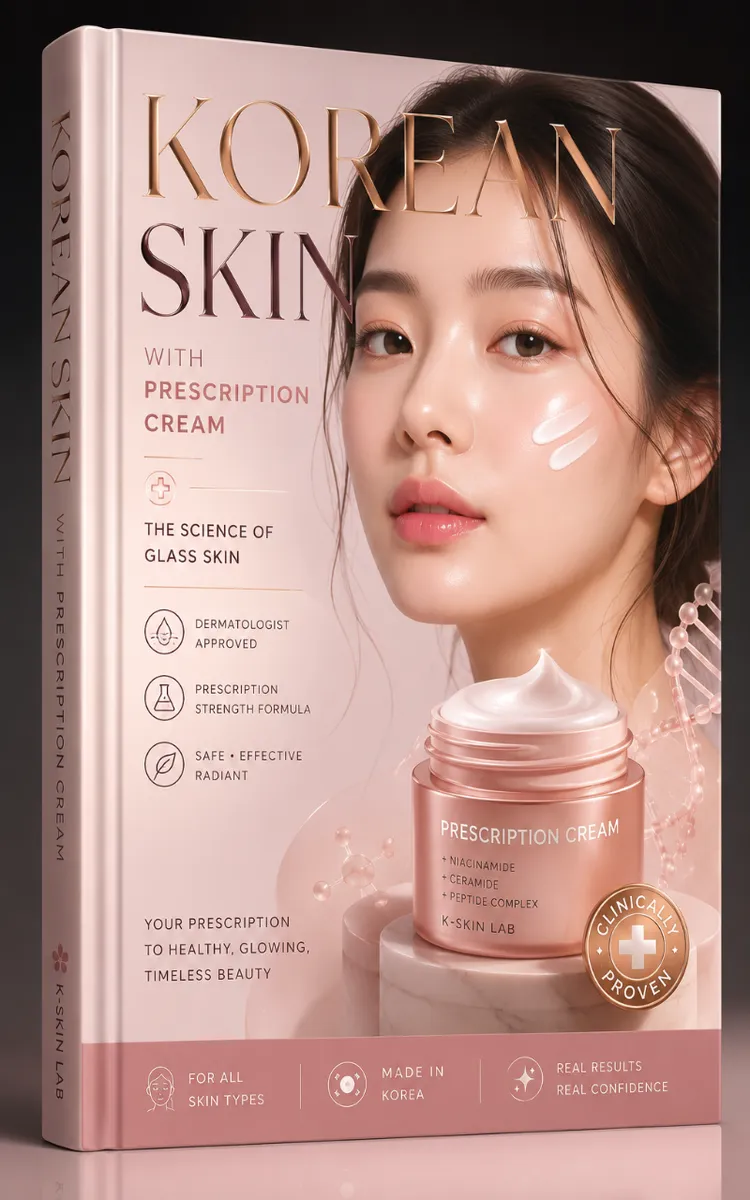
Korean Skin With Prescription Creams
Created with Inkfluence AI
Using pharmaceutical creams to achieve Korean-style skin
Table of Contents
- 1. Korean Skin Goals and Baseline
- 2. Prescription Cream Selection Guide
- 3. AM Routine With Prescription Creams
- 4. PM Routine and Irritation Control
- 5. Progress Tracking and Adjustments
Preview: Korean Skin Goals and Baseline
A short excerpt from “Korean Skin Goals and Baseline”. The full book contains 5 chapters and 9,482 words.
How can you choose a prescription cream if you don’t know what you’re trying to fix? If you start shopping for “Korean-style skin” before you measure your current skin, you usually end up guessing - trying to treat dryness when the real problem is irritation, or chasing dark spots when the skin barrier needs calm first. That guesswork wastes time and can make problems worse, especially with stronger creams.
This chapter gives you one practical tool: the Skin Scorecard Baseline. You’ll set clear, skin-specific targets and you’ll measure your starting point in a way you can repeat. After you read, you’ll be able to (1) write down what you want your skin to do, (2) track what your skin actually does right now, and (3) choose a prescription plan that matches your results instead of your hopes.
You’ll also learn how to measure without fancy equipment. You’ll use simple checks you can do at home - like how your skin feels right after cleansing, what your pores look like in natural light, and whether you get stinging with certain products. Then you’ll turn those observations into a baseline score you can revisit.
Why clear targets and a baseline decide which prescription cream works
Prescription creams work best when they match your skin’s current “job to be done.” Think of your skin like a system: if your barrier is irritated, a strong ingredient can feel like it “does something,” but it can also push you into redness and sensitivity. If you chase brightening while you still have active breakouts, you’ll feel like nothing improves because you keep resetting your skin with new inflammation. Clear targets prevent that mismatch.
A baseline solves a very specific problem: it tells you what to change first. If your skin is mostly rough and flaky, you don’t start by measuring dark spot coverage - you start by checking dryness and irritation triggers. If you have uneven texture plus clogged pores, you prioritize pore-related targets. When you record your starting point, you also stop losing track. You can’t “feel” improvement accurately after two weeks of trying multiple products; you need a consistent reference.
The Skin Scorecard Baseline keeps your decisions grounded. It turns your observations into a score you can revisit every few weeks. The score isn’t meant to diagnose you - it helps you choose what to focus on. Ask yourself this: when you look in the mirror, do you know which problem you want your skin to improve first? If you can’t name it clearly, your cream choices will stay random.
Practical takeaway: Your first goal isn’t “Korean skin.” Your first goal is matching your prescription cream to the real problem your skin shows today - so you can measure progress instead of guessing.
How the Skin Scorecard Baseline helps you set targets and measure your starting point
You’ll build your baseline in two parts: (1) pick a small set of targets that describe what you want your skin to do, and (2) score your current skin using the same checks every time. Keep it simple: three targets max at the start. If you try to fix five things at once, you won’t know what helped or hurt.
Use this numbered process. Write your answers down. Don’t rely on memory.
1. Pick up to 3 targets you can observe
Choose targets that match what you see or feel right now. Examples:
- “Less stinging after cleansing”
- “Fewer inflamed pimples”
- “Smoother texture on cheeks”
- “Dark spots look lighter”
Why this matters: prescription creams often work on specific skin behaviors. When your targets are observable, you can choose ingredients that match them.
2. Choose your “lighting rule” for every check
Use the same setup each time. For example, take photos in front of a window in the morning and check your skin in that same light. If you can’t take photos, use the same bathroom mirror and same time of day.
Why this matters: lighting changes make pores, redness, and uneven tone look different. Consistency turns your baseline into real data.
3. Score each target with a 0-3 rating
Use this simple scale:
- 0 = not present (or barely noticeable)
- 1 = mild
- 2 = moderate
- 3 = strong
For each target, record what you see and what you feel. Example: if your target is “Less stinging,” your score depends on whether you feel sting immediately after cleansing and for how long.
4. Record your “trigger check” before you choose a cream
Do a quick test with what you already use:
- Cleanse as you normally do.
- Wait 10 minutes.
- Note sting, tightness, and redness.
- Then moisturize and note how your skin feels for the next hour.
Why this matters: if your skin stings easily, you need to protect the barrier first. If you skip this step and start a prescription that irritates, your baseline will worsen even if the ingredient targets the right problem.
A concrete example helps....
About this book
"Korean Skin With Prescription Creams" is a how-to guide book by Dr. Hana Homaida with 5 chapters and approximately 9,482 words. Using pharmaceutical creams to achieve Korean-style skin.
This book was created using Inkfluence AI, an AI-powered book generation platform that helps authors write, design, and publish complete books. It was made with the AI Ebook Generator.
Frequently Asked Questions
What is "Korean Skin With Prescription Creams" about?
Using pharmaceutical creams to achieve Korean-style skin
How many chapters are in "Korean Skin With Prescription Creams"?
The book contains 5 chapters and approximately 9,482 words. Topics covered include Korean Skin Goals and Baseline, Prescription Cream Selection Guide, AM Routine With Prescription Creams, PM Routine and Irritation Control, and more.
Who wrote "Korean Skin With Prescription Creams"?
This book was written by Dr. Hana Homaida and created using Inkfluence AI, an AI book generation platform that helps authors write, design, and publish books.
How can I create a similar how-to guide book?
You can create your own how-to guide book using Inkfluence AI. Describe your idea, choose your style, and the AI writes the full book for you. It's free to start.
Write your own how-to guide book with AI
Describe your idea and Inkfluence writes the whole thing. Free to start.
Start writingCreated with Inkfluence AI


