
Read the first chapter
The whole of chapter one, free. About 7 min. Turn the pages with the arrows, your keyboard, or a swipe.
Chapter 1
Spotting Your PTSD Episode Signals
Spotting Your Episode Signals, early and often.
You’re brushing your teeth, answering a message, or turning off the light when your body suddenly changes the rules. Your jaw tightens. Your hearing sharpens. The room feels too quiet, then too loud. Your stomach drops, and a thought flashes through: Something’s wrong. I’m not safe.
Sometimes the signal is louder. A sound, smell, facial expression, or memory pulls you backward. Your chest pounds. You scan the door. You lose track of the conversation. Or you go completely blank, staring at your phone while your mind slips somewhere far away. Later, you may wonder why you snapped, shut down, cancelled plans, or couldn’t sleep.
A PTSD episode usually starts with small, subtle signals rather than the loudest symptom. It begins with a small shift you’ve learned to ignore: rubbing your hands together, checking the lock again, holding your breath, feeling suddenly irritated, or becoming desperate to escape. The Episode Radar Map helps you notice those early signals before the episode has full control. Do you recognise this in yourself?
The Question Beneath “What’s Wrong With Me?”
What if the first sign of an episode isn’t fear - but the moment you stop feeling like you have a choice?
That question matters because PTSD can make your reactions feel sudden and personal. You may believe you’re overreacting, being difficult, or failing at recovery. But an episode is often your nervous system moving into protection mode before your thinking mind has caught up. Your body detects danger, real or remembered, and prepares you to fight, flee, freeze, or disappear inward.
This doesn’t mean every reaction is harmless or that you never need to repair something afterward. It means the reaction has a pattern. When you can spot the pattern, you gain a small space between the signal and the response. That space is where real-time coping begins.
Before using the Episode Radar Map, you might notice only the final explosion: you leave the room, send an angry message, or lie awake replaying everything. After practising, you might catch the earlier point: your shoulders rise, your vision narrows, and you start searching for threats. Instead of arguing, you can say, “I’m getting activated. I need ten minutes,” place both feet on the floor, and reduce the stimulation around you. The episode may still be intense, but it’s no longer invisible.
The goal isn’t to become perfectly calm. That can become another exhausting demand. The goal is to recognise, This is an episode signal. My body is trying to protect me. I can choose one safe next move.
How the Episode Builds - and How You Can Interrupt It
Use the trigger-to-response chain below to study your personal pattern. The trigger might be an unexpected touch, a raised voice, a certain date, a nightmare, or the quiet of nighttime.
• When you encounter a trigger, your nervous system reads it as danger, even when part of you knows you’re in the present.
• You feel a surge of fear, anger, shame, numbness, panic, or unreality. Your body may heat up, tighten, shake, or go still.
• So you scan, argue, withdraw, check, over-explain, avoid, dissociate, or try to force the feeling away.
• Which leads to more stimulation, less connection to the present, and a stronger episode. Sleep may become harder because your body remains on watch.
Now try the alternative chain:
• When you notice the trigger, name it without debating whether you “should” be affected: “That sound activated me.”
• You feel the body signal and rate its intensity from 1 to 10.
• So you make one grounding choice: move to a quieter space, press your feet into the floor, look for five ordinary objects, or contact a trusted person.
• Which leads to a little more orientation. You may still feel upset, but your body receives new information: I’m here, and I have options.
The Episode Radar Map has four points: signal, meaning, move, and aftercare. The signal is what your body does first. Meaning is the story your mind attaches to it, such as I’m trapped or I’m about to be abandoned. Move is the smallest safe action you can take now. Aftercare is what helps your system come down later, without judging how it reacted.
You don’t have to stop the entire episode; you only need to interrupt the next step in its chain.
Your Honest Episode Radar Check
Answer these when you’re calm enough to reflect. You’re not grading your character. You’re learning your pattern.
• On a scale from 1 to 10, how quickly do you notice your earliest body signal?
A 1 may mean you notice only after shouting, shutting down, or fleeing. A 10 means you can identify an early change, such as clenched teeth, shallow breathing, or a hot face.
• On a scale from 1 to 10, how strongly do you believe the danger story during an episode?
A low number may mean you can keep some connection to the present. A high number suggests the story feels completely true in the moment, even if you question it later.
• Yes or no: Can you name one action that reliably lowers stimulation when you’re activated?
“Yes” might be leaving a crowded room, turning off a harsh light, using a familiar sound, or holding something cool. “No” isn’t a failure. It shows where you need to build a short list before the next episode.
• On a scale from 1 to 10, how much shame do you feel after an episode?
A low score may mean you can view the reaction with some compassion. A high score can keep your nervous system activated long after the trigger has passed, making rest and repair harder.
Here’s a simple guide: scores of 1-3 point to an area that needs basic support; 4-7 shows partial awareness you can strengthen; 8-10 shows a skill you can use deliberately. Don’t chase a perfect score. Choose the lowest area and work there first. If you feel unsafe, might harm yourself or someone else, or cannot return to the present, seek immediate help from local emergency services or a crisis service.
The Three-Minute Episode Radar Challenge
Name the signal before it names you.
• Map one recent episode - Timing: 5 minutes today; Difficulty: Medium.
Write four short lines: “The signal was…” “I told myself…” “I did…” “Afterward I needed…” Keep it factual. For example: “My stomach dropped when the door slammed. I thought someone was coming in. I checked the lock six times. I needed quiet and reassurance.”
You’ll know it’s working when:
• You identify a body signal before describing the whole story.
• You can separate the trigger from the meaning you attached to it.
• You notice one need beneath the reaction.
• Practise one interruption - Timing: once today while calm, then during the next early signal; Difficulty: Easy.
Put both feet on the floor. Name three things you see. Exhale slowly once, without forcing a deep breath. Then say, “This is an activation signal. I’m in the present, and I can take one safe step.” Practising while calm makes the words easier to find when your thinking narrows.
You’ll know it’s working when:
• You remember the phrase without searching for it.
• Your attention returns to at least one object in the room.
• The intensity drops by even one point.
• Choose your next safe move - Timing: write it down within 24 hours; Difficulty: Hard.
Pick one action for each common setting: at home, in public, and at night. Keep it realistic. At home, you might sit near an exit. In public, you might step outside and text a trusted person. At night, you might turn on a soft light and orient to the date and room. You’re not building an emergency plan for every possible disaster. You’re giving your activated brain fewer decisions to make.
You’ll know it’s working when:
• You can find the plan in under a minute.
• The action reduces noise, conflict, or isolation.
• You feel slightly more able to choose what happens next.
You Can Learn the First Language of an Episode
A PTSD episode is a protection response, not a personal failure. That truth doesn’t erase the impact of your actions, but it gives you a useful place to begin.
• Early signals often appear in the body before the episode becomes obvious.
• The danger story can feel true while your nervous system is activated.
• One small interruption can change what happens next.
• Recovery includes noticing, responding, and caring for yourself afterward - not punishing yourself.
The more familiar your signals become, the less you have to wait for a crisis to understand what’s happening. You can begin to recognise the tight jaw, the sudden distance, the scanning, the urge to escape. You can meet those signs with information instead of shame.
And when the episode arrives at night - when the room is dark, your body is tired, and the smallest sound feels loaded - how might understanding your signals change the way you meet sleep?
End of chapter one. 39 more chapters in the full book.
Swipe or use the arrows to turn the page
What's inside: 40 chapters
- 1. Spotting Your PTSD Episode Signals
- 2. Unlinking Trauma From Sleep Loss
- 3. Choosing Sleep Aids That Don’t Backfire
- 4. Falling Asleep With the 4-Step Drift
- 5. Stopping Nightmares With the Rehearsal Swap
- 6. Distinguishing CPTSD From PTSD in Symptoms
- 7. Recognizing a C-PTSD Breakdown Pattern
- 8. Taking a Free PTSD Self-Assessment
- 9. Using Audiobooks for Trauma Rewiring
- 10. Picking PTSD Recovery Books Readers Trust
- 11. Selecting Trauma Audiobooks With Clear Outcomes
- 12. Using Ebooks at Your Own Healing Pace
- 13. Immediate Coping When PTSD Hits Hard
- 14. Repairing the “Broken Body” Feeling
- 15. Recovering Without Medication: Your Options
- 16. Expert PTSD Sleep Tips for Tonight
- 17. Starting With Free Trauma Resources
- 18. Recognizing a PTSD Flashback in Real Time
- 19. Understanding PTSD Recovery Timelines
- 20. Finding Anxiety Relief Audiobooks That Fit
- 21. Confirming PTSD Possibility With Practical Steps
- 22. Navigating PTSD Symptoms in Women
- 23. Emergency Night Strategies When Sleep Won’t Come
- 24. Complex PTSD Recovery Tools You Can Use
- 25. Audio Healing Content: When It Helps Most
- 26. Creating Trauma-Informed Sleep Safety Cues
- 27. Linking Your Sleep Problems to PTSD Causes
- 28. PTSD vs Anxiety: Spotting the Differences
- 29. Finding Support in Free PTSD Communities
- 30. When Night Makes You Feel Unsafe
- 31. Ebook vs Audiobook: Choose Your Best Fit
- 32. Drug-Free Sleep Solutions That Actually Help
- 33. Releasing Trauma Stored in Your Body
- 34. Outgrowing PTSD: Real Recovery Proof
- 35. Guided Sleep Practices for PTSD Relaxation
- 36. Trigger Management With Real-World Tools
- 37. How Much Sleep You Need With PTSD
- 38. Home-Based Trauma Recovery Resource Plan
- 39. Is Your Insomnia Trauma-Related? Find Out
- 40. 3 AM Panic Relief in Minutes
About this book
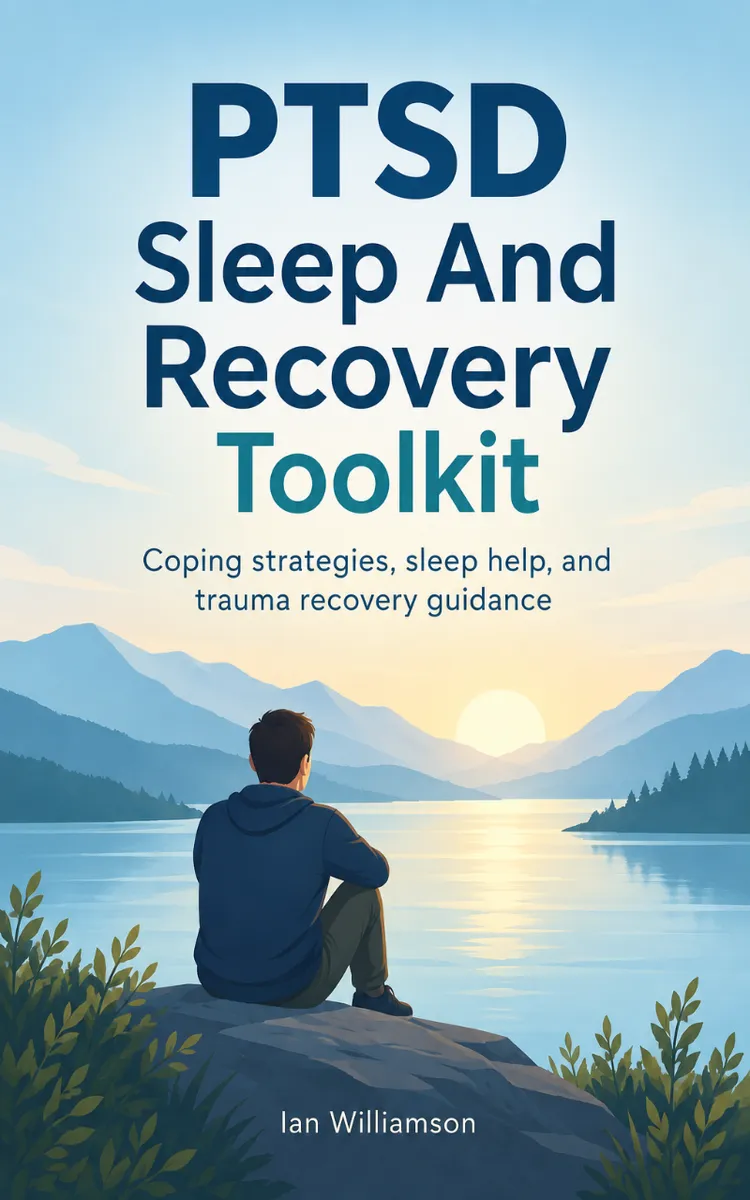
"PTSD Sleep And Recovery Toolkit" is a self-help book by Anonymous with 40 chapters and approximately 57,888 words. You can recover sleep and reduce triggers without pretending you’re just “bad at sleeping.” This PTSD Sleep And Recovery Toolkit helps you untangle fear from bedtime, so your nervous system can learn that nighttime is not danger.
This book was created using Inkfluence AI, an AI-powered book generation platform that helps authors write, design, and publish complete books. It was made with the AI Self-Help Book Writer.
Frequently Asked Questions
What is "PTSD Sleep And Recovery Toolkit" about?
You can recover sleep and reduce triggers without pretending you’re just “bad at sleeping.” This PTSD Sleep And Recovery Toolkit helps you untangle fear from bedtime, so your nervous system can learn that nighttime is not danger. You will use clear tools to recognize early episode signals, stop the pressure to force sleep, and understand how trauma can make your body stay watchful. You’ll also learn how to choose sleep aids with a safety-first filter, so you can support recovery without losing control or worsening nightmares. With 40 focused chapters and a fast track approach, you’ll gain a step-by-step plan you can apply immediately, and a grounded way to move from sleeplessness to steadier recovery.
How many chapters are in "PTSD Sleep And Recovery Toolkit"?
The book contains 40 chapters and approximately 57,888 words. Topics covered include Spotting Your PTSD Episode Signals, Unlinking Trauma From Sleep Loss, Choosing Sleep Aids That Don’t Backfire, Falling Asleep With the 4-Step Drift, and more.
Who wrote "PTSD Sleep And Recovery Toolkit"?
This book was written by Anonymous and created using Inkfluence AI, an AI book generation platform that helps authors write, design, and publish books.
How can I create a similar self-help book?
You can create your own self-help book using Inkfluence AI. Describe your idea, choose your style, and the AI writes the full book for you. It's free to start.
Write your own self-help book with AI
Describe your idea and Inkfluence writes the whole thing. Free to start.
Start writingCreated with Inkfluence AI


