
Read the first chapter
The whole of chapter one, free. About 7 min. Turn the pages with the arrows, your keyboard, or a swipe.
Chapter 1
Rebuilding Identity After Loss
When the Person You Were No Longer Fits
Three weeks after her husband’s funeral, a woman stood in the grocery store holding a basket with one item in it: coffee. She reached for the brand he liked, then stopped. She didn’t even like that coffee. For years, she had been the person who remembered what he bought, what he needed, and what they were having for dinner. Now the smallest choices felt strangely personal.
At home, his shoes still sat by the door. Her calendar still held appointments they had made together. Friends asked what she planned to do next, and the question landed heavily. She wasn’t only missing him. She was missing the version of herself who existed beside him.
Grief doesn’t only change your life; it can make you wonder who you are allowed to become now.
From Losing Yourself to Meeting Yourself Again
Old Belief: If I change after this death, I’m leaving my loved one behind.
New Reality: Redefining yourself is not betrayal; it’s how you carry love forward while making room for the life that remains.
After a death, identity can feel like a coat that no longer fits. You may have been a spouse, parent, child, caregiver, teammate, or business partner. Those roles shaped your days and your decisions. When one disappears, the loss can reach far beyond sadness. It can leave you asking, “What am I for now?”
The answer doesn’t have to arrive quickly. You don’t need to replace the relationship or become a completely different person. The goal is to notice which parts of you were tied to the person who died, which parts were always yours, and which parts are still waiting to develop.
Take someone who spent ten years caring for a sick parent. After the death, she may feel guilty taking an evening class, meeting friends, or enjoying a quiet morning. She might think, “I’m not a caregiver anymore, so who am I?” The Self-Map Reset helps her see that caregiving was one part of her identity. Her patience, loyalty, practical skills, and ability to notice what people need are still hers. They can now guide a different life.
This shift matters because grief often tells the story in extremes: “Everything is gone,” or “I must stay exactly as I was.” A more honest story makes room for both truths. Someone important died, and you are still here. Your life changed, and you still have choices. Love remains, and your identity can grow around the loss.
Notice the Old Map Before You Draw a New One
The Self-Map Reset begins with a simple idea: before rebuilding your direction, look at the map grief has disrupted. Your old map included roles, routines, responsibilities, relationships, values, and hopes. Some roads have ended. Others are still open. A few may lead somewhere you’ve never considered.
You don’t need to solve your future while standing in the middle of the wreckage. First, notice where grief is making decisions for you. Sometimes protecting yourself is necessary. Sometimes it quietly becomes a permanent rule.
Signs this pattern is running your life
1. You describe yourself only through the person who died. You say, “I was his wife,” “I was her son,” or “I was Dad’s caregiver,” and struggle to name anything else.
2. You reject activities because they feel disloyal. You avoid music, travel, food, or hobbies you once enjoyed because they seem too separate from your loved one - or too enjoyable without them.
3. You make every decision based on what they would have wanted. Their values may still matter, but you can lose touch with your own preferences when every choice becomes a conversation with the past.
4. You keep your life frozen to avoid facing the change. You leave every room untouched, decline every invitation, or refuse to make even small plans because movement feels like abandonment.
A healthy new identity keeps the love, releases the old limits, and makes room for your own voice.
For example, a person who always traveled with a sibling may initially avoid taking a trip alone. That’s understandable. But later, she might choose a one-day visit to a nearby town, carrying a photo or sharing the experience with someone who understands. The trip doesn’t erase the sibling. It shows that her life can hold memory and movement at the same time.
Questions for Your Own Self-Map
1. Which parts of my identity disappeared when this person died, and which parts are still present beneath the grief? Write two columns. In one, list roles that changed. In the other, list qualities that remain, such as humor, persistence, tenderness, curiosity, or responsibility. This separates what you did with someone from what you are.
2. What am I avoiding because it feels like betrayal? Be specific. Maybe it’s wearing brighter clothes, accepting a promotion, dating, laughing with friends, or changing the bedroom. Ask whether the action truly dishonors your loved one - or simply proves that life is moving.
3. What did this relationship teach me that I want to carry forward? You might write, “I learned to speak up about health,” or “I learned that showing up matters.” Turning memory into a value gives the relationship an ongoing place in your identity.
4. What is one choice I can make without asking what my loved one would choose? Start small. Pick the restaurant, rearrange a room, choose a weekend plan, or buy the kind of coffee you actually enjoy. The point isn’t independence for its own sake. It’s practice hearing your own voice.
5. What part of me has been waiting for permission to return or begin? Perhaps you miss painting, coaching, gardening, studying, or being more social. You don’t have to commit to a new life. You only need to identify one small doorway.
Answer gently. Your first response may be messy, contradictory, or full of “I don’t know.” That still counts. Grief often clears slowly, and honest uncertainty is more useful than a polished answer you don’t believe.
The Seven-Day Self-Map Reset
Challenge: Draw One New Road
For the next seven days, spend 10 minutes each evening updating your Self-Map. Use paper, a notes app, or a simple three-column page.
• Column one: What changed? Name one role, routine, or expectation affected by the death.
• Column two: What remains? Name one personal quality, value, skill, or relationship that is still yours.
• Column three: One small choice. Record one action that reflects who you are becoming. It might be calling a friend, cooking something new, walking a different route, or setting a boundary.
• On day seven, circle the choice that gave you the strongest sense of being yourself. Repeat it or make it slightly bigger next week.
Expected difficulty: Medium
Some days, 10 minutes may feel easy. Other days, even writing one sentence may feel like too much. If that happens, write, “Today I can’t see myself clearly, but I’m still here.” That is a valid map entry.
You’ll know it’s working when...
• You can name at least three qualities that belong to you, not only to your former role. - You notice one choice you made from personal preference. - You feel less pressure to preserve every part of the past exactly as it was. - You can hold a memory without letting it decide every next step. - You begin saying, “I’m becoming,” instead of only, “I used to be.”
The purpose isn’t to feel cheerful after seven days. It’s to create evidence that your identity is still alive. Small choices matter because grief can make your world feel controlled by circumstances. Choosing your breakfast, your schedule, or your next phone call gives a little control back.
Carrying Love Without Staying Frozen
You can honor who died without abandoning the person you are still becoming.
Redefining yourself after loss doesn’t mean closing the door on the past. It means learning which parts of the past you want to carry, which burdens you can set down, and which new qualities are beginning to grow.
You learned how to separate a role from the whole of your identity. You saw how guilt can disguise itself as loyalty. You used the Self-Map Reset to notice what remains and choose one new direction. You practiced taking small steps without demanding that grief disappear first.
Some days, the old map will pull you back. That doesn’t mean you’ve failed. It means the relationship mattered. Keep returning to the question, “What is mine to choose today?” Over time, your answer may become steadier - not because you love your person less, but because you are learning how to live with love in a changed shape.
End of chapter one. 4 more chapters in the full book.
Swipe or use the arrows to turn the page
What's inside: 5 chapters
- 1. Rebuilding Identity After Loss
- 2. Challenging Grief-Myths Gently
- 3. Using the Support Ladder
- 4. Communicating Without Pressure
- 5. Building a Life With Meaning
About this book
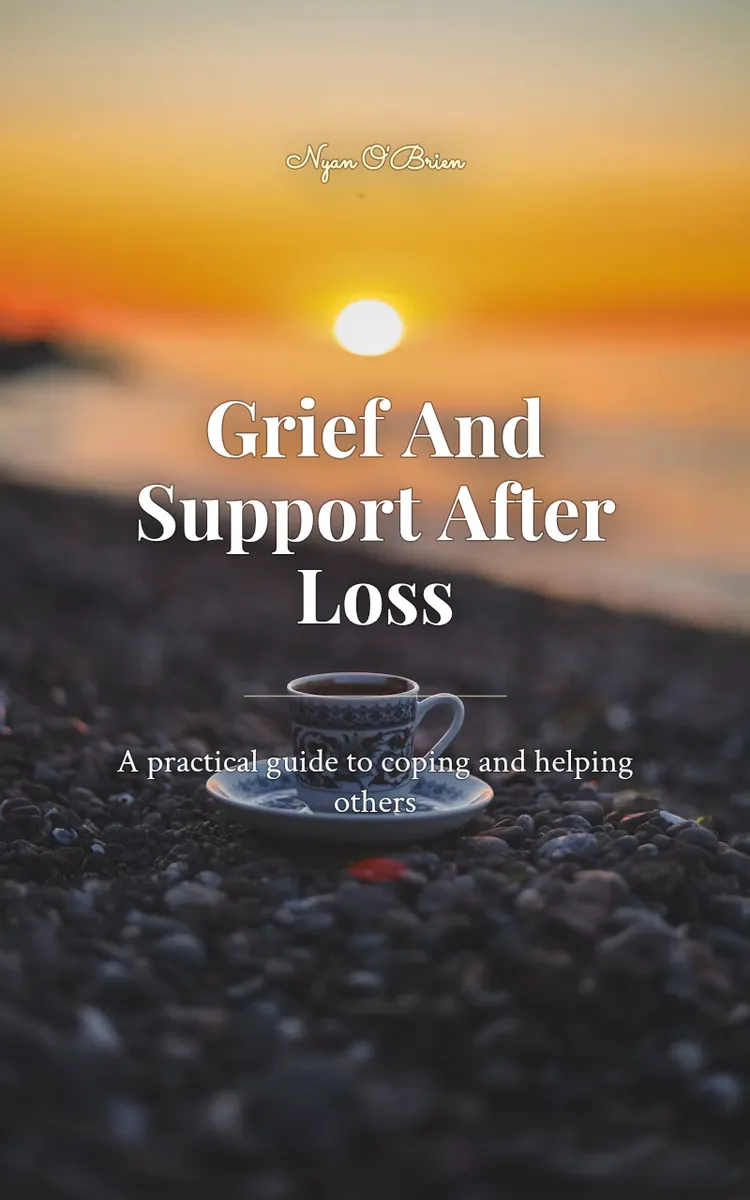
"Grief And Support After Loss" is a self-help book by Nyan O'Brien with 5 chapters and approximately 7,143 words. Coping with grief and supporting someone after a loss.
This book was created using Inkfluence AI, an AI-powered book generation platform that helps authors write, design, and publish complete books. It was made with the AI Self-Help Book Writer.
Frequently Asked Questions
What is "Grief And Support After Loss" about?
Coping with grief and supporting someone after a loss
How many chapters are in "Grief And Support After Loss"?
The book contains 5 chapters and approximately 7,143 words. Topics covered include Rebuilding Identity After Loss, Challenging Grief-Myths Gently, Using the Support Ladder, Communicating Without Pressure, and more.
Who wrote "Grief And Support After Loss"?
This book was written by Nyan O'Brien and created using Inkfluence AI, an AI book generation platform that helps authors write, design, and publish books.
How can I create a similar self-help book?
You can create your own self-help book using Inkfluence AI. Describe your idea, choose your style, and the AI writes the full book for you. It's free to start.
Write your own self-help book with AI
Describe your idea and Inkfluence writes the whole thing. Free to start.
Start writingCreated with Inkfluence AI


