
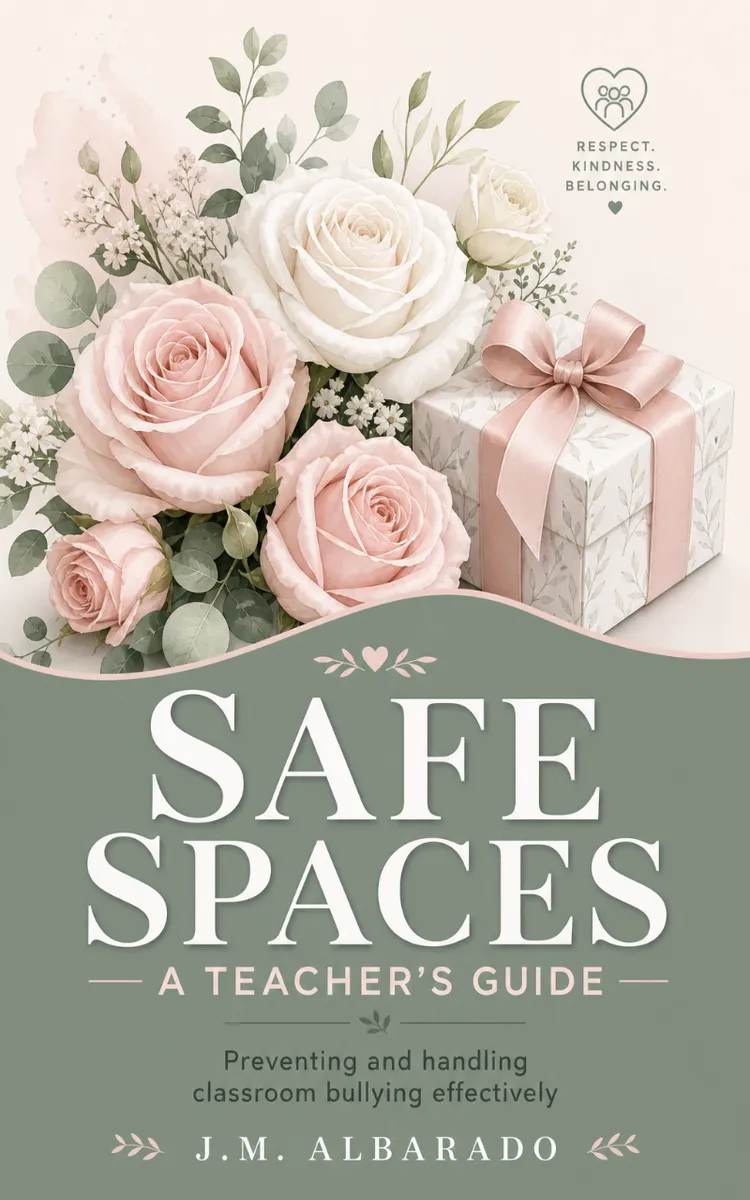
Safe Spaces: A Teacher's Guide
Created with Inkfluence AI
Teacher protocols to prevent and respond to classroom bullying
Table of Contents
- 1. Bullying Types You’ll See Today
- 2. Early Warning Signs to Track
- 3. Real-Time De-escalation Steps
- 4. Restorative Dialogue With Scripts
- 5. Community Standards That Prevent Bullying
- 6. Empathy Routines for Daily Practice
- 7. Documenting Incidents Objectively
- 8. Partnering With Parents as Allies
- 9. Long-Term Healing and Inclusion Plans
Preview: Bullying Types You’ll See Today
A short excerpt from “Bullying Types You’ll See Today”. The full book contains 9 chapters and 18,079 words.
A fight in the hallway can look like bullying - but a “small joke” can do the same damage when it happens again and again. Teachers often notice the loud moments first, yet bullying also shows up as targeted exclusion, repeated name-calling, or scary messages that arrive after the school day ends. If you can sort what you’re seeing into clear types, you can respond faster and more fairly.
This chapter gives you classroom-ready definitions and examples for four common bullying types: physical, verbal, social, and cyberbullying. You will learn a simple way to name what’s happening so you can write better notes, spot patterns earlier, and choose the right response in the moment. After this chapter, you should be able to look at a real classroom situation and say, “That fits Stream X because of these exact behaviors.”
You’ll also use the Four-Stream Bullying Map - a practical tool that helps you track bullying across the four types, even when a student says, “It’s not a big deal.” The goal is not to label students in a harsh way. The goal is to help you protect kids with clear eyes and clear next steps.
Physical, Verbal, Social, and Cyberbullying: Clear Definitions Teachers Can Use
Bullying is not one random mean moment. Bullying is repeated or patterned harm that targets someone and makes them feel unsafe, embarrassed, left out, or powerless. In school, bullying often blends types - someone might tease a student’s appearance (verbal), then get classmates to stop talking to them (social), and then send a nasty message after school (cyberbullying).
To teach yourself to recognize patterns quickly, you need clean definitions. Here’s the simplest version that works in classrooms:
- Physical bullying uses force or threats with bodies or objects.
- Verbal bullying uses words to insult, threaten, or degrade.
- Social bullying harms relationships by excluding, spreading rumors, or manipulating friendships.
- Cyberbullying uses phones, computers, or online platforms to harass, threaten, embarrass, or impersonate.
Now connect those definitions to everyday classroom scenes. Physical bullying can include pushing during line-up, blocking a student’s path, taking a phone/tablet and refusing to return it, or “accidentally” bumping someone hard every day. Verbal bullying can sound like “You’re so weird,” “Nobody wants you on the group,” or “If you tell, I’ll - ” Social bullying can look like “We’re not sitting with you,” “Don’t talk to her,” or spreading a rumor that causes other students to freeze someone out. Cyberbullying can look like repeated mean texts, screenshots posted in a class chat, or a fake account that tags someone in humiliating posts.
Ask yourself a quick comprehension check: When you hear an incident described, can you name the type and point to the behavior? If you can’t, you’ll struggle later when you write what happened and decide what to do next.
The Four-Stream Bullying Map for Naming What You See
The Four-Stream Bullying Map helps you sort bullying into four streams so you don’t miss the pattern. You don’t need fancy forms to start - just consistent naming. Nia, a middle school science teacher, uses this map because her classroom has lots of group work, lab partners, and shared online platforms where conflicts spill quickly.
When Nia hears, “It was just teasing,” she doesn’t guess. She checks the behavior against the four streams and records the exact actions she saw or the exact words she heard. That step matters because it keeps responses grounded in observable facts, not vibes.
Use this map with four stream rules:
1. Stream 1: Physical bullying
- Look for hitting, kicking, shoving, grabbing, tripping, blocking, or threatening with gestures or objects.
- Include “refuses to give back” as physical harm when it targets the same student repeatedly (for example, taking a Chromebook and keeping it during every lab period).
- Takeaway: If a student’s body or belongings get used to control another student, name it as physical.
2. Stream 2: Verbal bullying
- Look for insulting, mocking, yelling, name-calling, repeated sarcasm that humiliates, and direct threats.
- Include “quiet threats” too - like telling a student, “You’ll regret it if you don’t give me your worksheet,” even if it’s whispered.
- Takeaway: If words attack dignity, safety, or belonging, name it as verbal.
3. Stream 3: Social bullying
- Look for exclusion, silent treatment, “don’t sit with them,” rumor-spreading, and turning the group against someone.
- Include manipulation of who gets chosen: “We’ll only work with you if you stop talking to her.”
- Takeaway: If the harm happens through relationships and group power, name it as social.
4. Stream 4: Cyberbullying
- Look for harassment through messages, posts, comments, calls, screenshots, fake accounts, or sharing private info....
About this book
"Safe Spaces: A Teacher's Guide" is a how-to guide book by J.M. Albarado with 9 chapters and approximately 18,079 words. Teacher protocols to prevent and respond to classroom bullying.
This book was created using Inkfluence AI, an AI-powered book generation platform that helps authors write, design, and publish complete books. It was made with the AI Ebook Generator.
Frequently Asked Questions
What is "Safe Spaces: A Teacher's Guide" about?
Teacher protocols to prevent and respond to classroom bullying
How many chapters are in "Safe Spaces: A Teacher's Guide"?
The book contains 9 chapters and approximately 18,079 words. Topics covered include Bullying Types You’ll See Today, Early Warning Signs to Track, Real-Time De-escalation Steps, Restorative Dialogue With Scripts, and more.
Who wrote "Safe Spaces: A Teacher's Guide"?
This book was written by J.M. Albarado and created using Inkfluence AI, an AI book generation platform that helps authors write, design, and publish books.
How can I create a similar how-to guide book?
You can create your own how-to guide book using Inkfluence AI. Describe your idea, choose your style, and the AI writes the full book for you. It's free to start.
Write your own how-to guide book with AI
Describe your idea and Inkfluence writes the whole thing. Free to start.
Start writingCreated with Inkfluence AI


