
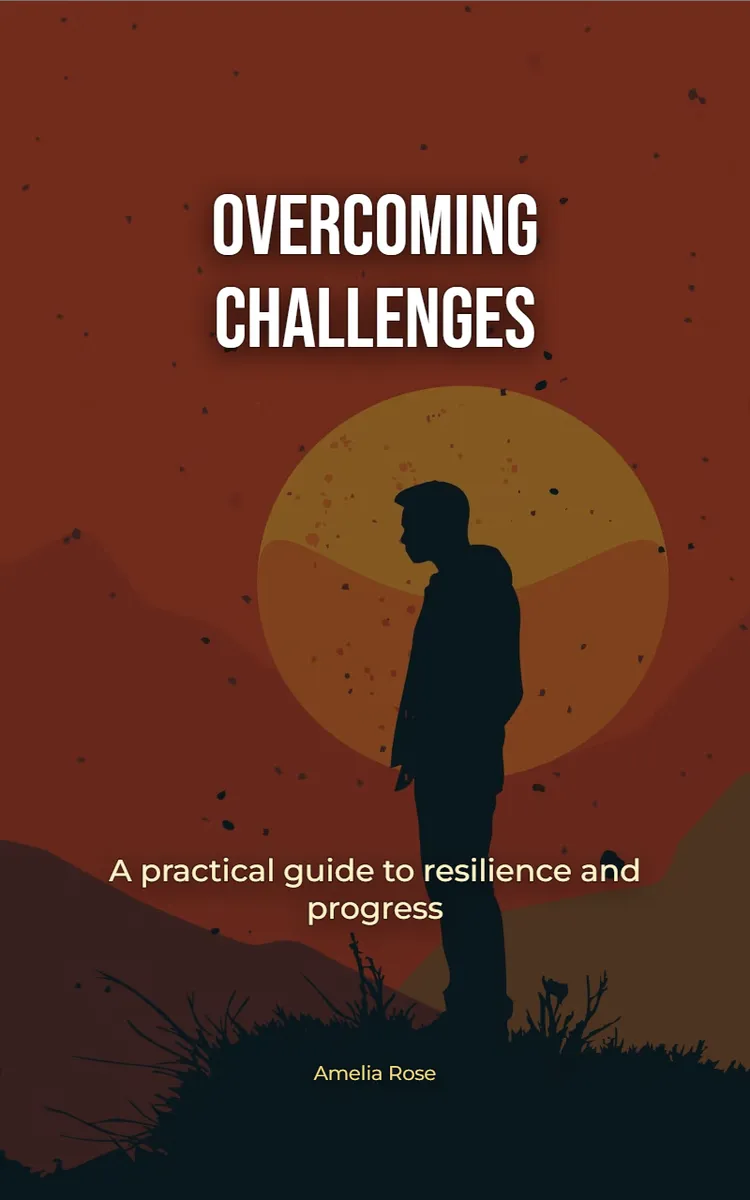
Read the first chapter
The whole of chapter one, free. About 7 min. Turn the pages with the arrows, your keyboard, or a swipe.
Chapter 1
Rewriting the Identity Story
Picture This: The Moment Your “Identity” Gets You Stuck
Nadia, 34, runs customer support for a small but growing company. One Tuesday, a ticket stack hits the inbox like a wave - angry customers, messy invoices, a product change that nobody fully documented. She does what she always does: she jumps in, fixes what she can, follows the process, and tries to stay calm.
Then one customer responds with, “You people never listen.” Another one says, “Stop giving excuses.” Nadia feels her chest tighten. She rereads the messages like she’s looking for a “gotcha,” but all she finds is proof - proof that she’s failing, proof that she’s not good at this, proof that she doesn’t belong in a role like this.
And here’s the weird part: even when she solves the next ticket, her brain still tags the day with the same label. Not “That was a hard moment.” Not “I handled it.” More like: “I’m the kind of person who can’t handle pressure.”
What if your setbacks aren’t just testing your skills - they’re rewriting who you think you are?
The Mindset Shift: Old Story vs New Identity (that you can actually live)
Old Belief: “When I mess up, it means something is wrong with me.”
New Reality: “When I mess up, it means I learned something about the situation - and I can still choose who I’m becoming.”
That shift sounds simple, but it changes how your brain treats pressure. Under the old belief, every setback becomes a verdict. Your mind grabs a single moment - an awkward call, a missed deadline, a customer who didn’t calm down - and turns it into a permanent identity: I’m incompetent. I’m not cut out for this. I’m the problem.
Under the new reality, the same moment becomes data. It might still sting, but it doesn’t get to define you. Instead of “I am bad at this,” you move toward “I’m learning what this moment needs.” That’s not fluff. It affects your choices in real time: how fast you recover, what you pay attention to, and whether you keep showing up.
Here’s a concrete example from Nadia. After a rough day, she used to replay the customer comments and spiral into self-blame. This time, she did something different: she wrote two sentences on a sticky note for the next shift. One was the old label her brain wanted to use (“I’m not good enough”). The second was the new identity she was practicing (“I’m a problem-solver who improves with feedback”). Then she backed it up with one action: before responding to the next ticket, she clarified the issue in her own words and offered the next concrete step.
The result wasn’t magic. Customers still got frustrated. The inbox still piled up. But Nadia stopped treating those moments as identity evidence. She started treating them as training - like the work was asking for a new approach, not announcing her worth.
Going Deeper: Why your self-narrative sticks (and how it hijacks you)
Your limiting self-narrative isn’t random. It’s usually your brain trying to protect you - by making the world feel predictable. If it can label you (“I’m not good under pressure”), then it thinks it can prevent surprises. The problem is: it doesn’t protect you from danger. It protects you from growth that feels risky.
When you repeat an identity story often enough, it becomes a shortcut. It decides what you notice, what you ignore, and what you assume you’re capable of. That’s why the same situation can feel like “I’m failing” to you, while someone else might experience it as “I’m learning a hard part.” Your brain isn’t just reacting to events. It’s reacting to the meaning you assigned to those events.
The Identity Rewrite Loop is built for this exact moment: when your mind tries to turn a feeling into a fact. You don’t have to “think positive” to use it. You just have to catch the narrative early, interrupt the identity verdict, and choose a better label that matches how you want to live - even when you’re stressed.
Signs this pattern is running your life
• You treat one bad moment as proof of a permanent trait. If you stumble once, your brain acts like it’s a pattern forever.
• You avoid the very situations that would disprove the story. “If I’m not good at this, why try?” sounds logical - until you realize it keeps you stuck.
• Your inner voice gets courtroom energy. You don’t just notice “I’m struggling.” You convict yourself. “I should’ve known better” turns into “I’m the kind of person who can’t handle it.”
• You get stuck even after you take action. You can complete the task, but your mind still refuses to update the identity.
The key move: Your narrative becomes your identity when you stop updating it.
Reflection & Self-Assessment: Catch the story before it becomes “you”
Let’s make this real. Nadia didn’t need a new personality overnight. She needed a way to identify the exact moment her brain flipped from “this is hard” to “this is me.” So grab a notebook (or notes app) and answer honestly. No performance. No “perfect insight.” Just the truth you usually avoid because it’s uncomfortable.
Here are thought-provoking questions to apply the Identity Rewrite Loop to your life:
• What’s the identity story your brain reaches for when something goes wrong?
Example answer: “When I get criticism, I tell myself I’m not capable.”
If you can’t name it yet, start with the emotion first: what do you feel right before the label appears?
• What specific moment do you keep using as “evidence”?
Example answer: “That one customer call where I didn’t respond fast enough.”
Write the moment down like you’re describing it to a friend, not a judge.
• If that story wasn’t true, what would you be able to do differently tomorrow?
Example answer: “I’d ask clarifying questions sooner instead of freezing.”
Your answer tells you what identity would actually help you live your life.
• What would a more accurate identity sound like - still honest, just not fatal?
Example answer: “I’m someone who improves under pressure.”
Keep it believable. If it feels fake, you’ll abandon it. It should match how you can behave this week.
• What do you lose by believing the old identity story?
Example answer: “I lose momentum because I spend time punishing myself instead of learning.”
This question usually reveals the real cost - the part your brain tries to hide.
When you answer, look for the pattern: the old narrative often shows up as a verdict, and the new identity needs to show up as a choice.
Growth Challenge: Run the Identity Rewrite Loop for the next 7 days
You don’t need a whole new mindset. You need a repeatable interruption. For the next week, you’ll practice rewriting the identity story at the moment it tries to become “you.”
Challenge Title: The 7-Day Identity Rewrite Loop
• Pick one “trigger” moment each day (something that usually makes you spiral - criticism, delays, misunderstanding, a tough customer, messy progress).
• Use this exact loop when it hits:
• Name the verdict: “My brain is telling me I am ___.”
• Separate event from identity: “This is a moment about ___, not a permanent label about me.”
• Choose the rewrite (one sentence): “I’m the kind of person who, even when.”
• Take one identity-matching action within 10 minutes: send the follow-up, ask the question, do the next small step, or correct the mistake fast.
• Track it in one line per day in your notes app: trigger → old verdict → rewrite sentence → action you took.
Expected difficulty rating: Medium (because it asks you to be honest in real time)
You’ll know it’s working when…
• You catch the identity verdict faster than you used to (even by 30 seconds).
• You still feel the sting, but you don’t surrender your direction.
• Your “rewrite sentence” starts to feel more true with each day - not like a pep talk, but like a better fit.
• You complete more of the next step, even if the day is messy.
If you miss a day, don’t treat it like proof your brain is “too broken.” Just resume. The loop is about practice, not perfection.
Key Takeaway: You don’t have to wait for confidence - you can rewrite the identity that earns it
The real shift isn’t “I’ll believe in myself.” It’s more practical than that: you start building an identity that can survive setbacks. Nadia didn’t become invincible. She became consistent at separating a hard moment from a permanent label. And once she did that, her confidence stopped being something she waited for. It became something she practiced into existence.
Here’s what you learned:
• Your self-narrative turns into identity when you treat setbacks as permanent verdicts.
• Identity rewrites work best when they’re believable and paired with a small action within minutes.
• The Identity Rewrite Loop helps you interrupt the “courtroom voice” before it controls your next move.
• A more accurate identity isn’t softer - it’s sharper about what’s true and what’s not.
Next, you’ll start building resilience in a way that actually holds up when life gets loud - by strengthening the habits that keep your identity steady, not fragile.
Your setbacks don’t get to define you - your next choice does.
End of chapter one. 7 more chapters in the full book.
Swipe or use the arrows to turn the page
What's inside: 8 chapters
- 1. Rewriting the Identity Story
- 2. Challenging Catastrophic Thinking Habits
- 3. Building Boundaries Without Guilt
- 4. Designing Resilient Daily Habits
- 5. Turning Failures into Feedback Fast
- 6. Communicating Needs Under Pressure
- 7. Practicing Stress-Reset Skills
- 8. Choosing Purpose Through Hard Seasons
About this book
"Overcoming Challenges" is a self-help book by Lucas Sinclair with 8 chapters and approximately 13,080 words. Building resilience and strategies to handle life challenges.
This book was created using Inkfluence AI, an AI-powered book generation platform that helps authors write, design, and publish complete books. It was made with the AI Self-Help Book Writer.
Frequently Asked Questions
What is "Overcoming Challenges" about?
Building resilience and strategies to handle life challenges
How many chapters are in "Overcoming Challenges"?
The book contains 8 chapters and approximately 13,080 words. Topics covered include Rewriting the Identity Story, Challenging Catastrophic Thinking Habits, Building Boundaries Without Guilt, Designing Resilient Daily Habits, and more.
Who wrote "Overcoming Challenges"?
This book was written by Lucas Sinclair and created using Inkfluence AI, an AI book generation platform that helps authors write, design, and publish books.
How can I create a similar self-help book?
You can create your own self-help book using Inkfluence AI. Describe your idea, choose your style, and the AI writes the full book for you. It's free to start.
Write your own self-help book with AI
Describe your idea and Inkfluence writes the whole thing. Free to start.
Start writingCreated with Inkfluence AI


