

Read the first chapter
The whole of chapter one, free. About 13 min. Turn the pages with the arrows, your keyboard, or a swipe.
Chapter 1
Your Property Is Either Producing
A contractor cleared a corner of his workshop for a new compressor, then stopped when he added the numbers. The compressor needed electrical work, occupied valuable floor space, required regular maintenance, and would sit unused for most of the week. Meanwhile, a clean storage bay near the entrance could earn monthly rent from a local tradesperson with almost no new equipment. The better investment was not the machine. It was the space already sitting there.
That decision captures the central rule of property monetization: every asset either produces value or consumes it. A garage, shed, driveway, vacant corner, trailer, or piece of equipment may generate cash, support a business, or reduce operating costs. If it does none of those things, it still creates bills, maintenance, insurance exposure, security work, and opportunity cost. Before you buy anything new, find out which side of that line your existing property occupies.
How to Separate Producers From Consumers
A producing asset creates measurable value. It may bring in rent, support paid work, reduce a cost you would otherwise pay, or make another income-producing asset more useful. A consuming asset takes money, time, space, or attention without returning enough value to justify its place.
Do not judge an asset by how useful it feels. Judge it by what it does during a normal month.
A spare outbuilding may feel valuable because it has a roof and four walls. If it contains broken furniture, blocks vehicle access, leaks onto stored items, and needs electrical repairs, it may consume more than it produces. A driveway may look too ordinary to matter, but if it can hold a vehicle safely without disrupting your household, it may become a straightforward producer. A commercial-grade tool may look like an investment, but if customers rarely need it and replacement parts cost too much, it may be an expensive consumer.
Use the Producer-Consumer Scorecard to force a clear decision. Score each asset against five questions:
• Does it generate direct income? - Does it reduce a cost you already pay? - Does it require regular cash spending? - Does it require regular labor or attention? - Does it block a better use of the same space?
Record the answers with actual amounts whenever possible. “It might be useful someday” earns no income score. “It saves me $80 each month because I no longer rent outside storage” earns a measurable benefit. “It needs $600 in repairs before anyone can use it” belongs in the cost column, not the wish column.
Suppose a 200-square-foot outbuilding produces no income. You spend $40 each month on electricity and pest control, $300 each year on minor repairs, and four hours each month clearing access and moving stored items. At a modest labor value of $25 per hour, the monthly carrying cost looks like this:
Electricity and pest control: $40 Repairs averaged monthly: $25 Labor: $100 Total monthly carrying cost: $165
The building consumes $165 each month before you count the value of the space. If a practical use could produce $300 per month after setup, the building has a possible $135 monthly contribution. If a safe, compliant use could produce only $100, keeping it in its current condition costs you $65 more than the income it creates.
That comparison does not automatically mean you should rent the building. You still need to verify local requirements before monetizing any space or equipment. Check ownership rights, lease limits, zoning, permits, fire rules, insurance, access, and safety requirements before accepting money. A profitable idea on paper can become a losing decision if local rules prohibit the use or require costly upgrades.
The scorecard also exposes false bargains. A used storage container may cost $1,200, but delivery, leveling, locks, lighting, repairs, and insurance can push the real starting cost much higher. A used trailer may seem cheap because the purchase price looks manageable. Add registration, tires, brakes, storage, maintenance, and the time required to answer customer requests. The purchase price tells you what it costs to acquire the asset. It does not tell you what it costs to operate.
How to Find Hidden Carrying Costs Before Buying
Carrying cost means the money and effort required to keep an asset available, safe, legal, and usable. Buyers often count the purchase price and ignore everything that follows. That mistake turns a cheap asset into a monthly drain.
Separate costs into four groups: fixed, usage-based, repair-related, and opportunity costs. Fixed costs continue even when nobody uses the asset. Examples include loan payments, insurance, registration, property taxes, base utilities, security monitoring, and required permits. Usage-based costs rise when customers use the space or equipment. Examples include electricity, fuel, cleaning, delivery mileage, consumable supplies, and wear. Repair-related costs arrive irregularly but still belong in your planning. Opportunity cost measures what the space could have produced under another use.
For a piece of equipment, write down:
• Purchase price and delivery - Setup, wiring, leveling, or installation - Registration and required inspections - Insurance and deductible exposure - Fuel, electricity, and consumables - Routine maintenance - Replacement parts and expected wear - Storage and security - Your labor - The value of the space it occupies
Your labor belongs in the calculation even if you do not pay yourself immediately. If customer handoffs, cleaning, loading, and troubleshooting take six hours per month, assign those hours a realistic value. Otherwise, the asset may appear profitable only because you donated your time.
Maintenance deserves its own reserve. Set aside money from each dollar of revenue for predictable wear instead of waiting for a breakdown. A trailer may need tires, lights, bearings, and brake work. A workshop may need roof repairs, pest treatment, and electrical maintenance. A pressure washer may need hoses, seals, oil, and pump service. The correct reserve depends on the asset, its age, usage, and replacement cost. Use service records, manufacturer guidance, and quotes from local repair providers to set a defensible amount. Do not invent a reserve simply to make the numbers look attractive.
Insurance also belongs in the asset cost. Request a written quote for the intended business use before buying. Ask whether customer property, commercial activity, rented equipment, customer access, and damage during transport receive coverage. Verify local requirements and speak with a qualified insurance professional when the use falls outside ordinary household activity. A policy that covers personal use may not cover paid rentals or customer property.
Vacancy creates another hidden cost. A storage space that could rent for $300 per month does not necessarily produce $3,600 per year. Customers leave, demand changes, and some months may produce no revenue. If the space remains empty for two months, annual gross revenue falls to $3,000 before expenses. Use an honest vacancy assumption based on your local demand and the asset’s limitations. Do not use a full calendar as your forecast unless customers have already committed.
Customer acquisition costs matter even for a small side hustle. Track listing fees, signs, platform charges, advertising, phone time, mileage, and the labor required to show the space. If you spend $180 to find a customer who stays six months, the acquisition cost equals $30 per month during that customer’s first six months. Include that cost when you compare short-term and recurring uses.
A simple monthly carrying-cost worksheet can include:
Fixed monthly costs Usage-based costs Maintenance reserve Insurance allocation Vacancy allowance Customer-acquisition cost Owner labor Total monthly cost
The total tells you the minimum monthly contribution the asset must produce. If an equipment rental brings in $500 but costs $120 in fuel and wear, $75 in insurance, $60 in maintenance reserve, $50 in customer acquisition, and $100 in labor, the contribution before tax equals $95. That result may still make sense if the equipment would otherwise sit unused and the work remains manageable. It does not make sense if the equipment occupies a space that could produce $250 with a simpler use.
How to Apply the Producer-Consumer Scorecard to New Purchases
Run the scorecard before you buy, not after the delivery truck arrives. Start with the exact job you want the asset to perform. Avoid vague goals such as “make money from the property.” Write a measurable target: “Generate at least $250 per month after direct costs,” or “Replace a $150 monthly storage bill without adding more than two hours of work.”
Next, identify the customer and the payment event. A renter may pay monthly for secure storage. A contractor may pay for a staging area. A customer may pay for equipment hours. A local business may pay for scheduled access. If you cannot state who pays, what they receive, and when they pay, you do not yet have an operating plan.
Then compare the proposed purchase with an existing asset. Suppose you consider buying a $2,000 enclosed trailer to rent for $175 per month. Before buying, inspect your current garage. A 120-square-foot section may support paid storage at $225 per month after cleaning and security work. The garage option may require $350 in setup and $40 per month in added costs. The trailer may require $2,000 upfront, $85 per month in carrying costs, and significant customer handoff time.
For the garage:
Monthly revenue: $225 Added monthly costs: $40 Monthly contribution: $185 Setup cost: $350
For the trailer:
Monthly revenue: $175 Monthly costs: $85 Monthly contribution: $90 Purchase and setup cost: $2,000 or more
The garage returns the setup cost in less than two months if demand exists and local requirements allow the use. The trailer takes much longer and carries more mechanical risk. The scorecard does not ban the trailer. It makes you earn the right to buy it by proving that the existing space cannot meet demand.
Use the same discipline with tools and machinery. If a tool rents for $45 per day and produces eight paid days per month, gross revenue reaches $360. Subtract cleaning, pickup coordination, wear, insurance, maintenance reserve, and idle time. If those costs total $210, the tool contributes $150 per month. A $1,800 purchase then needs twelve productive months to recover the purchase price before considering taxes or major repairs. That is the payback period: the time required for cumulative contribution to equal the initial investment.
Payback alone cannot approve a purchase. A tool with a twelve-month payback may still fail if demand depends on one seasonal customer or if one repair costs half the purchase price. Review the asset’s replacement cycle, resale value, security needs, and legal exposure. Verify local requirements before renting equipment, allowing customer access, or storing customer property.
Break-even provides another essential check. Break-even occurs when revenue covers all operating costs and the initial investment has not yet been recovered. For a monthly rental, divide fixed monthly costs by the contribution from one customer or one paid use.
If a storage bay carries $180 in monthly fixed and reserved costs, and each renter contributes $90 after variable costs, you need two renters to break even each month. If the bay holds three renters, the third renter creates the operating margin. If you need all three spaces occupied just to cover costs, vacancy creates immediate losses.
For equipment, use paid hours instead of renters. If monthly fixed costs equal $240 and each paid hour contributes $30 after fuel and wear, the equipment needs eight paid hours each month to break even. If local demand supports only four hours, do not buy the equipment unless another benefit justifies the shortfall.
How to Measure Production Without Fooling Yourself
Revenue must connect to capacity. A space can produce money only when customers can use it safely, access it reliably, and understand what they receive.
For storage or workspace, calculate income per square foot by dividing monthly revenue by usable customer square footage. Count only the area customers can actually use. Exclude walls, blocked corners, utility zones, required walkways, and space reserved for your own operations. If 150 usable square feet produces $240 per month, the gross income equals $1.60 per square foot each month. Then subtract the costs tied to that space to find net income per square foot.
Do not confuse gross income with profit. A large building may produce more total rent but less net income per square foot than a smaller, cleaner space. Use the comparison to decide where to place shelving, equipment, or customer access - not to chase a single universal target. Local demand, legal limits, security, and labor still control the result.
For parking, divide monthly revenue by the number of usable parking spaces. If four spaces produce $480 per month, each space produces $120 gross. If one space blocks deliveries or creates frequent disputes, its practical value may fall below the headline amount. Count turning room, access windows, snow removal, lighting, and the time required to manage arrivals. Verify local requirements before offering parking, vehicle storage, or access to a driveway or lot.
For equipment, divide net operating contribution by paid equipment hours. If a machine produces $900 in monthly revenue over fifteen paid hours, gross revenue equals $60 per paid hour. Subtract fuel, wear, cleaning, labor, maintenance reserve, and insurance allocation. The resulting contribution shows whether each hour justifies the ownership burden.
Utilization rate measures how much of an asset’s available capacity customers actually use. For a space, divide occupied square feet by usable square feet. For equipment, divide paid hours by available operating hours. For parking, divide occupied spaces or booked space-time by the capacity you can safely offer. State your time period clearly. A trailer used for six paid days in a thirty-day month has a different utilization result from a trailer used six days during a season.
Low utilization does not always make an asset a bad producer. A high-value booking may cover the month with little use. A low-value asset may need constant use to overcome its carrying cost. Compare utilization with contribution, not with pride of ownership.
Track actual results in a simple weekly record:
• Booked days or hours - Empty days or hours - Revenue collected - Direct expenses - Maintenance performed - Customer inquiries - Canceled or rejected bookings - Owner hours
Review the record every Monday. If inquiries arrive but bookings do not, the issue may involve price, access, rules, photos, or customer fit. If bookings arrive but the asset creates constant work, the price may not cover the operating burden. If no inquiries arrive, stop spending on upgrades until you verify demand and local compliance.
How to Decide Whether to Keep, Improve, or Sell
The scorecard should produce a decision, not another folder of notes. Place each asset into one of four actions: keep as a producer, improve toward production, limit its consumption, or remove it.
Keep an asset when it produces a reliable contribution after carrying costs and owner labor. Improve it when a specific, affordable change can increase production or reduce consumption. Limit it when the asset serves a personal purpose but costs more than expected; reduce stored items, lower utility use, or restrict access. Remove it when repairs, risk, legal barriers, or opportunity cost overwhelm its realistic earning capacity.
Use a written improvement test. Name the change, cost, expected monthly contribution, and proof required before spending. If better lighting costs $250 and should support an additional $75 monthly contribution, require evidence that customers care about evening access or improved security. A quote from one interested customer, several qualified inquiries, or a confirmed booking provides stronger proof than your own assumption.
Calculate the payback period for the improvement, not just the original asset. A $600 shelving project that adds $150 in monthly contribution has a four-month payback if the added revenue holds and no major costs appear. If the shelving reduces usable access, creates fire-code concerns, or increases labor, adjust the estimate. Verify local requirements before making physical changes, especially changes involving electrical work, occupancy, fire separation, customer access, or structural safety.
A practical decision tree looks like this:
• If the asset produces positive monthly contribution and manageable work, keep operating it. - If it produces a loss but a documented improvement can reverse that loss within an acceptable payback period, test the improvement cheaply. - If the improvement requires major construction before demand exists, pause and validate first. - If the asset remains a consumer after a low-cost test, sell, repurpose, or remove it. - If local rules or insurance restrictions block the intended use, do not accept customers until qualified local professionals confirm a lawful path.
“Worth it or skip it?” depends on the full scorecard. A small storage corner may be worth it because it needs little capital, has recurring revenue, and requires limited labor. A large vacant building may be worth skipping because it needs structural repairs, complex approvals, and constant supervision. A trailer may be worth buying after existing storage reaches capacity and customers demonstrate demand. Buying it first reverses the safe order.
Your next seven days should produce evidence. Photograph every underused asset and record its usable capacity. List every monthly and annual carrying cost. Ask three plausible local customers what problem they need solved, what access they require, and what they would pay for a clear service. Request insurance guidance and verify local requirements before offering the space or equipment. Run the Producer-Consumer Scorecard on the strongest three candidates. Choose one low-cost test, set a spending limit, and define the result that would justify continuing.
The goal is not to make every square foot earn rent. The goal is to stop allowing unexamined assets to consume money and attention. Once you know what produces, what consumes, and what could change with a controlled test, you can spend with purpose. The next purchase should strengthen a proven income stream - not compensate for failing to notice the value already under your control.
End of chapter one. 24 more chapters in the full book.
Swipe or use the arrows to turn the page


What's inside: 25 chapters
- 1. Your Property Is Either Producing
- 2. The $100-Square-Foot Question
- 3. The Hidden Profit Property Audit
- 4. Ownership Rights and Lease Limits
- 5. Zoning, HOA, and Permit Reality
- 6. Insurance: Coverage and Exclusions
- 7. The Liability Trap Nobody Talks About
- 8. Why Cheap Insurance Can Be Expensive
- 9. The Liability-First Pricing Model
- 10. Income Per Square Foot Calculations
- 11. Income Per Parking Space Math
- 12. Income Per Equipment Hour
- 13. Utilization Rate and Break-Even
- 14. The Garage That Pays the Mortgage
- 15. How to Make a Garage Earn More
- 16. The Driveway Nobody Thought Was an Asset
- 17. The Small-Town Parking Opportunity
- 18. One Trailer, Three Revenue Streams
- 19. Your Shed Could Be a Tiny Business
- 20. Storage Is Boring-and That’s Why
- 21. Stop Building Before You Monetize
- 22. How to Turn Vacant Lot Useful
- 23. The Old Building Opportunity Checklist
- 24. Make the Tenant Pay for Convenience
- 25. Build the Next Asset With First
About this book
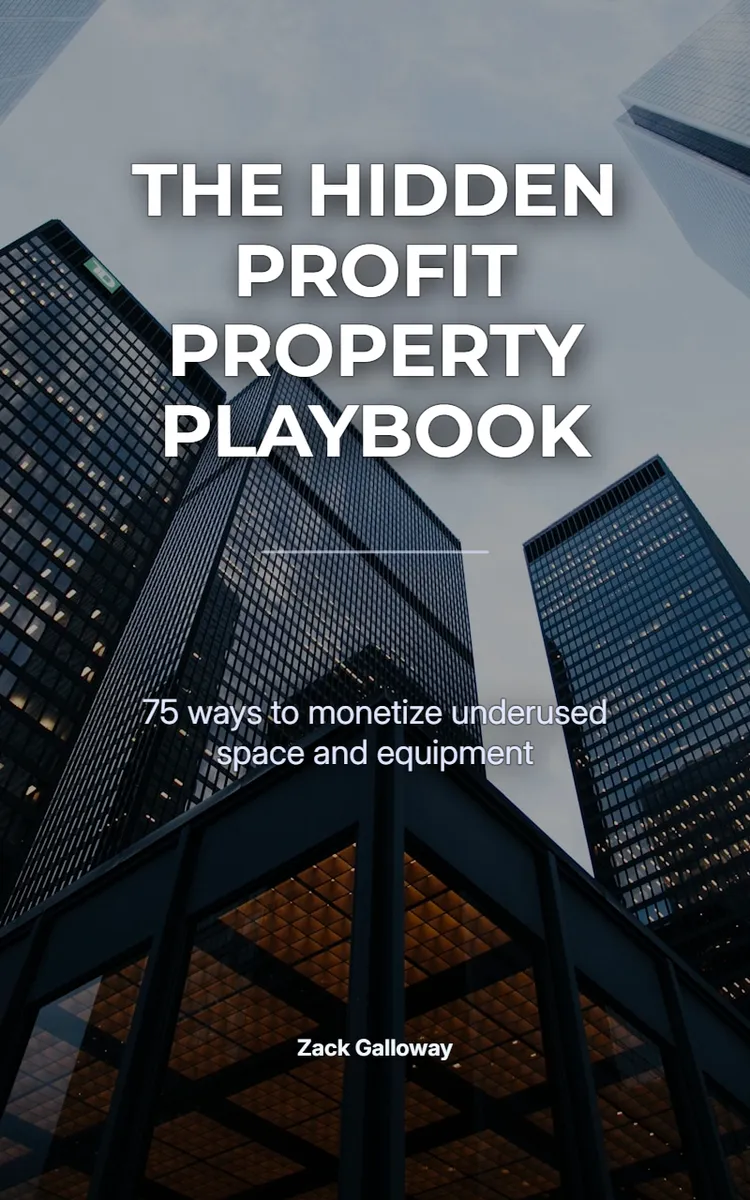
"The Hidden Profit Property Playbook" is a business book by Zack Galloway with 25 chapters and approximately 79,511 words. Monetizing garages, sheds, lots, and equipment via rentals and services.
This book was created using Inkfluence AI, an AI-powered book generation platform that helps authors write, design, and publish complete books. It was made with the AI Business Book Writer.
Frequently Asked Questions
What is "The Hidden Profit Property Playbook" about?
Monetizing garages, sheds, lots, and equipment via rentals and services
How many chapters are in "The Hidden Profit Property Playbook"?
The book contains 25 chapters and approximately 79,511 words. Topics covered include Your Property Is Either Producing, The $100-Square-Foot Question, The Hidden Profit Property Audit, Ownership Rights and Lease Limits, and more.
Who wrote "The Hidden Profit Property Playbook"?
This book was written by Zack Galloway and created using Inkfluence AI, an AI book generation platform that helps authors write, design, and publish books.
How can I create a similar business book?
You can create your own business book using Inkfluence AI. Describe your idea, choose your style, and the AI writes the full book for you. It's free to start.
Write your own business book with AI
Describe your idea and Inkfluence writes the whole thing. Free to start.
Start writingCreated with Inkfluence AI


