
Read the first chapter
The whole of chapter one, free. About 15 min. Turn the pages with the arrows, your keyboard, or a swipe.
Chapter 1
The One-Man Town Announcement
Elma Hart had barely hung her “Just Married” apron - her old one, the one she’d used for years and years - before the whole town started talking about the other kind of marriage. The kind where somebody finally got free. The kind where a person could be picked, and not just endured.
“Only one eligible man left,” the grocer’s wife had said to Elma like she was announcing the weather. “Marlow’s got him. Main Street’s got him. You’ll see him at Marlow’s Diner, same as everybody else.”
Eligible. The word landed in Elma’s chest like a dropped pan - metallic, loud, embarrassing. She told herself she didn’t care. She told herself she wasn’t the kind of woman who chased. Then she caught herself in the window glass outside her own porch, hair pinned too tight, lips pressed into a line that meant she’d been practicing dignity all morning.
She walked into Marlow’s Diner with a napkin tucked in her sleeve like she might need it for wiping sweat or wiping away a mistake.
The place was already humming. Not the friendly hum of coffee and buttered toast - this was a buzz with teeth. The air smelled like bacon grease and dish soap, and the heat from the griddle made the windows fog at the edges. Main Street outside could have been a postcard, but inside Marlow’s it felt like the whole town had gathered to watch a parade they didn’t want to miss.
A man sat in the far booth, one elbow on the table like he’d been born there. He wasn’t dressed up, not like some folks who tried to buy attention with a fresh shirt. He wore a plain jacket, sleeves rolled just enough to show he liked his hands free. Elma couldn’t see his face clearly from the doorway, but she could see what people did around him - how they angled their bodies, how they leaned in when they thought they weren’t being obvious.
He had that kind of calm that made other people nervous.
Elma took two steps in and immediately felt her plan slip. The diner’s narrow aisles were crowded with women who laughed too loudly and men who pretended not to listen. Someone’s perfume - powdery and sweet - mixed with the coffee smell until Elma’s throat tightened. She moved between tables like she was navigating a storm, shoulders squared, chin up, pretending she wasn’t measuring every glance.
“Morning, Elma!” a voice called. Mrs. O’Dell from the church committee, her earrings swinging like little bells. “You look… lively.”
Elma managed a smile. “I’m always lively.”
Mrs. O’Dell’s grin widened, and Elma saw the question under it. Not about her apron. About the man.
Elma kept walking, the napkin in her sleeve getting damp. She reached the counter, where Marlow himself was wiping down a glass with a towel that never seemed to get clean no matter how many times he tried.
“Coffee?” Marlow asked, like he could see her thoughts. His eyebrows shot up toward the booth. “You came for the buzz.”
“I came for breakfast,” Elma said, because that was the safest lie she had.
Marlow clicked his tongue, amused. “Breakfast’s the excuse. You’re not the first.”
The bell above the diner door jingled behind her as if it were part of the crowd’s excitement. Elma’s stomach tightened with something meaner than nerves - something like hunger. Not for food. For proof. For a look at the man everyone was suddenly pretending they hadn’t been watching.
She turned toward the booth and finally caught his face properly.
His eyes met hers, and for half a second Elma forgot how to breathe. They weren’t bright with invitation. They weren’t cold, either. They just - rested there, as if her presence was a fact he’d already filed away.
Then he looked past her, toward the counter, and the moment she’d built in her head started to crumble.
A woman at the next table - short, sharp hair, lipstick the color of cherries - stood up too fast and said, “Well, if it isn’t Elma Hart.”
Elma’s pulse jumped. She knew that woman. Everyone did. Lila Granger, who used to work the hardware store and had opinions about everything, including what birds should eat.
Lila’s gaze flicked to Elma’s napkin sleeve, then back to her face. “You’re here early. Planning to swoop in before the rest of us wake up?”
“It’s breakfast,” Elma said again, because she was stubborn and because her mouth hadn’t gotten the memo that she was supposed to be graceful.
Lila laughed, loud enough to get attention. “Breakfast. Sure. That’s what we’re calling it.”
Elma could feel the diner’s eyes turn toward her like sunflowers turning. The griddle hissed. A spoon clinked. Somewhere a plate thumped and someone said “Oh, honey” like they were already entertained.
Elma had one immediate desire - simple, almost childish. Get close enough to look him in the eye and not look away. Get close enough to be remembered.
So she made herself move.
She threaded her way toward his booth, squeezing past a chair that scraped the floor, and her heart did an embarrassing little stumble when the man - Mason? Marlow had called him something, hadn’t he? - tilted his head as she approached.
Up close, he smelled like aftershave and something clean, like the laundry soap his shirt had soaked in. His hands were steady. His expression, annoyingly, wasn’t searching for approval.
“You’re Elma Hart,” he said.
It wasn’t a question. It was a statement delivered like he’d heard it through the walls.
Elma swallowed. “I am.”
His mouth twitched, not quite a smile. “I’m trying to eat.”
The words were so casual, so disinterested, Elma almost laughed. Almost. Instead she heard herself say, “You’re trying to eat. That’s wise.”
Behind her, someone made a sound - half sigh, half chuckle. Elma felt herself being evaluated by the room the way a coat is evaluated by a rack.
The man glanced at the table, then back at her. “What do you want, Elma?”
There it was. The directness. The lack of romance in it. It might have been rude if it didn’t feel… honest. Like he didn’t have the patience to play games.
Elma lifted her chin. “I wanted a clear look. Since the town’s talking like you’re the last man on earth.”
A few women nearby murmured - soft laughter, sharp gossip. Elma could almost hear the gears turning in their heads about how she’d phrased it, how she’d sounded like she was trying.
The man leaned back slightly, the booth creaking under him. “Town talks. That’s what it does.”
Elma’s fingers tightened on the napkin until she felt the paper fibers bite. “And you don’t?”
His eyes narrowed a fraction. “I don’t care what they talk about.”
That should’ve cooled her off. It should’ve made her turn around and go back to her own life, back to her tidy porch and her carefully controlled loneliness.
Instead, it made her want to be the one thing he cared about.
“I’m serious,” Elma said, and the word “serious” sounded too heavy in her own ears. “I’m not just here to… watch.”
“Okay,” he said, like she’d told him the weather report. “Then sit.”
The command came with no heat. No invitation. Just permission.
Elma slid into the booth opposite him, careful with her movements, because the room was watching and because her pride was fragile. The vinyl seat was warm from other bodies, and it stuck to her skirt a little when she shifted.
Marlow appeared with a pot of coffee and two cups like he’d been waiting for the moment. He poured without asking. “Sugar?”
Elma nodded at the cup. “Yes, please.”
She didn’t look away from the man. She wanted him to see her attention, not just her presence.
“What’s your name?” she asked, even though she’d probably heard it a dozen times this morning.
His gaze flicked to her face, then to the coffee. “Cal.”
Just Cal. Like it was simple. Like it didn’t belong to a town of women whose hearts had apparently been set on boil.
Elma exhaled slowly. “Cal.”
He watched her as if he were waiting for her to do something - something that would confirm whether she was a nuisance or a person.
Elma leaned forward, elbows near the table edge. “Cal, I’m not asking for a miracle. I’m asking - ”
A chair scraped somewhere to her right. A woman stood up, pushing herself into the space beside the booth like she had every right to it. Her perfume hit Elma first: warm vanilla and something floral that made Elma’s eyes sting.
“Cal,” the woman said brightly, like she’d rehearsed it. “I knew you’d be here.”
Elma’s stomach turned. She recognized her too. Nora Finch.
Of course Nora was here.
Nora’s smile was polished, her lipstick perfect. But Elma saw the quick blink, the way Nora’s fingers tightened on her purse strap. The cheerfulness had a crack in it, like a cup that looked whole until you tapped it.
Nora’s eyes slid to Elma’s face, and for a moment the diner’s noise fell away. Elma could hear only the coffee drip and the faint hiss of the griddle.
Nora said, sweetly, “Elma. I didn’t know you were coming out.”
Elma’s hands went cold. Coming out. As if she were some kind of hobby.
“I didn’t know you needed to know,” Elma shot back before she could stop herself.
Cal cleared his throat once, a small sound. He looked between them, then back at his coffee. “Do you two always do this in public?”
Nora laughed lightly, like she didn’t hear the edge. “Only when it’s necessary.”
Elma felt heat rise up her neck. “It’s not necessary,” she said, and surprised herself with how much she meant it. “It’s just… crowded in here.”
The lie tasted sour. The truth was obvious: it was necessary to be noticed because Cal didn’t look like a man who asked for attention. He didn’t look like he’d chase. He’d let the world chase him until it got bored.
And Elma couldn’t stand that. Couldn’t stand the idea of wanting something and being treated like noise.
Marlow set Nora’s coffee down a touch too hard. The cup clinked. “Ladies,” he said, voice calm and amused. “Don’t make Cal late for his breakfast.”
Cal finally lifted his eyes to Marlow. “I’m not late.”
Marlow’s grin widened. “You will be. People are making a show of it.”
Nora’s gaze darted toward the crowd, then back to Cal. “Let them watch,” she said. “It’s not like Cal can hide.”
Elma’s laugh came out too sharp. “Hiding is for people who want to be found later.”
Nora tilted her head. “Or for people who have been hurt.”
There it was - an undercurrent. Elma felt it before she understood it, like a draft under a door. Nora’s words weren’t just flirting. They were aimed. They were memory wrapped in a bow.
Elma’s mouth went dry. She hadn’t told Nora anything today. She hadn’t even sat down until Cal told her to.
“How would you know about hurt?” Elma asked, softer than she intended.
Nora’s smile faltered. Only for a second. Then she recovered it with practiced ease - the kind of ease you learn when you’ve had to swallow things for years.
“Because I’ve had to,” Nora said. “And you have too.”
Elma felt her chest tighten. Those words should’ve been a weapon. Instead they landed like a hand on her shoulder. Familiar. Unwanted.
She had to remember her own humiliating start - how she’d walked into her divorce attorney’s office two years too late, how she’d nodded along while people discussed her life like it was a problem they could solve with paperwork. How she’d smiled at neighbors who asked questions she didn’t want to answer.
She had to remember the way her late husband’s friends used to say she was “a good woman,” as if good meant quiet and compliant and never demanding.
Elma looked at Cal again. He wasn’t smiling. He was watching. Not with romance. With attention. With the kind of focus that made Elma’s skin feel too tight.
Cal’s voice lowered just a little. “You two are both… looking for something.”
Elma opened her mouth, then closed it. Looking for something. Yes. But what? A man? A second chance? A story that didn’t end with her alone at sixty and then, somehow, alone at seventy?
Nora’s fingers were white around her purse strap. Her eyes shone with something she tried to hide.
Elma knew that look. Not because she’d seen Nora cry in public. Because Elma had cried in bathrooms and kitchens, wiping her face with the back of her hand like it was a stain she could erase.
Nora leaned forward, finally letting her voice lose its brightness. “Cal, I’m not here to compete like a teenager,” she said. “I’m here because I can’t keep living like the life I chose was the only life available.”
Elma’s throat tightened. She turned her head slightly, giving Nora a side-eye that said, Don’t you dare make me feel like you understand me.
Nora continued, quieter now, almost to herself. “I married someone I didn’t really love.”
The diner’s noise rushed back in all at once - forks clinking, laughter bubbling up, somebody’s radio crackling faintly near the kitchen. But Elma heard only Nora’s confession. The words weren’t dramatic. They were plain.
And they hit Elma like a bell.
Because Elma knew exactly what Nora meant. Elma knew the sweetheart Nora had lost. Elma knew how Nora had once been the kind of woman who could love hard and then, when life turned ugly, had been forced to settle.
Elma’s own history sat in her bones like a bruise. The sweetheart she’d lost had been Nora’s - once. Before Nora married someone she didn’t really love. Before Elma married the man she’d promised herself she could build a life with.
Elma’s hands trembled around her napkin. She didn’t want to be reminded. She didn’t want Cal to look at her and see a woman with a past that overlapped in somebody else’s mouth.
Cal’s eyes shifted, taking Nora in, then Elma. “So you both have a story,” he said.
Elma’s voice came out smaller than she wanted. “I do.”
Nora glanced at Elma, almost challenging. Almost kind. “What’s yours?”
Elma swallowed. The room was too warm. The coffee smelled too strong. The vinyl seat stuck to her skirt again when she shifted.
She could’ve lied. She could’ve turned it into banter, into harmless flirting. But the confession Nora had offered made Elma feel exposed in a way that was… dangerous.
Elma forced herself to speak anyway. “I married the sweetheart you wanted,” she said, and watched Nora’s face go still.
A silence settled over the booth like a dropped sheet. Not the kind of silence that ends a conversation. The kind that makes every sound afterwards feel too loud.
Cal stared at Elma, then at Nora. The crowd around them seemed to lean in without realizing it.
Nora’s lips parted, and Elma thought she might say something sharp. Something cruel. Something that would make the whole diner laugh at them.
Instead Nora let out a breath, slow and shaky. “You did,” she whispered, as if confirming a nightmare she’d been trying to wake from for years.
Elma’s eyes burned. She didn’t blink. “And I thought I could be enough.”
Cal’s voice cut through, gentle in a way that made Elma angry because gentleness wasn’t supposed to exist here. “That’s what you want from me?” he asked. “To fix what you thought you’d be.”
Elma’s heart lurched. “No,” she said, too fast. “I want - ”
She wanted him to care. She wanted him to look at her like she was a possibility, not a complication. She wanted to be chosen without having to beg for it.
But Cal had already shifted in his seat, pulling back a fraction, like her honesty had pushed him away instead of pulling him in.
He reached for his coffee cup, took a sip, and finally - finally - met Elma’s eyes. “Elma,” he said, voice casual again, the way it had been at the start. “You’re a nice woman. But I’m not looking for a reunion.”
The words landed like a slap wrapped in velvet.
Elma felt the hum of the diner return, louder now, as if the room had been waiting for this rejection. Nora’s face tightened, not with triumph but with something hurt and cautious. Like she couldn’t decide whether to be relieved or furious.
Elma sat back, the booth suddenly too tight around her. Her napkin was crumpled in her fist, damp at the edges.
“I didn’t ask you to look for a reunion,” Elma said, forcing steadiness into her voice. “I asked for a clear look. A chance.”
Cal set his cup down. The clink was sharp in the quiet that followed. “A chance for what?”
Elma opened her mouth, then realized she didn’t have the answer that would satisfy him. She didn’t know how to explain wanting without sounding desperate. She didn’t know how to be serious without making it look like a performance.
So she did the only brave thing she could do.
She looked right at him and said, “A chance to see me as I am now.”
Cal’s gaze drifted past her shoulder, toward the crowd, toward the next table, toward the next woman waiting to be noticed. His expression didn’t soften.
He gave her a small, disinterested nod, like courtesy was the only tool he had. “Good luck,” he said.
It wasn’t cruel. That was the problem.
It was casual. It was final enough to sting, and polite enough to make it hard to argue.
Elma’s cheeks burned. She stood too quickly, chair scraping again, and the diner’s attention snapped onto her like a spotlight.
She gathered herself with a breath that tasted like coffee and humiliation. Nora watched her from the booth, eyes unreadable - sympathy, anger, something that looked like recognition of the same fear in two different bodies.
Elma turned toward the door, the bell jingling behind her like it was laughing.
On Main Street, the air was cooler, and the sunlight made her feel exposed in a way the diner hadn’t. The crowd noise faded behind her, but the ache didn’t.
She’d gotten what she wanted - one clear look, one conversation, one undeniable moment of being heard.
And he’d brushed her off with a remark so light it felt heavier than rejection.
As she walked back toward her car, Elma realized the cost of stepping into Marlow’s wasn’t just that she’d been dismissed.
It was that she’d brought the truth into the open - between her and Nora, and between her and the man who didn’t care.
The question now wasn’t whether Cal noticed her.
It was whether Cal would notice what she’d revealed - before someone else turned it into a game and before Elma’s pride ran out of room to hide in.
End of chapter one. 7 more chapters in the full book.
Swipe or use the arrows to turn the page
What's inside: 8 chapters
- 1. The One-Man Town Announcement
- 2. Choosing Love Over Old Promises
- 3. The Wedding Tie That Still Binds
- 4. Following the Rumor Trail to Truth
- 5. The Fundraiser Mix-Up That Starts War
- 6. When Pride Breaks the Heart
- 7. The Apology That Wins the Choice
- 8. Love at Seventy, Chosen
About this book
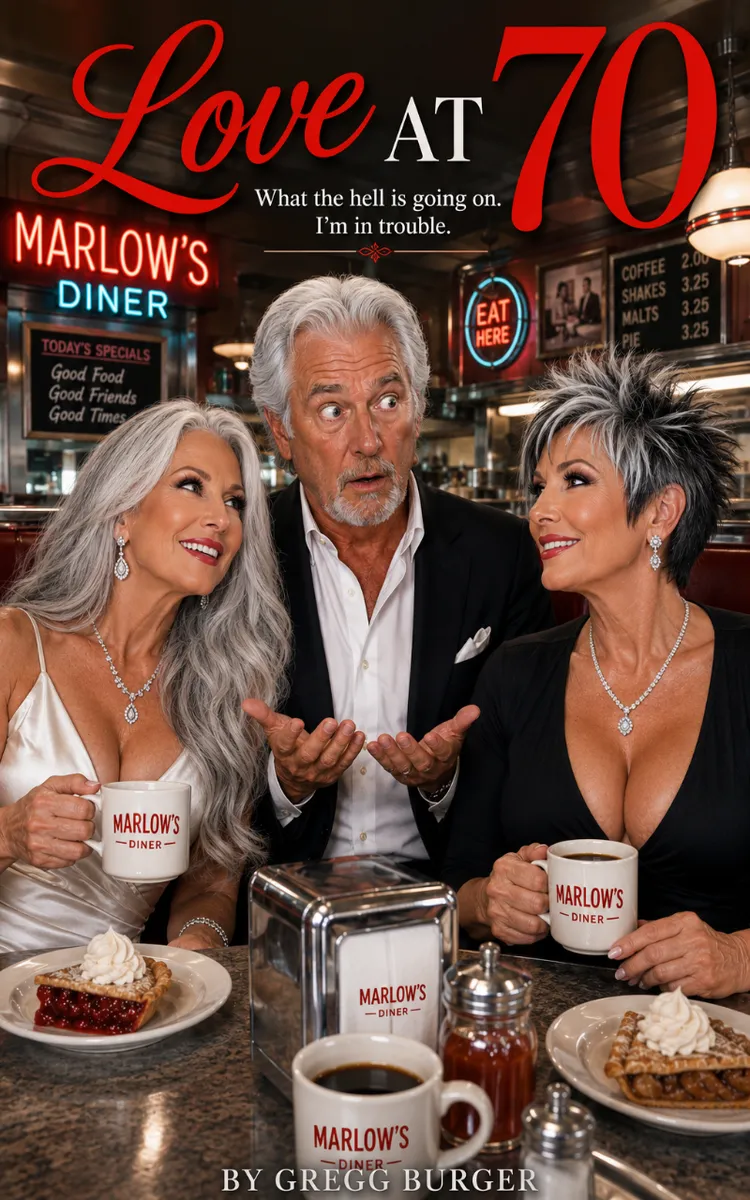
"Love At Seventy" is a romance book by Anonymous with 8 chapters and approximately 22,794 words. Two 70-year-old women compete for one man’s love..
This book was created using Inkfluence AI, an AI-powered book generation platform that helps authors write, design, and publish complete books. It was made with the AI Romance Novel Writer.
Frequently Asked Questions
What is "Love At Seventy" about?
Two 70-year-old women compete for one man’s love.
How many chapters are in "Love At Seventy"?
The book contains 8 chapters and approximately 22,794 words. Topics covered include The One-Man Town Announcement, Choosing Love Over Old Promises, The Wedding Tie That Still Binds, Following the Rumor Trail to Truth, and more.
Who wrote "Love At Seventy"?
This book was written by Anonymous and created using Inkfluence AI, an AI book generation platform that helps authors write, design, and publish books.
How can I create a similar romance book?
You can create your own romance book using Inkfluence AI. Describe your idea, choose your style, and the AI writes the full book for you. It's free to start.
Write your own romance book with AI
Describe your idea and Inkfluence writes the whole thing. Free to start.
Start writingCreated with Inkfluence AI


