
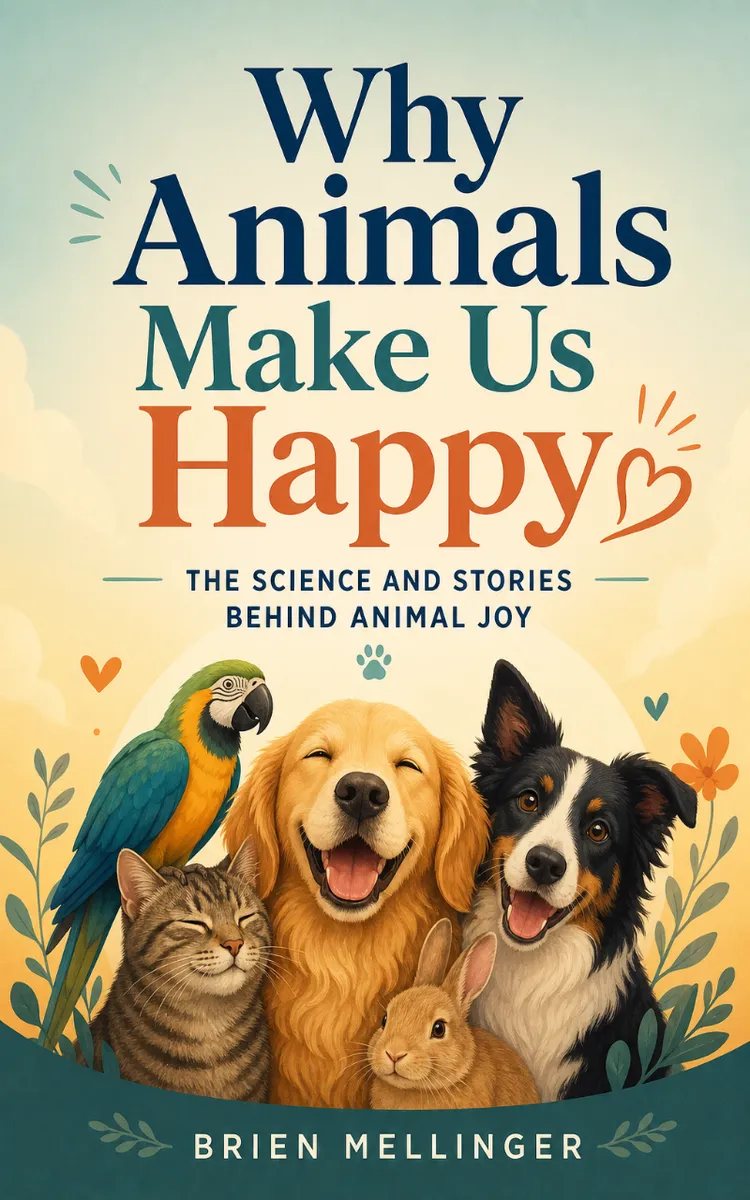
Why Animals Make Us Happy
Created with Inkfluence AI
How animals affect human happiness and wellbeing
Table of Contents
- 1. The Instant Mood Switch
- 2. Oxytocin: The Bonding Chemical
- 3. Stress Downshift Through Movement
- 4. Why Touch Feels Like Home
- 5. The Judgment-Off Conversation
- 6. Empathy Training Without Trying
- 7. The Loneliness Buffer Effect
- 8. Meaning, Not Just Comfort
Preview: The Instant Mood Switch
A short excerpt from “The Instant Mood Switch”. The full book contains 8 chapters and 14,658 words.
The Three-Second Comfort Loop: How Animals Flip Your Mood FastA dog can interrupt a bad day in the time it takes to find your keys. A cat can settle a room with a slow blink, even when your mind is still sprinting ahead. It sounds too quick to be real - until you notice how often it happens, and how consistent the pattern feels.
This chapter looks at a particular kind of mood shift: the instant, almost automatic lift that can arrive within minutes of an animal being present. We’ll follow the thread from everyday observations to older cultural habits - petting, keeping animals close, treating them as companions rather than decoration - then ground it in what researchers know about attention, comfort, and calming cues. The goal isn’t to claim animals are a cure-all. It’s to understand why they can act like a switch, turning down the volume of stress at the exact moment you’re already overwhelmed.
The mystery at the heart of this chapter is simple: how can something as small as a warm body, a familiar sound, or a steady gaze change what your brain feels - so fast?
Attention, Comfort, and the Small Signals That Cut Through NoiseLena learned to read time the way other people read weather. Having to work long shifts stretch and thin out, and the mind starts doing that thing it does when it’s tired: reaching for any distraction that feels safe. Lena doesn’t talk about “self-care” in the tidy, motivational way you might see online. She talks about survival - about moments that make the next hour possible.
Near the end of a string of night shifts, when the waiting room was quiet but her body still carried the leftover adrenaline, Lena would go home and do the same brief ritual: sit on the couch with her hands resting where her cat liked to land. The cat didn’t ask for conversation. It simply chose a spot, pressed its weight into her lap, and began its slow, deliberate grooming sounds. Lena says she noticed something odd at first: the mood change didn’t seem to come from thinking about the day. It came from the cat’s presence itself - its steady rhythm, its closeness, the way her attention got gently pulled away from the mental replay.
That’s the heart of the Three-Second Comfort Loop - not a gadget, not a hack, but a pattern in how your attention gets guided. In those first seconds, the animal offers cues that are both sensory and social: warmth from fur, a familiar scent, a soft texture under your hand, a sound that doesn’t demand anything. Your brain treats those signals as “safe enough” information. The mind stops scanning for threat and starts anchoring to comfort.
It helps to remember that mood isn’t just an emotional feeling; it’s a state of the nervous system. When stress is high, your attention tends to narrow and your body stays ready for impact. Animals - especially ones that are calm and predictable - offer an alternative flow of information. The signals are simple, repetitive, and easy to process. That matters. When you’re exhausted, your brain doesn’t want complexity. It wants something it can interpret quickly.
Historically, humans have leaned on that interpretability. For thousands of years, people kept animals close for practical reasons - hunting, herding, guarding, pest control. Over time, many cultures added another layer: companionship. In ancient Egypt, cats were associated with domestic life and protection; in parts of Europe, dogs became entwined with household routines. None of that was “therapy” in the modern sense, but it created something important: an everyday environment where animals were present during ordinary emotional moments, not only during special occasions. If you live with an animal long enough, you don’t just get used to it - you build a relationship with its patterns. Those patterns become a kind of emotional language.
The animal cues that seem to matter most in day-to-day life are rarely dramatic. They’re small: the steady weight of a cat settling, the slow blink that reads as a “no threat” signal in many animals, the soft pacing of a dog that keeps moving without rushing. Even the way an animal breathes can be rhythmic enough to give your own breathing an indirect target.
One reason this works so quickly may be that attention is sticky. When something new or uncertain pulls at you, your mind keeps returning to it. But when something familiar and calming appears, your attention can lock onto it - like a camera finding focus. Animals are excellent at offering that kind of focus because they’re alive in a way objects aren’t. They move, they respond, they change their posture. Even when they’re doing nothing, they are still “there,” and that presence can be enough to steer your mental state.
Why Familiar Warmth and Predictable Presence Quiet the Nervous SystemThe comfort part of the story has an obvious sensory side. Fur is warm. Contact is grounding....
About this book
"Why Animals Make Us Happy" is a curiosity book by Brien Mellinger with 8 chapters and approximately 14,658 words. How animals affect human happiness and wellbeing.
This book was created using Inkfluence AI, an AI-powered book generation platform that helps authors write, design, and publish complete books.
Frequently Asked Questions
What is "Why Animals Make Us Happy" about?
How animals affect human happiness and wellbeing
How many chapters are in "Why Animals Make Us Happy"?
The book contains 8 chapters and approximately 14,658 words. Topics covered include The Instant Mood Switch, Oxytocin: The Bonding Chemical, Stress Downshift Through Movement, Why Touch Feels Like Home, and more.
Who wrote "Why Animals Make Us Happy"?
This book was written by Brien Mellinger and created using Inkfluence AI, an AI book generation platform that helps authors write, design, and publish books.
Write your own curiosity book with AI
Describe your idea and Inkfluence writes the whole thing. Free to start.
Start writingCreated with Inkfluence AI


