
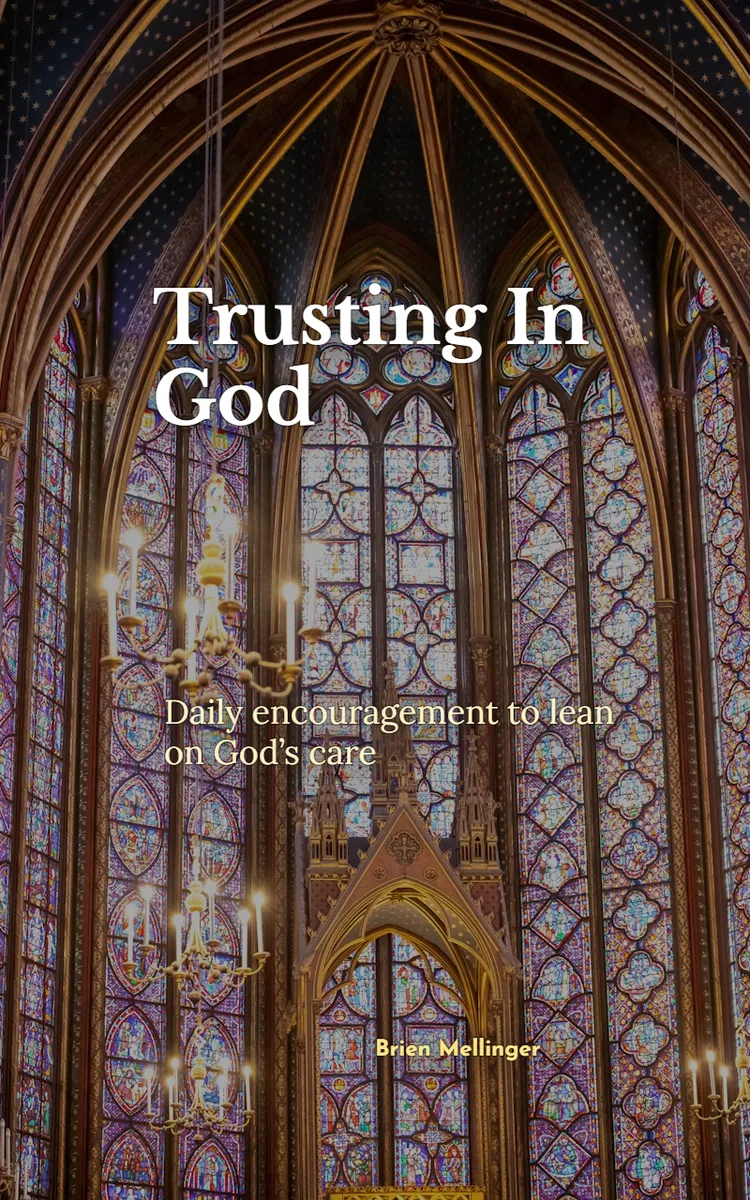
Trusting In God
Created with Inkfluence AI
Faith-based guidance on trusting God
Table of Contents
- 1. Choosing Trust Over Control
- 2. Prayer That Reaches Beyond Fear
- 3. God’s Word as Your Anchor
- 4. Hope in the Waiting
- 5. Surrendering What You Can’t Fix
- 6. Trusting God in Conflict and Change
- 7. Living a Life of Ongoing Trust
Preview: Choosing Trust Over Control
A short excerpt from “Choosing Trust Over Control”. The full book contains 7 chapters and 6,352 words.
Scripture Focus
Proverbs 3:5-6
> Trust in the Lord with all your heart, and do not lean on your own understanding.
> In all your ways acknowledge him, and he will make straight your paths.
When you’re tempted to grab the steering wheel, God invites you to lean on His character instead of your control plan.
That “steering wheel” feeling shows up in all kinds of places. Maybe it’s when you’re waiting on a call you can’t speed up. Or when you’re balancing the books and the numbers don’t behave. Or when you’re praying about a direction - and then, five minutes later, you start trying to force an outcome with your own ideas. Proverbs doesn’t say you have to stop thinking. It says you don’t have to stop trusting.
Reflection
Control feels safer than faith because control promises predictability. You can see it. You can measure it. You can tighten it like a loose screw. Faith, on the other hand, can feel like letting go - especially when your life has deadlines, bills, and responsibilities that don’t pause just because you want to “trust God.” But the Bible keeps pointing us to a different kind of safety: not the safety of outcomes you can control, but the faithfulness of God you can depend on.
So what’s the real issue? It’s not that you want things to go well. It’s that you start treating your understanding like it’s the final authority. You begin to believe, even quietly, “If I don’t manage this, it won’t work.” Sometimes that shows up as over-planning. Sometimes it shows up as constant checking - emails, messages, bank balances, health symptoms, social media updates. Other times it looks like trying to carry everyone else’s emotions on your shoulders. You keep moving, keep fixing, keep tightening the grip… and you wonder why your heart feels restless.
Here’s the key takeaway phrase to hold onto: Trust isn’t passive - it’s choosing God’s character over your control plan. Leaning doesn’t mean you stop doing what’s wise. It means you stop making your efforts the foundation. You acknowledge God “in all your ways,” which includes the practical stuff: scheduling, budgeting, training, parenting, leading, and even the hard conversations you’re tempted to avoid. God doesn’t ask you to pretend you don’t have responsibilities. He asks you to stop pretending you’re the one responsible for the outcome.
Think about a moment from this week. When did you try to manage life instead of trusting God? Maybe it was when you drafted the “perfect” message before praying, then re-read it ten times like the tone might determine the result. Or maybe it was when you kept re-playing a conversation in your head, trying to find the version where you said the right thing and got the right response. Control often dresses up as preparation, but it’s still control. Faith looks like bringing your request to God, then taking the next step with a clean conscience - even if you don’t get instant clarity.
And Proverbs 3 doesn’t give you a vague spiritual feeling. It gives a path. “Acknowledge him” is an action. It’s not just a mood. It’s a practice of turning your attention back to God when you’d rather turn it toward your own understanding. That’s why this journey starts with recognition. You can’t lean on God if you don’t notice when you’re leaning on yourself.
Practice for Today
1. Do a “control check” with a simple pause (2 minutes).
Set a timer for 2 minutes and ask: Where am I trying to manage instead of trusting? Write one sentence: “Right now, I’m controlling my _ because I’m afraid of _.”
Then add one sentence of faith: “God, You know _, so I will acknowledge You by _ today.”
(Keep it practical. Use one real task, like “submit the invoice,” “make the call,” or “send the message after I pray.”)
2. Journal with a faith question (5 minutes).
Use this prompt: “What would it look like to trust God’s character in the middle of my current situation?”
Guidance: If your situation is financial, write what God’s character looks like for you - steady, generous, faithful. If it’s relational, write what trust looks like - honest, patient, calm.
Example sentence to get you started: “If God is faithful, then I can take the next step without needing to control the response.”
3. Try a timed “acknowledge prayer” (10 minutes) and end with one obedient step.
Set a 10-minute timer. In the first 3 minutes, name what you’re trying to control (no edits). In the next 4 minutes, thank God for one aspect of His character - wisdom, faithfulness, steadiness, guidance. In the last 3 minutes, write one next step you can do today that doesn’t depend on the outcome.
Service challenge option (if you don’t have a lot of mental space): choose one small act of support for someone else - drop off a meal, pay for someone’s coffee, or send an encouraging text - then pray for them for 30 seconds before you hit send. Control gets quieter when love gets louder.
...
About this book
"Trusting In God" is a religious devotional book by Brien Mellinger with 7 chapters and approximately 6,352 words. Faith-based guidance on trusting God.
This book was created using Inkfluence AI, an AI-powered book generation platform that helps authors write, design, and publish complete books.
Frequently Asked Questions
What is "Trusting In God" about?
Faith-based guidance on trusting God
How many chapters are in "Trusting In God"?
The book contains 7 chapters and approximately 6,352 words. Topics covered include Choosing Trust Over Control, Prayer That Reaches Beyond Fear, God’s Word as Your Anchor, Hope in the Waiting, and more.
Who wrote "Trusting In God"?
This book was written by Brien Mellinger and created using Inkfluence AI, an AI book generation platform that helps authors write, design, and publish books.
Write your own religious devotional book with AI
Describe your idea and Inkfluence writes the whole thing. Free to start.
Start writingCreated with Inkfluence AI


