
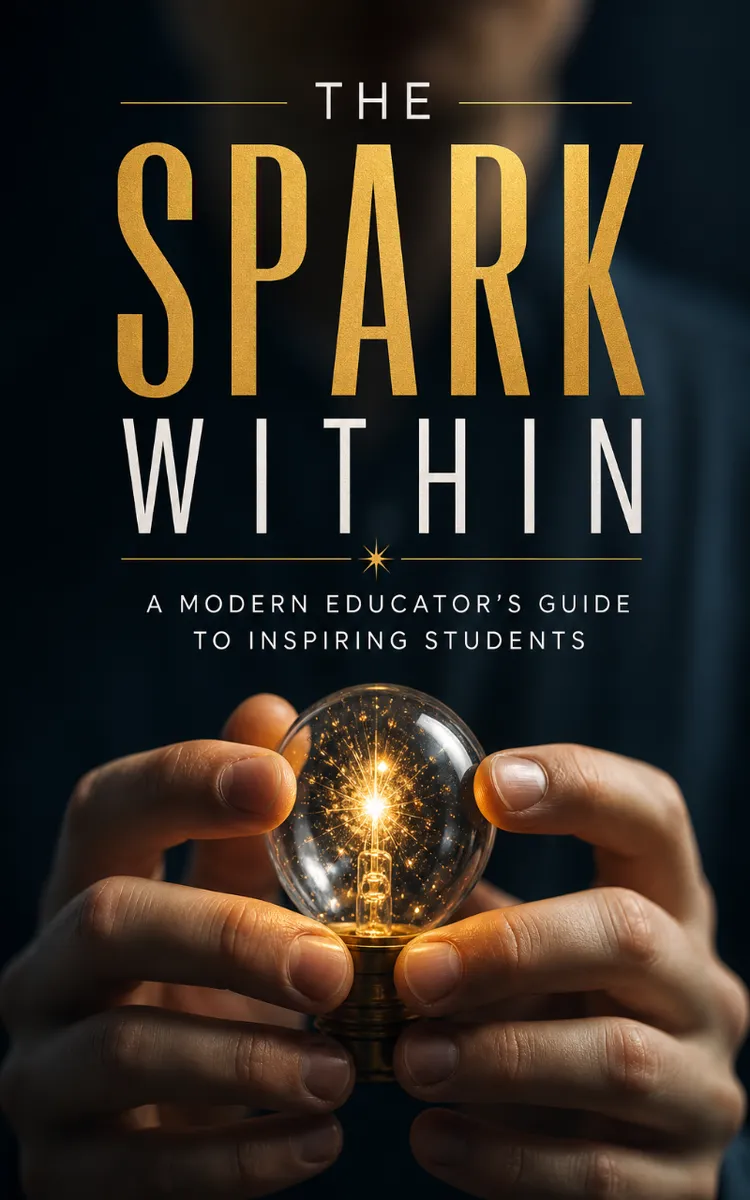
The Spark Within
Created with Inkfluence AI
Psychology-backed strategies to motivate and support students
Table of Contents
- 1. Introduction: The Changing Landscape of Student Motivation
- 2. Building a Culture of Belonging
- 3. The Power of High Expectations
- 4. Authentic Connection
- 5. Gamification and Engagement
- 6. Feedback that Empowers
- 7. Mentorship vs. Instruction
- 8. Overcoming Apathy
- 9. Empowering Student Voice
- 10. Sustaining Your Own Spark
Preview: Introduction: The Changing Landscape of Student Motivation
A short excerpt from “Introduction: The Changing Landscape of Student Motivation”. The full book contains 10 chapters and 17,571 words.
Student motivation today rarely comes from one big external prize anymore. Students move through constant feedback loops - grades, notifications, likes, and quick opinions - so the “work for the reward” approach often backfires. When rewards shrink, students often shrink with them. Your goal becomes clearer: you help students build an internal reason to keep going, even when the first push of excitement fades.
That shift doesn’t mean you throw out structure or deadlines. It means you redesign the reason behind effort. Extrinsic tools still have a place, but you use them like scaffolding: brief, targeted, and connected to something students can feel inside - competence, choice, and meaning. If you can answer one practical question for every learning task - “What will the student want to do, and why will it matter to them?” - you already have the engine for intrinsic drive.
Spot the Hidden Cost of Extrinsic-Only Motivation
Ask yourself what happens in your room when you stop offering the next reward. Do students keep trying when the “point system” pauses, when you stop praising, or when the novelty wears off? Often, you’ll notice two patterns: students work only to avoid losing something, and they treat learning as a performance instead of a process. The workaround is not “less structure.” The workaround is aligning the task with internal payoff while you still manage behavior and pace.
Takeaway prompt: Where do you currently rely on rewards to get effort, instead of using rewards to point toward a deeper goal?
Use a Three-Part Lens: Competence, Choice, Meaning
Intrinsic drive grows when students can tell themselves three things. First, “I can get better at this” (competence). Second, “I have a say in how I work” (choice). Third, “This connects to something that matters” (meaning). You don’t need a fancy program; you need to design for these signals every day.
Try this quick check before you teach a lesson: What proof will students collect that they improved? What small decision can they make - order, approach, product, or pacing? What real-world purpose can you name clearly, not vaguely? When you can answer those, you stop guessing and start steering.
Takeaway prompt: For your next task, write one sentence each for competence evidence, choice, and meaning.
Build “Earned” Motivation with Temporary External Supports
External supports work best when students experience them as a bridge to internal goals, not as the finish line. Use rewards for short-term momentum while you simultaneously teach the student what success looks like and how they can reproduce it. For example, you can tie points to specific behaviors tied to growth - trying a new strategy, revising after feedback, or using a checklist - then fade the reward as the skill becomes routine.
This keeps the room moving while you strengthen the student’s own self-direction. Your job shifts from “pay them to work” to “show them how work leads to mastery.”
Takeaway prompt: Which rewards in your course train a habit you want students to keep after the reward disappears?
Redesign Tasks So Effort Produces Visible Progress
Students lose heart when improvement stays invisible. Make progress easy to spot by breaking learning into clear targets and letting students see results quickly. You can do this through short cycles of practice, manageable checkpoints, and feedback that points to the next move. When students can track “I’m learning,” they stop waiting for someone to push them.
A practical way to start: plan one moment in every class where students produce something they can improve immediately - then follow it with specific next-step feedback. That simple loop turns effort into evidence, and evidence turns into confidence.
Takeaway prompt: Where will students see improvement today - within the lesson, not weeks later?
Transition to the Next Chapter: Connection as the Spark’s Fuel
Intrinsic drive doesn’t grow in a vacuum. Students need to feel safe enough to try, and they need to believe mistakes won’t erase their place in the group. As you shift from extrinsic-only pressure to internal momentum, your next step is building the kind of classroom climate where students can learn from failure without losing dignity.
When you teach motivation this way, you don’t just raise performance - you protect the student’s spark so it keeps burning when the incentives end.
About this book
"The Spark Within" is a how-to guide book by J.M. Albarado with 10 chapters and approximately 17,571 words. Psychology-backed strategies to motivate and support students.
This book was created using Inkfluence AI, an AI-powered book generation platform that helps authors write, design, and publish complete books. It was made with the AI Ebook Generator.
Frequently Asked Questions
What is "The Spark Within" about?
Psychology-backed strategies to motivate and support students
How many chapters are in "The Spark Within"?
The book contains 10 chapters and approximately 17,571 words. Topics covered include Introduction: The Changing Landscape of Student Motivation, Building a Culture of Belonging, The Power of High Expectations, Authentic Connection, and more.
Who wrote "The Spark Within"?
This book was written by J.M. Albarado and created using Inkfluence AI, an AI book generation platform that helps authors write, design, and publish books.
How can I create a similar how-to guide book?
You can create your own how-to guide book using Inkfluence AI. Describe your idea, choose your style, and the AI writes the full book for you. It's free to start.
Write your own how-to guide book with AI
Describe your idea and Inkfluence writes the whole thing. Free to start.
Start writingCreated with Inkfluence AI


