
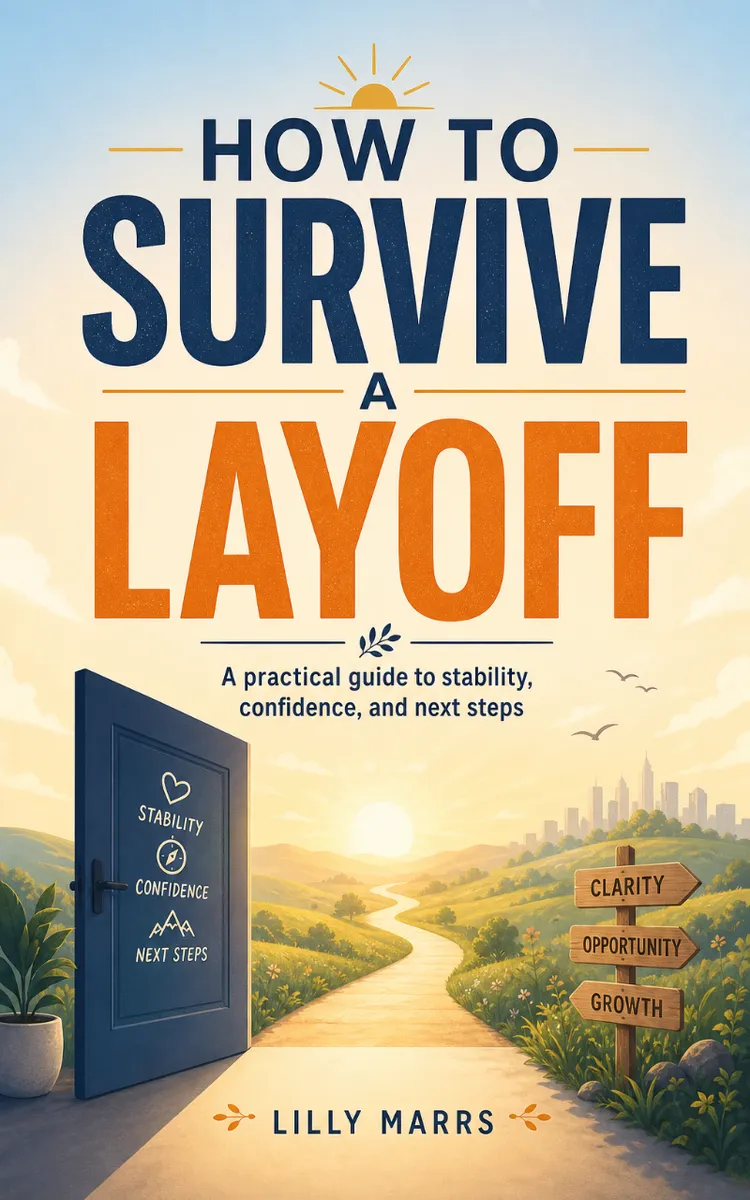
How To Survive A Layoff
Created with Inkfluence AI
Coping with job loss and rebuilding after a layoff
Table of Contents
- 1. Rebuilding Identity After Layoff
- 2. Defusing the Layoff Story You Tell
- 3. Turning Fear Into a Weekly Plan
- 4. Budgeting for Breathing Room Fast
- 5. Crafting a Confidence-Boosting Resume
- 6. Networking Without Feeling Fake
- 7. Managing Rejection With the Bounce Back Loop
- 8. Designing Purpose Beyond the Job
Preview: Rebuilding Identity After Layoff
A short excerpt from “Rebuilding Identity After Layoff”. The full book contains 8 chapters and 12,635 words.
When Your Job Title Disappears
Tanya was 34 when her company eliminated her customer success team. The meeting lasted eleven minutes. By lunch, her laptop access was gone, her calendar was empty, and the title she’d used to explain herself for years no longer fit.
That evening, someone asked, “What do you do?” Tanya opened her mouth and felt the answer catch. Customer success manager had been more than a job. It had shaped her routine, her confidence, her friendships, and the way she introduced herself. Without it, she wondered whether she was still the same capable person - or just someone waiting for her old life to return.
A layoff removes income and structure. It can also make your identity feel like it has been packed into a box and carried away.
If your job is gone, what remains that still proves who you are?
The Shift From Job Identity to Whole-Person Identity
Old Belief: My job is the strongest proof of my value.
New Reality: My job was one place where my value showed up, not the source of it.
This shift matters because a job title is easy to measure. You can point to a promotion, a salary, a team, or a list of responsibilities. Your deeper value is less visible. It lives in how you solve problems, keep promises, learn quickly, calm tense situations, and help other people do good work.
When the job disappears, the skills and qualities behind it don’t disappear with it. Tanya didn’t lose her ability to listen to frustrated customers, organize messy information, or build trust after a mistake. She lost the setting where those abilities had been given a title.
That distinction changes how you search for work. If Tanya says, “I’m only a customer success manager,” she may overlook roles in account management, onboarding, training, operations, or client support. If she says, “I’m someone who helps people solve problems and stay engaged,” she can see more options without pretending the layoff didn’t hurt.
Your identity also needs flexibility because careers change. A stable identity isn’t a rigid label. It’s a dependable understanding of your strengths, values, relationships, and choices. The job can change. Those foundations can travel with you.
Try this today: write your former job title at the top of a page. Under it, list five things you regularly did that required judgment or skill. Then rewrite each one without the title. “Managed customer accounts” becomes “built trust, spotted risks early, and guided people through complicated decisions.” That version is closer to the person you are.
The Identity Reset Ladder
The Identity Reset Ladder helps you rebuild from the outside label toward the parts of yourself that remain useful and true. The steps are Title, Skills, Values, Roles, and Choices.
Your Title is what the company called you. Your Skills are what you could do because of your experience. Your Values are what mattered to you while doing it. Your Roles are the ways you contribute beyond paid work. Your Choices are the actions you can take now, even while the future is uncertain.
The ladder matters because a layoff often traps your attention on the lowest step: the missing title. Moving upward gives your mind more accurate evidence. You’re not trying to talk yourself into feeling positive. You’re collecting a fuller description.
Signs this pattern is running your life:
1. You introduce yourself by apologizing for being unemployed or quickly explain why the layoff wasn’t your fault.
2. You reject possible jobs because they don’t match your old title, even when the work uses your strongest skills.
3. A difficult interview feels like proof that you’re no longer capable, rather than one disappointing conversation.
4. You avoid activities where you can contribute because they don’t seem “important enough” without a paycheck.
For Tanya, the ladder might look like this:
- Title: Customer success manager
- Skills: Listening, account planning, conflict resolution, training, follow-through
- Values: Reliability, clarity, usefulness, respect
- Roles: Mentor, friend, sister, volunteer coordinator, problem-solver
- Choices: Apply for adjacent roles, ask for introductions, practice her story, protect her sleep, and choose work that fits her values
Your title describes where you worked; your identity describes how you show up wherever you are.
The common mistake is jumping straight from “I lost my job” to “I need a new job.” Of course, employment matters. Bills are real. But if your identity remains tied to one title, you may accept the first role that restores status, even if it repeats the conditions that exhausted you. The ladder creates a pause between loss and reaction. That pause gives you room to choose.
Questions That Separate Worth From Work
1....
About this book
"How To Survive A Layoff" is a self-help book by Lilly Marrs with 8 chapters and approximately 12,635 words. Coping with job loss and rebuilding after a layoff.
This book was created using Inkfluence AI, an AI-powered book generation platform that helps authors write, design, and publish complete books. It was made with the AI Self-Help Book Writer.
Frequently Asked Questions
What is "How To Survive A Layoff" about?
Coping with job loss and rebuilding after a layoff
How many chapters are in "How To Survive A Layoff"?
The book contains 8 chapters and approximately 12,635 words. Topics covered include Rebuilding Identity After Layoff, Defusing the Layoff Story You Tell, Turning Fear Into a Weekly Plan, Budgeting for Breathing Room Fast, and more.
Who wrote "How To Survive A Layoff"?
This book was written by Lilly Marrs and created using Inkfluence AI, an AI book generation platform that helps authors write, design, and publish books.
How can I create a similar self-help book?
You can create your own self-help book using Inkfluence AI. Describe your idea, choose your style, and the AI writes the full book for you. It's free to start.
Write your own self-help book with AI
Describe your idea and Inkfluence writes the whole thing. Free to start.
Start writingCreated with Inkfluence AI


