
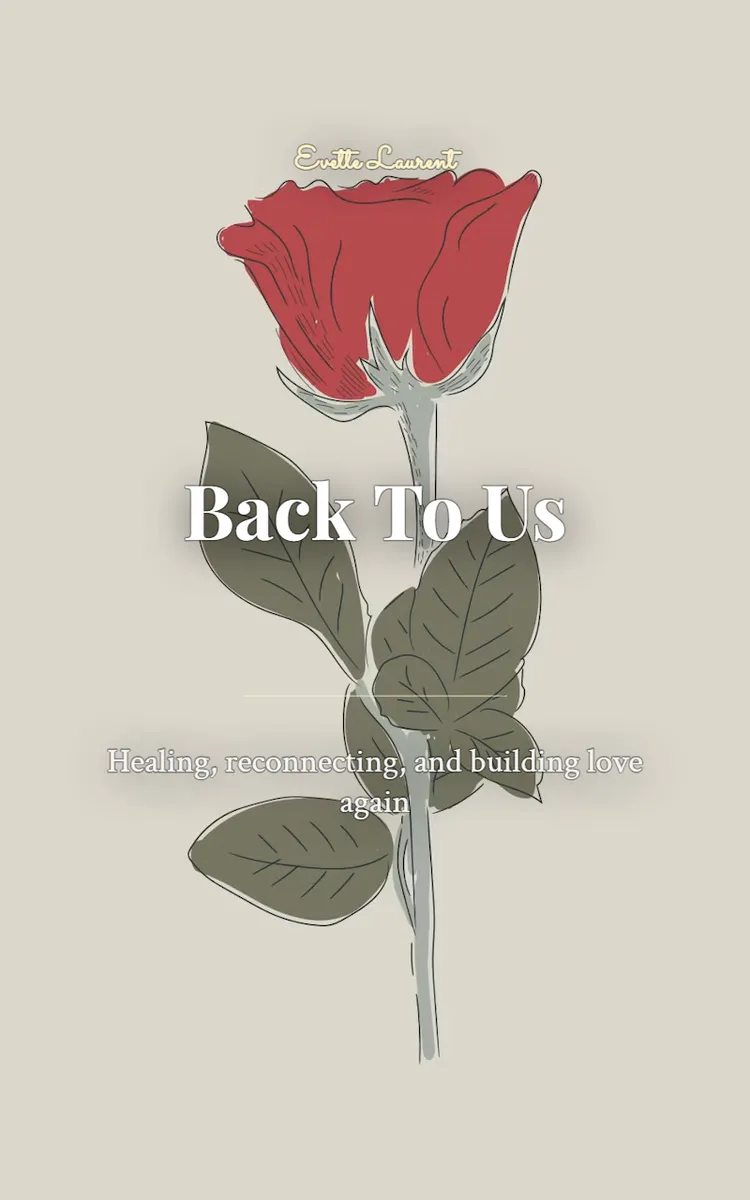
Back To Us
Created with Inkfluence AI
Couples workbook for healing conflict, trust, and emotional intimacy
Table of Contents
- 1. What Happened to “Us”?
- 2. Understanding Your Conflict Cycle
- 3. Learning to Fight Without Hurting Each Other
- 4. The Wounds We Bring Into Relationships
- 5. Healing Trust
- 6. Learning to Feel Safe With Each Other Again
- 7. How to Communicate What You Actually Need
- 8. Finding Your Way Back to Affection
- 9. Igniting the Spark Again
- 10. Rebuilding Emotional Intimacy
- 11. Forgiveness, Resentment, and Letting Go
- 12. Becoming Partners Instead of Opponents
- 13. When the Relationship Needs More Than a Book
- 14. The Reconnection Plan
- 15. Conclusion - Choosing Each Other on Purpose
Preview: What Happened to “Us”?
A short excerpt from “What Happened to “Us”?”. The full book contains 15 chapters and 25,040 words.
What Happened to “Us”?You can be sitting beside the person you love and still feel completely alone. The television is on, the dishes are done, and tomorrow’s schedule is already packed - but something between you feels quiet in the worst way.
Maybe you used to tell each other everything. Now conversations are mostly logistics: Who’s picking up dinner? Did you pay that bill? What time will you be home? Even affection can start to feel like a reminder of what’s missing.
When couples ask, “What happened to us?” they’re often looking for one clear answer. A single betrayal. A single argument. A moment when love disappeared.
Usually, it’s less dramatic and more painful than that. “Us” can fade through thousands of small moments: the question that went unanswered, the apology that never came, the evening when one of you reached out, and the other was too tired, distracted, or hurt to reach back. None of those moments seemed big enough to fix right then. Together, they changed the atmosphere of the relationship.
That doesn’t mean your relationship is doomed. It means you need to stop treating the distance as a mystery and start looking at how it was built.
How “Us” Gets Replaced by Survival ModeMost couples don’t decide to become roommates. Life backs them into it.
Work gets demanding. Money gets tight. Children need something every five minutes. Family problems show up at the door. Health concerns, housework, errands, and endless notifications keep pulling your attention away from the person beside you.
At first, you tell yourselves it’s temporary. You’ll reconnect after this busy season. After the move. After the new job settles down. After the kids sleep better.
But temporary habits have a sneaky way of becoming the relationship’s normal setting.
You stop asking about each other’s inner world because there’s so much practical business to handle. You stop making plans because planning feels like one more task. You stop bringing up hurt because you don’t want another argument. Then the silence creates more hurt, and the hurt makes silence feel safer.
This is one of the hardest truths to face: distance often grows while both people are trying to protect themselves. One partner withdraws to avoid criticism. The other pushes for attention because they feel abandoned. One stays busy so they don’t have to feel unwanted. The other complains because they’re desperate to matter again.
Neither person may be thinking, I want to damage this relationship. They’re thinking, I don’t know how to get through to you anymore.
That difference matters. It doesn’t excuse cruelty, dishonesty, or neglect. But it helps you look beneath the latest argument. The problem may not be that you stopped caring. The problem may be that your ways of reaching for care have become tangled with fear, disappointment, and resentment.
Try this today: choose a calm moment and each finish this sentence out loud:
“Lately, I’ve missed the part of us where we…”
Don’t use the sentence to accuse. “You never…” will shut the door quickly. Speak about what you miss: laughing in the kitchen, making decisions together, touching without expecting sex, feeling like the first person the other wanted to tell.
Then let the other person answer without correcting the details. You’re not trying to settle whose memory is more accurate. You’re finding the shape of the relationship you both lost.
The Difference Between Losing Love and Losing ContactSometimes couples say, “We don’t love each other anymore,” when what they really mean is, “I can’t feel your love from where I’m standing.”
Love can still be present while connection is buried under disappointment. You may care deeply about your partner and still avoid their calls. You may worry about them all day and then snap when they walk through the door. You may want closeness but feel too angry to risk being vulnerable.
That contradiction doesn’t make you fake. It makes you human - and stuck.
Love is an emotion, but “us” is also a pattern. It’s built through attention, shared meaning, small acts of consideration, and the sense that your life is not just running beside your partner’s life. When those patterns disappear, love has fewer places to land.
This is why grand gestures often fail when a relationship is worn down. A weekend away can be lovely, but it can’t carry the whole weight of months or years of disconnection. A gift can say, “I thought of you,” but it may not answer the deeper question: “Can I count on you to notice me consistently?”
The repair usually begins smaller than either person expects. You look up when your partner enters the room. You ask a real question and stay for the answer. You share something before it becomes a crisis. You make room for ten undistracted minutes, even when the house is messy.
These actions matter because attention tells the nervous system, You still matter here. Not perfectly. Not every minute. But reliably enough to feel.
Ask yourself privately:
...
About this book
"Back To Us" is a self-help book by Evette Laurent with 15 chapters and approximately 25,040 words. Couples workbook for healing conflict, trust, and emotional intimacy.
This book was created using Inkfluence AI, an AI-powered book generation platform that helps authors write, design, and publish complete books. It was made with the AI Self-Help Book Writer.
Frequently Asked Questions
What is "Back To Us" about?
Couples workbook for healing conflict, trust, and emotional intimacy
How many chapters are in "Back To Us"?
The book contains 15 chapters and approximately 25,040 words. Topics covered include What Happened to “Us”?, Understanding Your Conflict Cycle, Learning to Fight Without Hurting Each Other, The Wounds We Bring Into Relationships, and more.
Who wrote "Back To Us"?
This book was written by Evette Laurent and created using Inkfluence AI, an AI book generation platform that helps authors write, design, and publish books.
How can I create a similar self-help book?
You can create your own self-help book using Inkfluence AI. Describe your idea, choose your style, and the AI writes the full book for you. It's free to start.
Write your own self-help book with AI
Describe your idea and Inkfluence writes the whole thing. Free to start.
Start writingCreated with Inkfluence AI


