
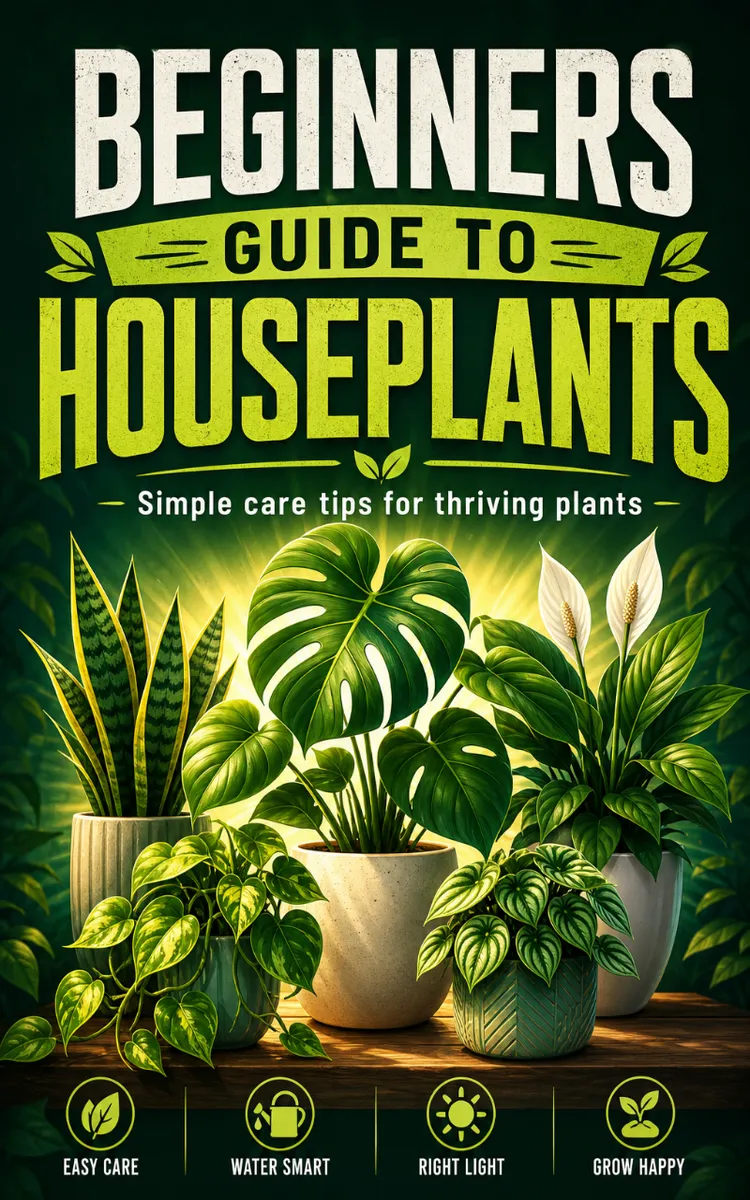
Beginners Guide To Houseplants
Created with Inkfluence AI
Basic instructions for choosing and caring for houseplants
Table of Contents
- 1. Choose Easy Houseplants for Beginners
- 2. Light Requirements and Placement Basics
- 3. Watering: How to Avoid Overwatering
- 4. Potting Mix, Drainage, and Repot Timing
- 5. Fertilizing on a Simple Schedule
- 6. Humidity, Temperature, and Airflow
- 7. Pruning, Cleaning, and Supporting Growth
- 8. Troubleshooting Yellow Leaves and Pests
Preview: Choose Easy Houseplants for Beginners
A short excerpt from “Choose Easy Houseplants for Beginners”. The full book contains 8 chapters and 13,815 words.
Why This Matters
Have you ever bought a cute plant, brought it home, and then watched it slowly struggle even though you “followed the instructions”? That’s usually not bad luck-it’s a mismatch. Most beginner problems happen because the plant’s needs don’t line up with your home’s light, your watering habits, and how the plant grows.
Choosing beginner-friendly houseplants gets you out of that guessing game. When you match a plant to your space, you reduce stress on the plant and reduce stress for you. You also stop treating every yellow leaf like a mystery. After this chapter, you’ll be able to pick plants that fit your light level, handle your watering style, and stay manageable as they grow-so you start with the highest chance of success.
You’ll also learn how to use a simple tool called the Home-Match Plant Scorecard to compare plants quickly. Instead of buying based on looks alone, you’ll look at three things: light level, watering tolerance, and growth habits. Then you’ll choose plants that fit Nina’s (and your) real-life apartment routine-like a bright window that still feels “too dim” or forgetting a watering day because of work.
Practical takeaway: Your goal isn’t “perfect plant care.” Your goal is picking plants that match your home right now.
---
How It Works
Plants don’t run on vibes. They run on basic conditions: light for energy, water for growth, and space for roots and leaves. When those conditions line up, the plant stays sturdy. When they don’t, the plant sends you signals-drooping, yellow leaves, crispy edges, or slow growth. The Home-Match Plant Scorecard helps you avoid those mismatches before you buy.
Use this scorecard the same way Nina does when she tours apartment listings and tries to picture where a plant will live. She checks what the space actually offers, not what she hopes it offers. Then she chooses plants that tolerate small mistakes, like watering a little late.
Here’s how the scorecard works. You’ll score each plant on three categories, then pick the ones that fit your home today.
1. Match light level (how much sun reaches the plant)
Light matters because it powers photosynthesis, the process plants use to turn light into energy. If a plant needs bright light and you put it in a darker corner, it will stretch, thin out, or drop leaves.
Concrete example: A snake plant (often sold as Sansevieria or Dracaena trifasciata) tolerates lower light than many leafy plants, so it often scores well for apartments with “not-that-bright” windows.
2. Match watering tolerance (how the plant handles your schedule)
Water tolerance tells you how badly the plant suffers if you miss a watering or water too often. Some plants prefer to dry out between waterings; others stay happier with more consistent moisture.
Concrete example: Many popular beginner plants like pothos (often sold as Epipremnum aureum) handle typical beginner watering mistakes better than finicky plants-especially when you let the soil dry slightly before watering again.
3. Match growth habits (how big it gets and how fast)
Growth habits include size at maturity, how quickly it grows, and whether it grows upright or trails. This matters because a plant that grows fast and tall can outgrow your space, while a slow-growing plant can feel “stuck” and make you overwater to “help it.”
Concrete example: A trailing plant like pothos can fit on a shelf or bookcase and doesn’t require perfect height. A plant that becomes big upright may need more open floor space.
4. Pick plants that score high across all three categories
You don’t need a perfect match, but you need a workable match. If a plant scores well on light and watering tolerance but grows too large for your apartment, you’ll still struggle.
Concrete example: If Nina’s window faces north and gets limited direct sun, she should lean toward plants known to tolerate lower light rather than plants that demand bright sun all day.
Now, here’s the simple scoring mindset: if you’re unsure about your light, choose a plant that tolerates lower light. If you know you sometimes forget watering, choose a plant that tolerates drying out. If you want “set it and forget it” for months, choose a slower, manageable grower.
Practical takeaway: When the scorecard categories line up, your care routine becomes easier and your plant stays stable.
---
Putting It Into Practice
Nina, 24, just moved into her first apartment and picked a plant because it looked great in the store. Two weeks later it started dropping leaves near the window that “seems bright.” The problem wasn’t Nina’s effort-it was the mismatch between the plant’s light needs and the apartment’s actual light, especially in the corners. She fixed it by using the Home-Match Plant Scorecard before buying again.
Use the same process at home, even if you’re staring at the plants in a shop aisle.
...
About this book
"Beginners Guide To Houseplants" is a how-to guide book by Inkfluence AI Demo with 8 chapters and approximately 13,815 words. Basic instructions for choosing and caring for houseplants.
This book was created using Inkfluence AI, an AI-powered book generation platform that helps authors write, design, and publish complete books. It was made with the AI Ebook Generator.
Frequently Asked Questions
What is "Beginners Guide To Houseplants" about?
Basic instructions for choosing and caring for houseplants
How many chapters are in "Beginners Guide To Houseplants"?
The book contains 8 chapters and approximately 13,815 words. Topics covered include Choose Easy Houseplants for Beginners, Light Requirements and Placement Basics, Watering: How to Avoid Overwatering, Potting Mix, Drainage, and Repot Timing, and more.
Who wrote "Beginners Guide To Houseplants"?
This book was written by Inkfluence AI Demo and created using Inkfluence AI, an AI book generation platform that helps authors write, design, and publish books.
How can I create a similar how-to guide book?
You can create your own how-to guide book using Inkfluence AI. Describe your idea, choose your style, and the AI writes the full book for you. It's free to start.
Write your own how-to guide book with AI
Describe your idea and Inkfluence writes the whole thing. Free to start.
Start writingCreated with Inkfluence AI


