
Read the first chapter
The whole of chapter one, free. About 14 min. Turn the pages with the arrows, your keyboard, or a swipe.
Chapter 1
Leaving Nyamirambo After the War
Dust clung to the hems of dresses and to the backs of calves as people moved along Nyamirambo road. The air tasted of sweat and old smoke, and every few minutes the sound of a distant engine would rise, then fade, as if the road itself could not promise anything. I had been waking before sunrise, listening for footsteps that did not always belong to my family. Even when the morning was quiet, my body stayed ready - shoulders tight, hands searching for something to hold. We were still in Nyamirambo after the war, and the movement toward temporary shelters had started to feel like a crowd pushing through a narrow doorway. You could step forward, but you could also get crushed.
My mother had wrapped a small bundle with cloth and twined the knot again and again, as if it could be tightened into safety. My younger brother walked close enough that his sleeve brushed mine, and I kept my gaze on his face whenever the road forced us to slow. My older brother, the one I trusted to find a way around trouble, was farther back with other relatives we had gathered with. He had said he would come quickly, that he just needed to check with someone near the roadblock. His voice had been steady, but his eyes had moved too fast, taking in everything at once. I remembered thinking that his calm meant he was hiding worry, and that I would have to notice more than he expected.
As we reached the first stretch where the road narrowed, I saw the armed roadblock before anyone told us to stop. Men stood in a loose line, rifles held across their chests, and the heat made the metal look almost wet. A few boys in worn shirts moved along the edge, trying to slip through gaps, but the men’s voices cut through the air like rocks thrown into water. “Stand aside,” one man said, and the words carried the authority of someone who had learned to be obeyed. People shuffled into a line that bent around a broken wall. The smell of fear mixed with the smell of cooking smoke from nearby shelters, and it made my stomach turn.
My mother pressed the cloth bundle against her hip. “We will pass,” she said, not as a promise, but as a decision. “Just keep together.”
I held my brother’s hand and felt the tremble in his fingers. He was small enough that a shove could move him away from us, and I had already seen how quickly separation could happen. A woman beside us adjusted her headscarf and stared at the ground, her lips moving as if counting. A man in front argued softly, then stopped when a rifle butt tapped the wall near his shoulder. The sound was sharp, a warning that did not need shouting.
When it was our turn to approach, the armed men asked questions that felt like they were meant to slow us down. Names. Ages. Where we had been sleeping. What we had brought. The details were simple, but the shortage of everything made people desperate, and desperation makes the truth blur. I watched my mother answer carefully, her voice measured. She did not exaggerate. She did not hide anything, either, because we had learned that lies could be punished more than missing items. The man closest to us glanced at my face, then at my brother’s. His eyes lingered a moment longer than politeness.
“How many?” he asked.
“Four,” my mother replied, as if counting could be a shield. “Me, her, and the two boys.”
The man’s gaze shifted to my younger brother. “Where is the other?”
My mother blinked, then looked back along the line as if she could see our missing brother from the angle of her eyes. “He went to ask about the registration,” she said. “We are waiting for him.”
A different voice snapped from the side, accusing or questioning, I could not tell. The roadblock was not only a gate; it was a place where people decided who belonged and who could be turned away. I felt the weight of my mother’s answer settle in the air. My brother’s hand tightened around mine, and I realized how much I wanted someone to say, “It is fine,” without conditions.
I leaned closer to my mother and lowered my voice. “Let me go find him,” I said, though I knew the risk.
My mother’s face tightened. “If you leave the line, you may not return.”
“I will come quickly,” I insisted. My own voice sounded too loud in my ears.
My mother’s eyes searched mine, and I saw her trying to weigh safety against the need to keep our family complete. “Do not go far,” she said at last. “If you see trouble, come back.”
The man at the roadblock called out again, and the line moved in uneven steps. We were not free to choose our pace. I slipped my hand from my younger brother’s for only a moment, then took a step sideways, turning my body so the armed men’s attention stayed on my mother. I moved along the edge where people were less organized, weaving between sacks and bodies. The road was crowded with the sound of coughing, the scrape of sandals, the clink of metal containers, and the constant murmur of names being called by mothers and sisters who could not afford to lose anyone.
I found my older brother near a pile of goods laid out by someone trying to trade. He was leaning forward, speaking to a man whose face I did not recognize. When he saw me, relief spread across his expression so quickly that I almost believed nothing bad was waiting. “Aline,” he said, and his voice held a warmth that made me forget the dust. “I will be done soon.”
“You were supposed to be with us,” I said, not accusing, but demanding certainty. “The roadblock asked where you were.”
His eyes moved over my shoulder, taking in the line and the armed men. “Registration,” he said again, as if that word could erase the problem. “They said people have to register at the camp, and they asked for information. I wanted to make sure - ”
He stopped when another shout rose from farther down the road. A group had tried to push forward, and the armed men had reacted by raising their rifles, not firing, but making the message clear. People backed away, and the trading area emptied like a bowl tipped over. My older brother grabbed my wrist, his grip firm. “Come,” he said. “We have to move before the road becomes worse.”
I followed him, and the heat grew heavier. The air seemed to hold its own weight. We reached a place where the road had been blocked by fallen boards and debris from damaged buildings. Men in uniform stood nearby, and there was a smell of sweat and oil from vehicles that were trying to move but could not. A woman ahead of us waved her hand in frustration. “There is no space,” she cried, though no one answered her.
My older brother tried to find a gap. “Stay close,” he told me, and his voice carried a seriousness that made my stomach sink. We had a plan in his mind, but plans fail when the world changes faster than you do.
As we searched for a way around, I heard my mother’s voice calling from behind, thin with distance. “Aline! Aline!” She sounded frantic, and the sound pulled at something in my chest. I turned my head and saw her near the line, her face turned sharply, scanning for me like she could force me into her sight. When she saw me with my older brother, she did not relax. Her eyes narrowed with worry, because my brother had not returned alone. My younger brother was still with her, but the space around them looked smaller than before, as if the crowd was tightening.
I tried to move toward her, but a man blocked our path. “You cannot pass here,” he said, and his voice was not kind. Another man stepped closer, and I smelled alcohol on his breath. He gestured at the side of the road where people were being redirected toward a narrower track leading toward temporary shelters. “Go that way.”
My older brother opened his mouth to argue, but I saw the moment he decided it was not worth it. He nodded and guided me toward the track. “We will rejoin them,” he said, though he spoke like someone bargaining with fate.
The track was rough and lined with weeds that scraped my ankles. The ground was uneven, and with every step my sandals caught small stones. Somewhere to the left, a thin sheet of metal clanged in the wind. The sound reminded me of a door being knocked on again and again. We passed a small shelter made from poles and fabric; someone’s pot sat on a stone, but no one was tending it. The smell of cooked food had faded, leaving only the memory of warmth.
We walked in a line of families who had been rerouted. The armed men were still present, but now they were farther apart, and their attention moved in waves. At one point, I heard my name again, not from my mother, but from someone else calling for a lost child. The road swallowed the voice, and the crowd continued. I began to understand that in a place like this, names did not travel far. Only bodies did.
When we finally reached the area near the temporary camp shelter, the confusion shifted shape. There were people everywhere, and the ground was churned into mud by footsteps. The camp had tents or temporary structures - some built with sheets, some with branches and cloth. Smoke drifted from small fires, and the air was full of the mixed smells of soapless bodies, damp fabric, and food that could not be enough for everyone.
Registration was happening in a corner where a few men sat behind a table with papers and pens that looked too few for the number of people. A line formed and stretched, and the sound of pens scratching was thin compared to the noise of crying and arguing. I could see my mother’s bundle in my mind, feel the weight of it against her hip, but I also knew we might not reach her again quickly enough.
My older brother pushed forward with me. “We will register,” he said, as if the right paperwork could hold our family together. “Then we will reunite with the others.”
A man behind the table glanced at us and asked for our names. My older brother answered first. The man wrote something down, then looked up. “Who else is with you?”
I felt a sharp fear, because I had not asked my mother’s exact position after being separated. “My mother is near,” I said carefully. “My younger brother is with her.”
The man’s face did not change. “She must come for her own registration,” he said. “Children must be registered with the person who brings them.”
My older brother’s jaw tightened. “But she is with the same group. We just came from the same roadblock.”
The man behind the table shrugged. “If she is not here, we cannot add her. Next.”
The word next sounded cruel in a place where time was already broken. I turned to look for my mother, scanning faces for the familiar shape of her headscarf and the way she held herself. I caught sight of her for a moment - her face turned toward the line, her eyes wide, her mouth pressed tight. Then the crowd shifted, and she was gone again.
I stepped forward, and my older brother’s hand found my shoulder. “Do not lose your place,” he said. “Wait - then we will find them.”
But the waiting in a crowded camp was not passive. It was a slow battle of bodies and impatience. A child cried somewhere near us, and its voice bounced off poles and cloth, making it difficult to locate. Someone bumped my arm, and I smelled sweat and dust on the person’s skin. When I tried to edge sideways, a woman snapped at me. “Move back,” she hissed, not looking at my face. The man with the table called out another family, and the line surged.
I saw my younger brother’s face in my mind like a picture I could not put down. I remembered his hand trembling in mine, and I realized that I had been so focused on keeping him close that I had not considered how quickly a camp’s rules could pull him away from us. The war had ended, but the world still demanded payment for movement.
When my older brother was finally told to step aside - papers checked, names marked - he leaned down toward me. “Come,” he said. “We will look for mother and the younger one right after this.”
I believed him because I needed to. We pushed away from the table and moved toward the open space where families were clustering. I asked a woman near a tent, “Have you seen my mother? She is - ” I began, and the woman interrupted without listening properly.
“We are all looking,” she said, and her voice was tired, not cruel. “If you want, ask at the registration again. They will tell you only what they wrote.”
I turned back toward the table, and the air seemed hotter than before. My throat felt dry, as if I had been speaking for hours. When we reached the line again, a different man sat there, and the papers looked different. I felt the ground shift under me, not because I fell, but because I understood how fragile “next” was.
My older brother tried to explain, pointing toward the direction where my mother had been. “She came earlier,” he said. “She should be on the same list.”
The man shook his head. “Not here,” he said simply, and the simplicity frightened me more than shouting would have. “Register each person. If you do not bring them, it is not written.”
Then came the moment that made my chest tighten so sharply I thought I might be sick. A loud voice called out a child’s name, and I recognized my younger brother’s name among the words. The call was followed by movement - someone gesturing, someone pulling a child’s arm. I saw my younger brother turn his head, and for a second he looked straight at me. His expression was not panic; it was confusion, as if he did not know why the path separating us had appeared so suddenly.
My older brother’s hand grabbed my wrist. “Stay with me,” he said, but his grip was too late. I heard my younger brother’s voice, small and strained, asking a question I could not catch. Then he was drawn toward a side area where people were being sorted. The crowd swallowed him.
I stood still long enough to feel the dust settle on my skin. My mother was still somewhere in that same chaos, and yet the cost had already arrived in the form of a separation I could not undo with pleading. Aline’s name had once been tied to her family by walking distance; now it was tied by memory.
Looking back, I now understand that this was the first time I truly learned the shape of danger in our new life. It was not only bullets or bombs. It was rules enforced by tired men. It was shortage that made people push. It was the way a road could become a narrow corridor and a corridor could become a wall. I had thought that if I watched my brother, if I stayed close, nothing would be taken. But the camp’s registration did not care how close my hands were to him. It only cared whether he was registered correctly and whether the person bringing him was standing in the right place at the right time.
I went to the side area where children were being sorted, but the space around it was already sealed by bodies. I tried to call my younger brother’s name, and my voice came out rough, as if I had swallowed sand. A guard turned his head and looked at me with a face that did not offer mercy. “What do you want?” he asked.
“My mother,” I said, and the words felt like a lie even though I meant them. “I want my younger brother. He was separated during registration.”
The guard looked at me as if I were another person asking for impossible things. “Find your mother,” he said. “You cannot take a child from here without a record.”
I stared at his face, searching for the crack where I might slip through with enough insistence. But the crack did not exist. The guard’s radio crackled once, a small sound that made the hair on my arms rise. I felt my older brother behind me, his breath quick, his hand hovering as if he wanted to pull me away.
“I will bargain,” I heard myself say, not loudly, but with the determination that had started to grow in me since the roadblock. I did not know yet what bargaining would cost, only that silence was not something I could afford. My brother’s eyes met mine, and in them I saw fear, but also a kind of agreement.
The camp was still a place of movement, but we had reached a temporary shelter at least for ourselves. We had not been turned away from the whole process. We had a place to sit on damp ground, a corner of shade under a pole, and the thin comfort of being inside something organized. But the shelter carried a new complication that landed heavier than hunger: my younger brother was separated during registration, and I had to start tracking him instead of simply protecting everyone by walking close.
That night, when the smoke from cooking fires thinned and the sound of people settling into sleep filled the camp, I held my older brother’s hand and listened for my younger brother’s voice. I could not hear it. The absence felt louder than any shouting. My mother sat a short distance away, her face turned toward the darkness, her eyes still scanning as if she could find our missing child by sight alone. She did not cry in front of us; she only pressed her bundle tighter, as if holding the cloth could hold our family together.
I understood then that getting to safety was not one journey with a clear end. It was a series of decisions made in crowded places, with rules that did not bend for love. We had reached shelter, yes - but the cost of reaching it was that I had to begin the search for my brother, and I had to learn how to bargain with the world that controlled the lines.
End of chapter one. 4 more chapters and about 15,005 words in the full book.
Swipe or use the arrows to turn the page
What's inside: 5 chapters
- 1. Leaving Nyamirambo After the War
- 2. Learning Trade Skills in Kigali
- 3. Following Rumors About Her Brother
- 4. Starting a Small Business With Savings
- 5. Choosing Education for Her Next Chapter
About this book
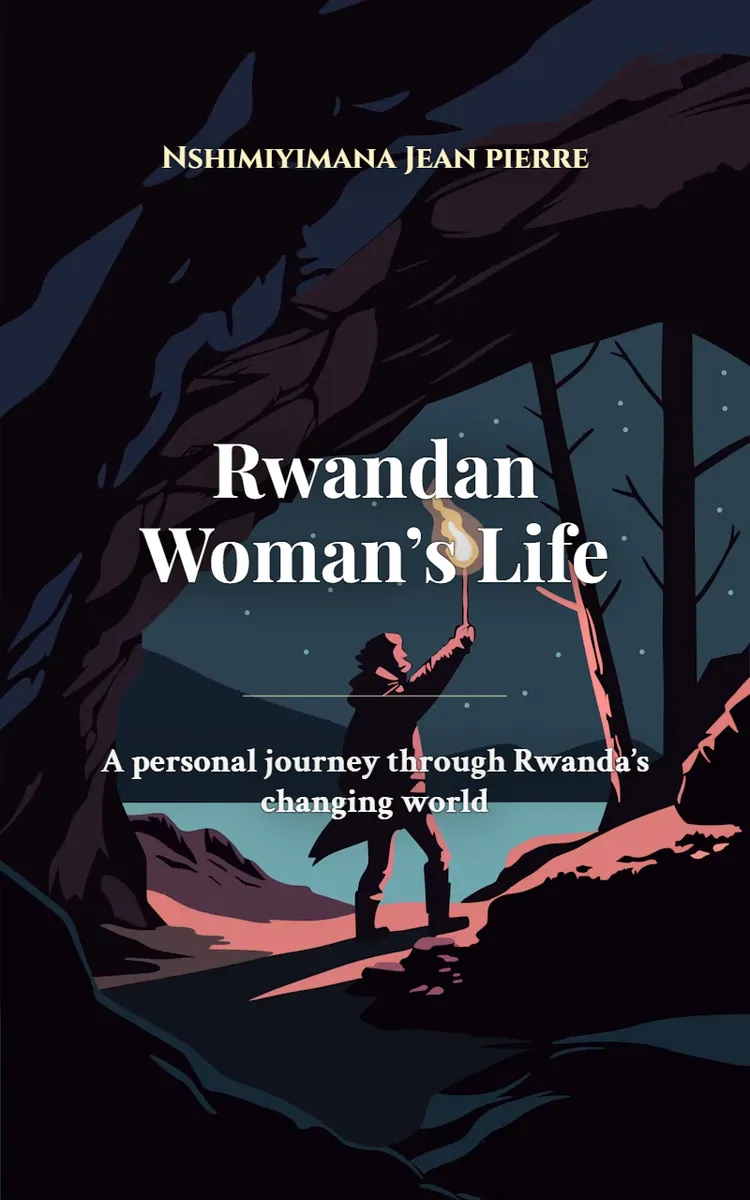
"Rwandan Woman’s Life" is a biography book by Nshimiyimana Jean pierre with 5 chapters and approximately 15,005 words. Life story of a Rwandan woman.
This book was created using Inkfluence AI, an AI-powered book generation platform that helps authors write, design, and publish complete books. It was made with the AI Biography Writer.
Frequently Asked Questions
What is "Rwandan Woman’s Life" about?
Life story of a Rwandan woman
How many chapters are in "Rwandan Woman’s Life"?
The book contains 5 chapters and approximately 15,005 words. Topics covered include Leaving Nyamirambo After the War, Learning Trade Skills in Kigali, Following Rumors About Her Brother, Starting a Small Business With Savings, and more.
Who wrote "Rwandan Woman’s Life"?
This book was written by Nshimiyimana Jean pierre and created using Inkfluence AI, an AI book generation platform that helps authors write, design, and publish books.
How can I create a similar biography book?
You can create your own biography book using Inkfluence AI. Describe your idea, choose your style, and the AI writes the full book for you. It's free to start.
Write your own biography book with AI
Describe your idea and Inkfluence writes the whole thing. Free to start.
Start writingCreated with Inkfluence AI


