
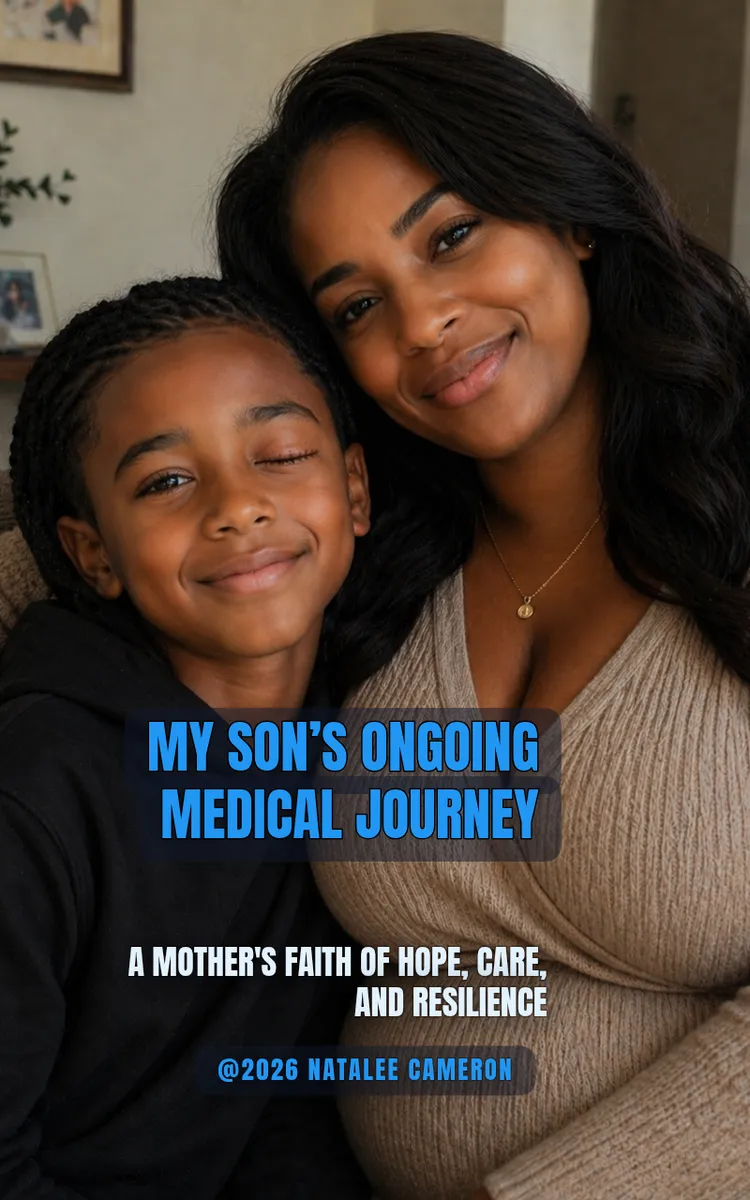
My Son’s Ongoing Medical Journey
Created with Inkfluence AI
A family memoir about a child’s ongoing medical journey
Table of Contents
- 1. The First Diagnosis and Aftermath
- 2. Hospital Routines and Care Team Navigation
- 3. Managing Symptoms Through Treatment Cycles
- 4. Advocacy at School and Home Adjustments
- 5. Hope, Setbacks, and Long-Term Planning
- 6. Chapter 6
Preview: The First Diagnosis and Aftermath
A short excerpt from “The First Diagnosis and Aftermath”. The full book contains 6 chapters and 13,383 words.
The first time we heard the word “ongoing,” it came from a voice that sounded tired, not unkind, as if the person had said it many times and still couldn’t make it easier. The room smelled faintly of hand sanitizer and warm paper, the kind hospitals use to line the tops of tables. My son was small enough to curl his legs under him in the chair, his socks sliding on the smooth vinyl. He kept tapping the side of his knee with a rhythm he must have learned when waiting felt too big. I remember the sound most-small taps, steady and impatient-over the muted hiss of the air conditioner and the distant clatter of other carts.
I was standing just to the side of the exam bed, holding a folded sweater I didn’t really need. I kept unfolding it anyway, smoothing the fabric as if I could press the outcome flat. When the doctor looked at the test results, the glow from the screen made their face half cool, half shadowed. My husband’s hand found mine without asking, and the pressure of our fingers together felt like the only solid thing in the room. We had expected an answer that would come with a neat ending, a clean line from problem to cure. Instead, the doctor’s explanation stretched outward, widening into things we couldn’t yet picture.
“We can treat it,” the doctor said, carefully, like each word had to land without injuring anyone. “But we’re not looking at a one-time fix. This is going to be ongoing.”
My son turned his head toward us at the word ongoing, as if it were a name he recognized. He asked a question in his own way-more a sound than a sentence at first-then repeated it louder when no one answered quickly enough for his patience. My husband crouched to his level, offering him his voice like a bridge. “It means we’ll keep working on it,” he said, choosing simple words. “We’ll have appointments. We’ll have doctors who help. It doesn’t mean you’re in trouble.”
My son studied his father’s face, searching for the part that would tell him whether this was scary. He didn’t look sick in that moment. He looked like a child who had been asked to accept a new rule. His hair stuck up at the crown from static and sleep. His cheeks were flushed from the waiting room air. He seemed ordinary, and that ordinary-ness made the doctor’s words feel heavier. I remember thinking that I could handle a diagnosis if it came with a map-if someone could point to where we’d go next. But the map was drawn in pencil. It kept changing. It kept being erased.
Afterward, we walked out into the hallway where the lights were too bright and the floor was too clean to match what we felt. The sound of our shoes was loud enough to make me flinch. My son pressed his palm against the wall as if testing whether it would move. When we got to the vending machine, he stared at the little glass front like it might offer a different kind of answer. We bought him a juice anyway, because we had learned that children needed something small they could hold while adults tried to absorb a sentence that would rearrange their lives.
In the parking lot, the air had that sharp early-season bite-cold that didn’t fully numb, just made everything feel awake. I opened the car door, and the smell inside was a mix of old coffee and fabric cleaner. My hands shook as I buckled him in. He watched my face the way he had watched the doctor’s earlier, waiting for my expression to tell him what kind of day this would become.
“We’re going to be okay,” I said, and I was surprised by how quickly the words left my mouth, as if my body had decided before my mind could argue. My husband got into the driver’s seat and exhaled, long and slow. “We have to be,” he answered, but his eyes stayed on the windshield. The street beyond it looked normal-cars, people, a dog pulling its owner toward a patch of grass. The normal world didn’t know what had just been said to us.
The change came in small administrative pieces, the kind that don’t feel like a turning point until you look back. Over the next days, the diagnosis became a schedule. The first phone calls were polite and careful, but each one carried the same undercurrent: now that we knew the name, we had to learn the system. A nurse left a voicemail with instructions that sounded straightforward until I tried to picture the steps while my brain kept circling the word ongoing. Another message arrived with forms that needed signatures and dates. There were questions we were asked to answer like we were experts in a thing we had just met.
When my son fell asleep that first night at home, his breathing sounded louder in the quiet. I lay awake beside him, listening for anything that might confirm our fear. The room was too warm, yet I felt cold anyway. I kept thinking about what the doctor had said-treat, but not cure-and how that meant our lives would keep bending around medicine even when the symptoms didn’t announce themselves. It wasn’t the pain I couldn’t stop imagining. It was the continuation....
About this book
"My Son’s Ongoing Medical Journey" is a biography book by @2026 Natalee Cameron with 6 chapters and approximately 13,383 words. A family memoir about a child’s ongoing medical journey.
This book was created using Inkfluence AI, an AI-powered book generation platform that helps authors write, design, and publish complete books. It was made with the AI Biography Writer.
Frequently Asked Questions
What is "My Son’s Ongoing Medical Journey" about?
A family memoir about a child’s ongoing medical journey
How many chapters are in "My Son’s Ongoing Medical Journey"?
The book contains 6 chapters and approximately 13,383 words. Topics covered include The First Diagnosis and Aftermath, Hospital Routines and Care Team Navigation, Managing Symptoms Through Treatment Cycles, Advocacy at School and Home Adjustments, and more.
Who wrote "My Son’s Ongoing Medical Journey"?
This book was written by @2026 Natalee Cameron and created using Inkfluence AI, an AI book generation platform that helps authors write, design, and publish books.
How can I create a similar biography book?
You can create your own biography book using Inkfluence AI. Describe your idea, choose your style, and the AI writes the full book for you. It's free to start.
Write your own biography book with AI
Describe your idea and Inkfluence writes the whole thing. Free to start.
Start writingCreated with Inkfluence AI


