
Read the first chapter
The whole of chapter one, free. About 11 min. Turn the pages with the arrows, your keyboard, or a swipe.
Chapter 1
The Sun Children’s First Public Footprint
The Sun Children’s First Public Footprint: What Newspapers Quietly Revealed
The earliest public traces of Germany’s Sun Children don’t look like a grand announcement at all. They read like routine paperwork - short notices, local columns, and the kind of half-checked information that usually disappears into the background. And yet, when you line those scraps up in time, they start to behave like evidence.
To trace the Sun Children’s first public footprint, I followed a simple idea: the first place the group became visible to strangers was rarely a manifesto or a headline. It was a paper trail - receipt-like, incremental - where a community had to write down that something existed, even if it couldn’t quite explain what it was. This chapter explores those beginnings through the lens of the First-Receipt Timeline, using newspapers, public notices, and eyewitness accounts to understand how attention formed.
The story gets stranger the deeper you go. The more ordinary the records seem, the more they hint at a movement that was both real and hard to categorize - especially in a country that loved paperwork almost as much as it loved order. So what, exactly, did Germany’s public documents first decide to call these “Sun Children,” and why did the language shift from one receipt to the next?
Tracing the First-Receipt Timeline Through Public Notices
Klara, 34, works the way many local archive volunteers do: patient, methodical, and quietly stubborn. She’s the sort of person who can tell you which drawer a certain kind of municipal notice usually ends up in, and she does it without making a big deal of it. In her corner of Germany, the early references to the Sun Children aren’t stored as a neat “Sun Children” folder. They’re scattered - across microfilm reels of local newspapers, bound volumes of city bulletins, and the back pages where community life was recorded with practical seriousness.
Her first find is rarely the “best” find. It’s small: a column that lists events, a notice about a public talk, a brief mention of a group meeting somewhere that outsiders could attend. The wording matters. In the early receipts, you can almost see the writer reaching for a label - something familiar enough to fit on a page, but not quite accurate enough to fully contain what was happening.
That’s where the First-Receipt Timeline becomes useful. Instead of asking, “When did the movement become important?” it asks, “When did it become legible to the public?” A movement can be active for years and still remain invisible to mainstream readers. Public footprints start when someone has to describe it in writing for a record: a newspaper editor, a clerk, a witness, a local official responding to a request. The timeline begins at the moment the group crossed from private practice into public perception.
To understand what early coverage meant, it helps to remember how German newspapers and public bulletins worked in the earlier decades of modern mass media. Local papers didn’t just report politics; they tracked community gatherings, health discussions, lectures, and public disputes. They were also selective. A story might appear because it was unusual, because it drew complaints, or because it promised to interest people who already read that paper. So when the Sun Children first surfaced in print, the record wasn’t only describing them - it was also revealing what kind of “unusual” the public was willing to acknowledge.
The early notices also carry a kind of bureaucratic fingerprint: dates, locations, and the careful phrasing of who was allowed to do what. Even when the Sun Children weren’t named directly, the context often pointed to them - references to sun exposure as a health practice, to gatherings in open air, or to a network of people who treated sunlight not as weather, but as a principle. In those first receipts, what looks like a health hobby sometimes reads like a social system trying to explain itself in public language.
Klara’s work shows another detail that matters for interpretation: she doesn’t treat each clipping as a standalone truth. She checks how the wording changes across time. The same practice described in one month as “an outdoor health exercise” might later become “a doctrinal movement,” or be framed through concerns about youth, morality, or discipline. That shift is not just editorial. It’s how a society learns to categorize something it can’t yet place.
And because these receipts are local, they contain the texture of real life. The notices mention streets, meeting rooms, lecture halls, and the kind of public spaces where people gathered before the age of online communities. When you read enough of them, the Sun Children’s first public footprint starts to look less like a single event and more like a series of crossings - each one a small barrier between private conviction and public scrutiny.
When “Sun” Meant More Than Weather: Context From the Records
One reason the Sun Children’s earliest mentions can feel slippery is that “sun” in those records rarely means only sunlight. In German public debate, the concept of sun exposure belonged to a wider landscape of health culture, body training, and outdoor living. You could find similar themes in discussions of Licht (light), Luft (air), and open-air practices that were promoted for well-being. That doesn’t automatically mean every outdoor health group was the Sun Children - but it does explain why early print references could sound familiar.
Scientific and medical language also casts a long shadow over these receipts. Even when a newspaper wasn’t “scientific” in its writing, it borrowed the tone of science to make claims feel grounded: sunlight as beneficial, fresh air as corrective, the body as something that could be trained or restored. This is where the documentary trail becomes especially important. If you only read later summaries of the movement, you might think it began as an ideological rupture. But the first visible footprints suggest something more incremental: a practice that initially traveled through health talk, then slowly acquired social meaning.
That’s also why the newspapers sometimes treat the Sun Children less like a political threat and more like a cultural oddity. In the early receipts, the public often frames them around what people could observe: gatherings outdoors, attention to children, and a belief system that seemed to organize daily life. The details may be sparse, but they’re concrete. You don’t need a grand manifesto to see how people were being organized around sunlight and routine.
Klara points to another pattern she keeps seeing in the archive: the first mentions usually come from readers who are already close to the community - people writing letters to editors, local correspondents, or official announcements. Later, when wider media picks up the story, the tone shifts. The movement becomes “a phenomenon,” then “a concern,” then - sometimes - an object for moral debate. That means the early footprint is crucial. It’s the moment when the Sun Children were still being translated for the public rather than judged by it.
A single-sentence fact from the records captures why this matters: in many early clippings, the group is described through what they do in public spaces, not through what they believe. That difference is easy to miss, but it changes the entire reading of the evidence. If the early footprint is behavioral, then the first public perception wasn’t built from theology - it was built from visibility: who gathered, where, and how openly.
This is also where the scientific grounding becomes more than background. Sunlight is not just a metaphor; it interacts with human biology in measurable ways. Ultraviolet (UV) light can contribute to vitamin D production, and light exposure affects how people experience time outdoors. Yet public debates about sunlight have always been messy, because benefits can come with risks, and because “health” can be used to justify many different social rules. The early receipts sit right in that confusion: sunlight as both a biological factor and a cultural banner.
The newspapers and notices don’t give you a lab report. But they do show how people used science-like language to make sense of the body. That’s why the Sun Children’s early footprint can feel both familiar and unsettling. It resembles common health talk, then gradually reveals itself as something that organizes families, children, and community life.
The Counterintuitive Shift: From Practice to Label
Here’s the counterintuitive finding that surprised even the careful readers I’ve spoken with: the first public footprints often avoided the strongest language about the Sun Children - then later coverage introduced labels that made the group sound more extreme than the early receipts suggested. That’s a sharp change, and it matters because it tells you something about how public memory forms.
If you start with later discussions, you might assume the movement entered public view already branded - already understood as a threat, a cult, or a radical alternative. But the early timeline - Klara’s clippings, the municipal notices, the local eyewitness mentions - often reads like a group being observed before it was fully interpreted. Only after a wider audience got involved did the story harden into categories.
Why does that change matter? Because it shifts what “evidence” means. Early receipts are not neutral, but they are closer to the moment of first contact. They show how the group was framed when people were still trying to figure it out. Later labels, by contrast, can reflect fear, politics, or the need for an easy story. Once a label sticks, it can overwrite the messy details that first made the group visible.
This reframing also changes how we treat eyewitness accounts. If someone wrote early - before the broader media narrative took over - their description may focus on what they saw: children outdoors, adults coordinating routines, the atmosphere of a gathering. Later accounts, even if sincere, can be influenced by what people already “knew” the movement to be. The Sun Children’s first footprint therefore becomes more than a starting point; it becomes a baseline. It’s the closest version of the group that the public allowed itself to see before interpretation took control.
There’s another twist. The shift from practice to label doesn’t just change how outsiders talk about the group; it changes how the group appears to itself through the eyes of others. Once the public starts using loaded words, every new event becomes a chance for the story to confirm itself. That feedback loop is visible in the timeline: early notices that sound almost curious give way to later reporting that reads like an argument.
So the mystery isn’t only what the Sun Children were doing. It’s how quickly Germany’s public language learned to judge them - and how that learning can happen even when the earliest receipts sounded far more ordinary.
Klara’s Archive Hour: A Local Receipt That Became a Trail
Klara’s most vivid clue is tied to a specific kind of document: a local notice that wasn’t written to explain anything to the wider public. It was written for the community - practical, brief, concerned with logistics. The paper mentioned an event connected to outdoor sun exposure and a gathering that families could attend. The notice carried the kind of formal structure you’d expect from a local publication: a date, a place, a short description, and a tone that treated the matter as part of normal civic life.
Then, weeks later, another record appeared - this time in a different section of the newspaper, with a different voice. The same basic activity was referenced again, but now with added caution. The wording implied that people were talking, not just attending. Some readers had concerns. Others had opinions about whether the practice was harmless or socially disruptive. The details weren’t sensational. But the shift was unmistakable: the group had moved from “something happening” to “something people were debating.”
Klara handled these clippings the way detectives handle evidence: not with drama, but with discipline. She checked whether the location matched, whether the date fit known calendars of community events, and whether the later notice borrowed phrasing from earlier ones. She also compared how different newspapers framed the same idea. One paper described a gathering in plain health terms. Another used moral vocabulary that suggested the writer was less interested in sunlight than in what sunlight was “doing” to children and families.
In her archive, the timeline becomes almost physical. The ink looks the same, but the intent doesn’t. Early receipts feel like observation. Later ones feel like interpretation. That difference is what makes the Sun Children’s first public footprint so important. It’s not just where they appeared. It’s how they were first translated into public language - and how that translation began to tilt.
The human story behind the abstract is also visible in the spaces between records. When local officials record meetings, they’re often responding to requests or complaints. When a newspaper prints a notice, it’s often because readers asked for it - or because the paper sensed interest. Klara’s trail shows that visibility wasn’t accidental. It was built by ordinary people noticing something, talking about it, then forcing it into print through letters, notices, and local reporting.
What makes this concrete for the reader is that you can picture the world these receipts came from: families moving through familiar streets, children present in public spaces, and adults organizing gatherings that looked like health practice to some and social disruption to others. The earliest footprint isn’t a hidden chapter in a book; it’s a stack of paper that caught the movement at the moment it became discussable.
What the First Receipts Say About Society’s Need to Name
By the time a movement becomes famous - or infamous - it often carries a simplified story. The Sun Children’s first public footprint resists that simplification. The early receipts suggest that people met the group through visible behavior and ordinary community life, then slowly constructed meaning around it. The process looks less like a sudden revelation and more like society doing what it always does: turning unfamiliar life into categories it can handle.
There’s something quietly revealing in how quickly language hardens. When the public first sees something new, it tends to describe actions. When it feels threatened, it tends to describe intentions. That transition - action to intention - is visible in the timeline of newspapers and notices Klara unearthed, and it tells you something about how communities defend themselves: not always with facts, but with framing.
The mystery that stays with you is not simply whether the Sun Children were “misunderstood.” It’s how easily misunderstandings become official, how a label can travel faster than evidence, and how paper - those small, “routine” public records - can steer what a society believes it has really seen. If the first receipts are the closest window we have to the truth, what do we lose when later labels become the only version that survives?
End of chapter one. 7 more chapters in the full book.
Swipe or use the arrows to turn the page


What's inside: 8 chapters
- 1. The Sun Children’s First Public Footprint
- 2. The Sunk-Into-Shadow Naming Trick
- 3. A Day Built Around Light
- 4. The Medical Labels Nobody Agrees On
- 5. Who Funded the Sun-And Why
- 6. The Schoolroom That Didn’t Look Like School
- 7. When Neighbors Became Witnesses
- 8. The Sun Children’s Legacy in Modern Memory
About this book
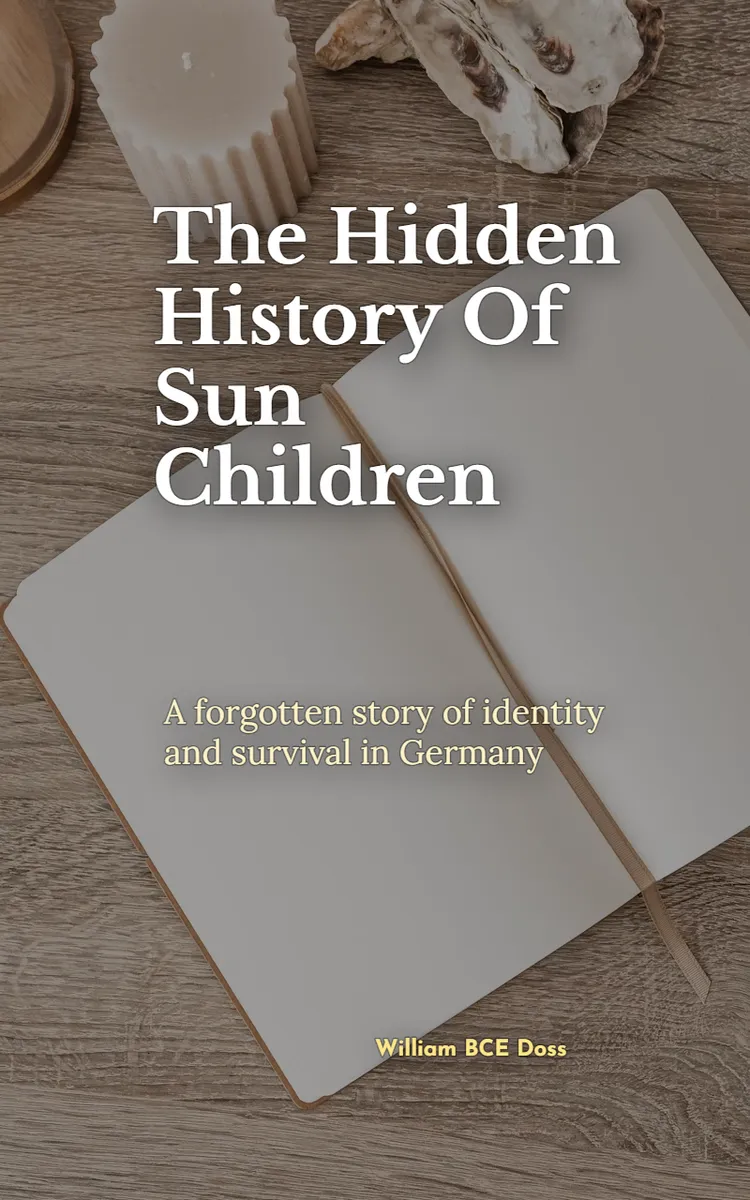
"The Hidden History Of Sun Children" is a curiosity book by William BCE Doss with 8 chapters and approximately 15,547 words. Historical account of a group called Children of the Sun in Germany.
This book was created using Inkfluence AI, an AI-powered book generation platform that helps authors write, design, and publish complete books.
Frequently Asked Questions
What is "The Hidden History Of Sun Children" about?
Historical account of a group called Children of the Sun in Germany
How many chapters are in "The Hidden History Of Sun Children"?
The book contains 8 chapters and approximately 15,547 words. Topics covered include The Sun Children’s First Public Footprint, The Sunk-Into-Shadow Naming Trick, A Day Built Around Light, The Medical Labels Nobody Agrees On, and more.
Who wrote "The Hidden History Of Sun Children"?
This book was written by William BCE Doss and created using Inkfluence AI, an AI book generation platform that helps authors write, design, and publish books.
Write your own curiosity book with AI
Describe your idea and Inkfluence writes the whole thing. Free to start.
Start writingCreated with Inkfluence AI


