
Earn more than a CPM
sponsorship pays.
30% recurring commission for 12 months on every paid signup. Host-read mid-rolls outperform CPM sponsorships when the audience matches.
Free to join · Approval within 24 hours · No exclusivity required
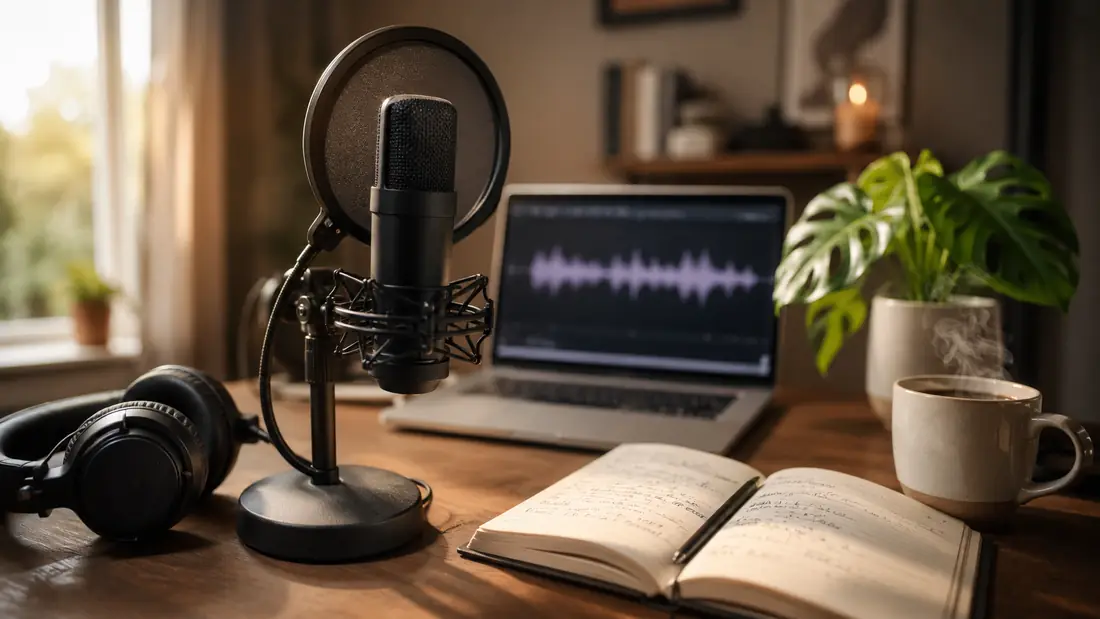
Why podcast affiliate often beats CPM sponsorship
Most podcasters get pitched CPM sponsorships at $20-$30 per thousand downloads. For a show doing 5,000 downloads per episode, that is $100-$150 per mid-roll, or about $400-$600 per month from a single sponsor running every episode. Affiliate revenue from the same audience often pays significantly more when the product matches the listener intent. Each Premium yearly signup pays $54 in commission, monthly signups generate up to $72 each over a year. A single host-read mid-roll that converts five listeners earns you $200-$360 from that one episode, with the option to keep that placement running indefinitely.
Three things make Inkfluence AI particularly suited to podcast affiliate:
- Audio-aligned use case. Inkfluence AI generates audiobooks from any manuscript. Podcasters intuitively understand the value of audio narration, and their audiences often do too.
- Free tier with no credit card. Listeners can try Inkfluence AI without paying anything first. Conversion rates from podcast mentions stay high because there is no checkout friction at the trial stage.
- Engaged audience overlap. Podcast listeners tend to be readers, writers, and content creators. The same audience that listens to a 60-minute episode about indie publishing or AI writing is the audience that converts on Inkfluence AI.
For the wider landscape, see our ranking of the 8 best AI writing affiliate programs in 2026.
What kind of podcast converts best
Audience-product fit matters more for podcast affiliate than for any other channel. A 1,000-download podcast in the perfect niche outearns a 50,000-download show with mismatched audience.
Strong fit (high conversion)
- ✓Writing, publishing, and indie-author podcasts
- ✓Self-publishing and KDP-focused shows
- ✓Audiobook production and narration podcasts
- ✓Creator-economy, side-hustle, and online business shows
- ✓Course creator and online education podcasts
- ✓Coaching, personal brand, and authority-building shows
Weaker fit (lower conversion)
- ○Pure news or current-events podcasts
- ○Sports, entertainment, or pop-culture shows
- ○Marketing-team-focused podcasts (Jasper fits better)
- ○Pure literary craft podcasts (Sudowrite fits better)
- ○Generic tech podcasts without a writing angle
If your show is in the "strong fit" column, Inkfluence AI converts well for you. If it falls in the "weaker fit" column, consider Jasper or Sudowrite instead, or run multiple programs.
6 podcast angles that convert
Specific podcast placements that drive paid signups. Each maps to a real listener moment. Mix recurring mid-rolls with dedicated episodes for compounding conversion.
Angle 1 · Format: 60-90 second host-read ad · Cadence: recurring per-episode placement
Sponsor-style mid-roll mention
A 60-90 second host-read mid-roll ad treating Inkfluence AI as your "show sponsor". Same format your audience already accepts. Mention your unique URL or affiliate code verbally and place the link in show notes.
Angle 2 · Format: 3-5 minute segment · Cadence: recurring segment
Tool-of-the-week segment
A 3-5 minute recurring segment in your normal episodes where you spotlight one tool you used that week. Inkfluence AI fits naturally when you discuss creating a lead magnet, drafting an ebook, or producing an audiobook.
Angle 3 · Format: 30-60 minute episode · Cadence: guest-driven dedicated episode
Dedicated guest episode about AI writing
Invite a guest who uses Inkfluence AI for indie publishing, lead magnets, or audiobooks. The conversation itself is the content; the affiliate mention comes naturally when the guest references the tool. Highest conversion format because the audience hears a third-party validation.
Angle 4 · Format: 30-45 minute solo episode · Cadence: topic-driven episode
Indie author and publishing-focused episode
A solo or co-host episode walking through how to self-publish on Amazon KDP or whether AI can write a novel. Affiliate link in show notes plus a verbal call-out at the natural moment.
Angle 5 · Format: Static section in every episode · Cadence: evergreen show notes
Show-notes resource section
A "tools mentioned in this episode" or "resources" section at the bottom of every show-notes page. Evergreen and compounds over time as your back-catalogue indexes and surfaces in search.
Angle 6 · Format: Email + audio combined · Cadence: cross-channel reinforcement
Newsletter and bonus-content cross-promotion
Podcasters who run a companion newsletter or Patreon can mention Inkfluence AI across both. The same audience hears the recommendation in two formats, which compounds conversion. See our newsletter affiliate page for the email-specific tactics.
Stack rule of thumb:
Host-read mid-rolls in every episode build steady baseline conversion.
One dedicated episode per quarter spikes conversion when paired with a relevant guest.
Show-notes resource link compounds quietly across your back-catalogue.
Common mistakes podcasters make
Six mistakes podcast affiliates make. Most cost real revenue but are easy to fix.
1. Using a hard-to-remember affiliate URL
Listeners cannot remember "tolt.io/affiliate-abc123". They can remember "yourpodcast.com/ai". Set up a vanity URL on your own domain that redirects to your affiliate link. The conversion difference is significant.
2. Reading a generic ad script
Listeners tune out scripted ads that sound nothing like the host. Host-read mid-rolls based on your actual use case convert 2-3x better. "I used this tool to build my newsletter lead magnet last week" beats "Today's episode is brought to you by..."
3. Skipping the FTC disclosure
Verbal disclosure ("this episode is supported by") plus a text note in show notes satisfies FTC requirements. Skipping it risks legal exposure and erodes audience trust.
4. Burying the link at the bottom of show notes
Show-notes affiliate links work better at the top of the resources section. Listeners who click through to show notes scan the first 2-3 lines, not the bottom.
5. Promoting multiple competing tools in one episode
An episode mentioning four AI writing tools dilutes the conversion on each. Pick one primary recommendation and let the others be context.
6. Stopping mid-roll after 2-3 episodes
Podcast audiences need 3-5 exposures before they convert. Episodes 1-2 with a mid-roll often see low click-through; episodes 4-6 see most of the actual conversions. Pulling the placement too early forfeits the compounding return.
Realistic earnings for a mid-sized podcast
A podcast driving 46 paid signups across the year, mixed across plan tiers and billing intervals, earns:
| Signup type | Commission per signup | Signups (year) | Total |
|---|---|---|---|
| Premium yearly customer | $54 | 12 | $648 |
| Premium monthly customer | $72 | 16 | $1,152 |
| Creator yearly customer | $27 | 6 | $162 |
| Creator monthly customer | $36 | 12 | $432 |
| Total annual earnings | 46 signups | $2,394 |
Compare this to a typical CPM podcast sponsorship: a 5,000-download show at $25 CPM earns $125 per episode, or roughly $1,500-$3,000 per year from a single sponsor running every episode. Affiliate revenue with the right audience often pays more, with the added benefit of compounding monthly commission on retained customers.
First 90 days: a podcast roadmap
Podcast affiliate revenue compounds across the back-catalogue. A focused 90-day plan stacks mid-roll mentions, dedicated episodes, and show-notes placements.
Days 1-30 · Foundation
Insert mid-rolls and update back-catalogue show notes
- • Record a 60-90 second host-read mid-roll based on your real use case
- • Add the mid-roll to your next 4-6 episodes
- • Add a "resources" section to your last 5-10 most-listened back-catalogue episodes with the affiliate link
- • Set up a vanity URL like yourpodcast.com/ai pointing to your affiliate link
Expected revenue this month: $100-$500 from back-catalogue plus initial mid-roll mentions.
Days 31-60 · Dedicate
Publish a dedicated episode and refine messaging
- • Record a dedicated episode: "I tested Inkfluence AI for a month, here is what happened"
- • Or invite a guest who uses Inkfluence AI for their indie publishing or audiobook work
- • Refine the mid-roll script based on conversion data from month 1
Expected revenue this month: $300-$1,500 from dedicated episode plus continued mid-roll baseline.
Days 61-90 · Stack
Cross-promote and amplify
- • Add the affiliate link to your newsletter, Patreon, or social profiles
- • Repurpose the dedicated episode as audiograms or short-form video clips
- • Update show-notes templates so every future episode includes the resources section by default
Expected revenue this month: $500-$2,500 as multiple touchpoints stack across your audience.
By month 6, a podcast affiliate running this playbook typically earns $1,500-$5,000 per month in recurring commission. Shows with 20,000+ downloads per episode and consistent placements can clear $8,000+ per month.
How to get started in under an hour
- 1
Apply at the partner portal
Manual review, typically within 24 hours. Approval is based on topical relevance, not download count.
- 2
Try Inkfluence AI yourself
Build a sample lead magnet or short ebook so your host-read script has authentic specifics. Listeners spot scripted ads quickly.
- 3
Set up a vanity redirect URL
Configure yourpodcast.com/ai or similar to redirect to your affiliate link. Listeners remember short branded URLs.
- 4
Get paid monthly via PayPal
Once your balance crosses the $25 minimum threshold, monthly payouts land via PayPal.
Podcast-specific best practices
Five tactics that drive higher conversion from podcast audiences than other channels.
1. Place mid-rolls at the 25-40% mark
Mid-rolls placed too early lose listeners who have not yet committed to the episode. Mid-rolls placed too late lose listeners who drop off. The 25-40% mark catches the most listeners while they are most engaged.
2. Lead with the listener's problem
"If you've been thinking about turning your podcast into a book or lead magnet, you should know about this tool I've been using" works better than "Today's sponsor is Inkfluence AI". Lead with the listener-relevant context.
3. Use show-notes templates
Every episode should auto-include a "Resources mentioned" section with your affiliate links. Templating this means you never forget, and the back-catalogue keeps generating commissions years later.
4. Repurpose into audiograms
A 30-second clip from your mid-roll, posted to Instagram, TikTok, or YouTube Shorts, drives social traffic to your show notes. Each repurposed clip becomes its own conversion funnel.
5. Cross-promote with newsletter and social
Podcast listeners often subscribe to your newsletter and social. Mentioning the same recommendation in those channels creates 3-4 exposures, which compounds conversion. See our newsletter affiliate guide for the email-specific tactics.
Frequently asked questions
How much can I earn promoting Inkfluence AI as a podcaster? ▾
Realistic earnings depend on audience size, engagement, and placement type. A small show (under 1,000 downloads per episode) doing host-read mid-rolls earns roughly $400-$1,000 per year. A mid-sized show (5,000-15,000 downloads per episode) earns $2,500-$6,000 per year. A large podcast (50,000+ downloads per episode) with consistent placements can earn $15,000-$35,000+ per year. Use the calculator on our affiliate page to model your scenario.
Do I need a huge audience to qualify? ▾
No. Inkfluence AI approves affiliates based on relevance, not raw download count. A small podcast in the indie publishing, AI writing, self-publishing, or creator-economy space converts at materially higher rates than a large generic show without topical fit.
How long does affiliate approval take? ▾
Manual review, typically within 24 hours. Most relevant applicants are approved on the same day.
What commission rate does Inkfluence AI pay? ▾
A flat 30% recurring commission for 12 months on every payment from a referred customer. There are no tiers or volume thresholds. Yearly subscribers generate a one-time bonus of $54 (Premium) or $27 (Creator) at signup.
Where should I place the affiliate link in a podcast episode? ▾
Three places: (1) verbal call-out in the mid-roll mention with a memorable URL or code, (2) first link in the show notes for that episode, (3) the "resources" or "tools" section at the bottom of show notes. Memorable URLs convert better than long affiliate strings, so consider routing through your own branded redirect.
Should I record host-read ads or use generic ad scripts? ▾
Host-read ads convert 2-3x better than generic scripts because they sound like the rest of your show. Build your own 60-90 second host-read script based on a real use case you have personally experienced with Inkfluence AI.
Do I need to disclose the affiliate relationship? ▾
Yes. Best practice for podcasters: a verbal mention ("this episode is supported by Inkfluence AI, which I use to create lead magnets and ebooks") plus a text disclosure in the show notes. This meets FTC requirements and protects audience trust.
How does sponsorship differ from affiliate for podcasters? ▾
A traditional podcast sponsorship pays a flat CPM (cost per thousand downloads). An affiliate program pays you on conversions. For podcasts with engaged audiences in the right niche, affiliate often pays more because each conversion is worth $36-$72, far above the typical $20-$30 CPM rate for the same audience.
Can I run Inkfluence AI as my podcast sponsor and use the affiliate program? ▾
You can do affiliate without a formal sponsorship deal. We do not currently run paid sponsorships for podcasts (affiliate revenue is the model). If you want to invoice us directly for sponsorship, that is a different conversation; the affiliate route is faster and pays better for engaged podcast audiences.
What restrictions apply to my promotion? ▾
No paid-ads bidding on "Inkfluence AI" brand keywords, no coupon-site spam, no purchased traffic, no misleading earnings claims. Organic podcast content, host-read mid-rolls, dedicated episodes, show-notes links, newsletter mentions, and social posts are all welcome.
When and how do I get paid? ▾
Monthly via PayPal once your balance crosses the $25 minimum payout threshold. Tracking and payouts run through Tolt.
How long until I see my first commission from podcast episodes? ▾
Podcasts have a long tail. Episodes typically peak in downloads in the first 2-3 weeks, then continue generating downloads (and conversions) for months. Most podcast affiliates see their first commission within 30 days of the first episode mention, with steady monthly recurring income from week 6-8 onwards.
Should I use a vanity URL or the raw affiliate link? ▾
A vanity URL like yourpodcast.com/ai or yourpodcast.com/inkfluence converts better than the raw affiliate link because listeners can remember it without writing it down. Set up a redirect on your podcast site that points to your affiliate link. Most affiliate platforms accept arbitrary referral domains.
Can I promote competitor programs alongside Inkfluence AI? ▾
Yes. No exclusivity. Most podcast affiliates run 2-3 programs. See our deep-dive comparisons with Jasper, Sudowrite, and Rytr.
Do affiliate commissions affect what the customer pays? ▾
No. The customer pays the standard Inkfluence AI price. Your commission comes out of our revenue, not theirs. Worth stating in your verbal disclosure to reassure listeners that clicking your link does not cost them more.
Related reading
Program
Inkfluence AI Affiliate Program
Full program details, earnings calculator, and signup.
Persona
For Bloggers
Same program, blog-content focused angles and SEO tactics.
Persona
For YouTubers
Same program, video-format angles and YouTube-specific tactics.
Persona
For Newsletter Creators
Same program, email placements and welcome-sequence tactics.
Persona
For Coaches
Same program, productised-service angles and demo-in-session tactics.
Product context
AI Audiobook Generator
The audio-aligned feature most podcast audiences want.
Ready to apply?
Approval within 24 hours. Start earning on your existing podcast audience.
Apply to the program