
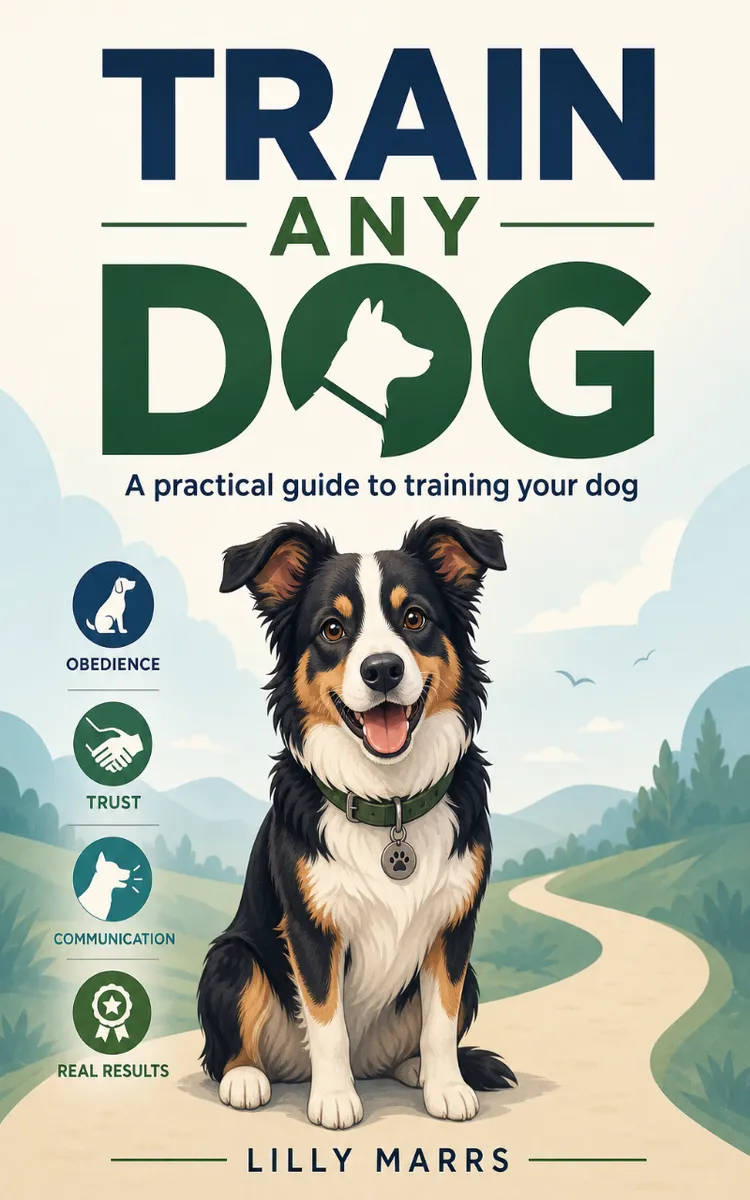
Train Any Dog
Created with Inkfluence AI
Dog training methods for any breed and temperament
Table of Contents
- 1. Choose Your Training Goals
- 2. Build a Motivation Plan
- 3. Set Up the Training Environment
- 4. Master Marker Training Basics
- 5. Teach Sit, Down, and Stay
- 6. Train Loose-Leash Walking
- 7. Handle Leash Reactivity Safely
- 8. Proof Behaviors and Plan Maintenance
Preview: Choose Your Training Goals
A short excerpt from “Choose Your Training Goals”. The full book contains 8 chapters and 14,362 words.
Why Clear Goals Change Dog Training
What would happen if your dog’s “training problem” became one visible action you could count? “Stop being difficult” gives you no clear practice target. “Lie on the mat for three minutes while I open the apartment door” tells you what to teach, how to measure progress, and when to adjust.
Clear goals prevent a common beginner mistake: trying to fix everything at once. A young, energetic dog may need help with jumping, barking, pulling, chewing, and settling. A shy dog may need confidence around visitors before you ask for a perfect sit. A dog bred to watch, chase, retrieve, or work closely with people may bring strong habits to training. Temperament matters too. A bold dog may rush toward distractions, while a cautious dog may freeze or retreat. The same goal may need a different starting point for each dog.
You will use the SMART-Plus Dog Goals framework to choose one priority, describe the exact behavior, set a useful measurement, and adjust the plan to your dog’s breed tendencies and temperament. SMART means Specific, Measurable, Achievable, Relevant, and Time-bound. The “Plus” adds two dog-training checks: choose a safe starting level and reward the behavior your dog can repeat. By the end, you should have a short goal that fits real life, such as “Within 14 days, my dog will sit for two seconds before I open the building door, in four out of five attempts.”
Ask yourself: could another person read your goal and know exactly what to watch for? If not, make the goal smaller and clearer before you begin.
Build a SMART-Plus Dog Goal
Start by separating the behavior you want from the label you use. “Calm” is a label. A dog with a calm body may stand still, lie down, keep four paws on the floor, or look at you without barking. Pick the visible action that matters most in your daily routine. Then use these parts of SMART-Plus Dog Goals:
1. Specific: Name one behavior, one place, and one common trigger. “Sit on the kitchen mat when I pick up the leash” gives you a better target than “behave on walks.” Specific goals reduce confusion because you practice the same skill in a repeatable setting.
2. Measurable: Choose something you can count, time, or observe. Count successful sits, measure seconds on a mat, or record how many steps your dog walks beside you. Measurement shows whether the plan works instead of relying on a vague feeling.
3. Achievable: Set the first target just beyond what your dog can already do. If your dog holds a sit for one second, begin with two seconds, not one minute. Small increases protect your dog from repeated failure and help you reward the right response.
4. Relevant: Connect the goal to a problem you actually face. A dog that barks at the apartment hallway may benefit more from a “look at me when I hear footsteps” goal than from learning a decorative trick. Relevance keeps practice useful.
5. Time-bound: Give the goal a review date, usually seven to fourteen days away. The date does not promise perfection. It tells you when to inspect your notes and decide whether to continue, make the task harder, or return to an easier step.
6. Plus - fit the dog: Adjust the starting point for breed tendencies, energy, sensitivity, age, health, and past experience. A scent-driven hound may need a stronger food reward and shorter practice near outdoor smells. A herding breed may need a job such as carrying a toy or touching your hand. A nervous dog may need more distance from a visitor. The goal stays clear, but the route changes.
7. Plus - protect repetition: Reward the behavior quickly and practice in brief sessions. A reward can be food, a toy, access to a sniff, or praise, depending on what your dog values. Five focused minutes can produce better learning than a long session filled with mistakes.
Choose priorities with a simple test: which behavior affects safety, daily access, or household peace most often? A dog that bolts through an open door needs a safety goal before a goal about greeting politely. A dog that cannot settle while you work may need a mat goal before advanced off-leash skills. When two problems seem equal, choose the one you can practice in a controlled setting and reward easily. Fast wins build a useful training history.
For each goal, write an event, a behavior, a measurement, and a reward. The event tells you when to ask. The behavior tells you what the dog should do. The measurement tells you what counts as success. The reward gives the dog a reason to repeat it. For example: “When I place the food bowl down, my dog will wait with four paws on the floor for three seconds, in four of five meals, and then receive the bowl.” This goal has a clear beginning, action, standard, and payoff.
Do not raise several parts at once. If your dog can sit for three seconds in the kitchen, keep the time the same when you move to the hallway. If you add a visitor, lower the time....
About this book
"Train Any Dog" is a how-to guide book by Lilly Marrs with 8 chapters and approximately 14,362 words. Dog training methods for any breed and temperament.
This book was created using Inkfluence AI, an AI-powered book generation platform that helps authors write, design, and publish complete books. It was made with the AI Ebook Generator.
Frequently Asked Questions
What is "Train Any Dog" about?
Dog training methods for any breed and temperament
How many chapters are in "Train Any Dog"?
The book contains 8 chapters and approximately 14,362 words. Topics covered include Choose Your Training Goals, Build a Motivation Plan, Set Up the Training Environment, Master Marker Training Basics, and more.
Who wrote "Train Any Dog"?
This book was written by Lilly Marrs and created using Inkfluence AI, an AI book generation platform that helps authors write, design, and publish books.
How can I create a similar how-to guide book?
You can create your own how-to guide book using Inkfluence AI. Describe your idea, choose your style, and the AI writes the full book for you. It's free to start.
Write your own how-to guide book with AI
Describe your idea and Inkfluence writes the whole thing. Free to start.
Start writingCreated with Inkfluence AI


