
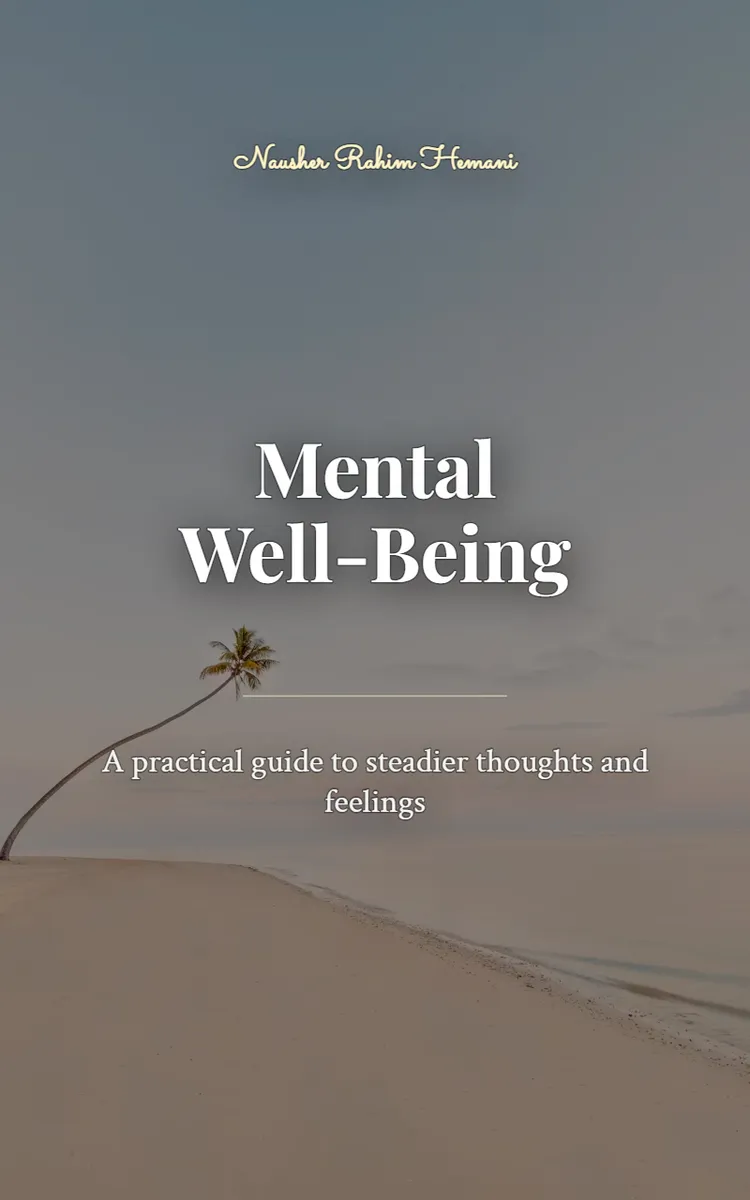
Mental Well-Being
Created with Inkfluence AI
Strategies for improving mental well-being and emotional balance
Table of Contents
- 1. Rewriting Your Core Beliefs
- 2. Building Boundaries Without Guilt
- 3. Using Thought Records to Calm Anxiety
- 4. Designing a Daily Mood-Reset Habit
- 5. Becoming Resilient Through Meaning-Making
Preview: Rewriting Your Core Beliefs
A short excerpt from “Rewriting Your Core Beliefs”. The full book contains 5 chapters and 7,642 words.
When One Thought Starts Running the Whole Day
What do you tell yourself when you make a mistake at work, send a message with no reply, or hear a disappointed tone in someone’s voice? Do you call it a small, fixable moment - or quietly decide it proves something permanent about you?
Talia, 34, leads a customer support team. One Monday morning, a customer escalated a complaint she thought she had handled well. Her manager asked to review the conversation. Before the meeting even began, Talia’s mind had already written the verdict: I’m bad at this. I’m going to lose my manager’s trust. I probably shouldn’t be leading anyone.
Nothing new had happened yet. Still, her shoulders tightened, her breathing became shallow, and she started planning how to defend herself. The event was one difficult interaction. The belief turned it into a judgment about her entire identity.
The moment may be difficult, but the belief you attach to it can make it feel like a life sentence.
From “This Proves I Can’t” to a Belief-to-Bridge Rewrite
Old Belief: If something goes wrong, it proves I’m incapable, unworthy, or destined to fail.
New Reality: One event is evidence about a situation, not a final verdict about who I am.
This shift matters because your mind naturally looks for meaning. When something uncomfortable happens, it tries to explain why. That explanation can help you respond - or trap you in fear. “The customer was upset because the policy was confusing” leads to problem-solving. “The customer was upset because I’m terrible at my job” leads to shame and avoidance.
The Belief-to-Bridge Rewrite helps you move from a harsh belief to a balanced thought that still respects reality. It doesn’t ask you to paste a cheerful sentence over a painful one. It asks you to build a bridge from the first interpretation to a more accurate conclusion.
For Talia, the old belief was, I’m failing as a leader. She checked the actual evidence. Her team’s response scores had improved over the past month. She had coached two new employees successfully. The complaint involved a policy she hadn’t written, and the customer had misunderstood part of it. A more grounded thought became: This interaction needs review, but it doesn’t define my leadership. I can learn what happened and improve the process.
That thought didn’t erase the discomfort. It gave her somewhere useful to stand.
How Beliefs Turn Moments Into Patterns
A belief is more than a passing thought. It’s a conclusion you’ve repeated often enough that it begins to feel like a fact. Beliefs shape what you notice, how you interpret it, and what you do next. If you believe “I always mess things up,” you’ll collect mistakes as proof while overlooking ordinary successes.
The goal isn’t to question every thought until you can’t make a decision. The goal is to notice when a thought is making a bigger claim than the evidence supports. Words such as always, never, everyone, no one, and must often signal that a specific event has been stretched into a rule.
The Belief-to-Bridge Rewrite has three simple parts: name the belief, check the evidence, and write a thought that is both honest and supportive. The bridge should feel believable. “I’m perfect at everything” won’t help if you don’t believe it. “I made a mistake, and I can take the next useful step” has a better chance of calming your mind.
A balanced belief doesn’t deny the problem; it stops the problem from becoming your identity.
Signs this pattern is running your life:
1. You treat one outcome as a prediction of every future outcome.
A rejected application becomes “I’ll never get hired,” or one awkward conversation becomes “I ruin relationships.”
2. You dismiss evidence that contradicts the belief.
Talia could name several strong leadership decisions, yet her mind treated one complaint as more trustworthy than a month of solid results.
3. You feel shame before you know the facts.
Your body reacts as if the harsh conclusion has already been proven. The meeting, message, or conversation hasn’t happened, but you’re already bracing for rejection.
4. You change your behavior to avoid proving the belief wrong.
You stop sharing ideas, delay asking for help, or avoid opportunities where you might be evaluated. Short-term relief quietly strengthens the belief long-term.
When you spot these signs, pause before arguing with yourself. First, write the exact belief. Not “I feel bad,” but “I’m telling myself that one mistake means I can’t be trusted.” Precision gives you something real to examine.
Questions That Test the Story
1. What exactly happened, without adding a judgment about you?
Talia’s factual version was: “A customer escalated a complaint, and my manager asked to review the case.” That’s different from “I failed and my manager has lost faith in me.” Separating facts from conclusions creates breathing room.
2....
About this book
"Mental Well-Being" is a self-help book by Nausher Rahim Hemani with 5 chapters and approximately 7,642 words. Strategies for improving mental well-being and emotional balance.
This book was created using Inkfluence AI, an AI-powered book generation platform that helps authors write, design, and publish complete books. It was made with the AI Self-Help Book Writer.
Frequently Asked Questions
What is "Mental Well-Being" about?
Strategies for improving mental well-being and emotional balance
How many chapters are in "Mental Well-Being"?
The book contains 5 chapters and approximately 7,642 words. Topics covered include Rewriting Your Core Beliefs, Building Boundaries Without Guilt, Using Thought Records to Calm Anxiety, Designing a Daily Mood-Reset Habit, and more.
Who wrote "Mental Well-Being"?
This book was written by Nausher Rahim Hemani and created using Inkfluence AI, an AI book generation platform that helps authors write, design, and publish books.
How can I create a similar self-help book?
You can create your own self-help book using Inkfluence AI. Describe your idea, choose your style, and the AI writes the full book for you. It's free to start.
Write your own self-help book with AI
Describe your idea and Inkfluence writes the whole thing. Free to start.
Start writingCreated with Inkfluence AI


