
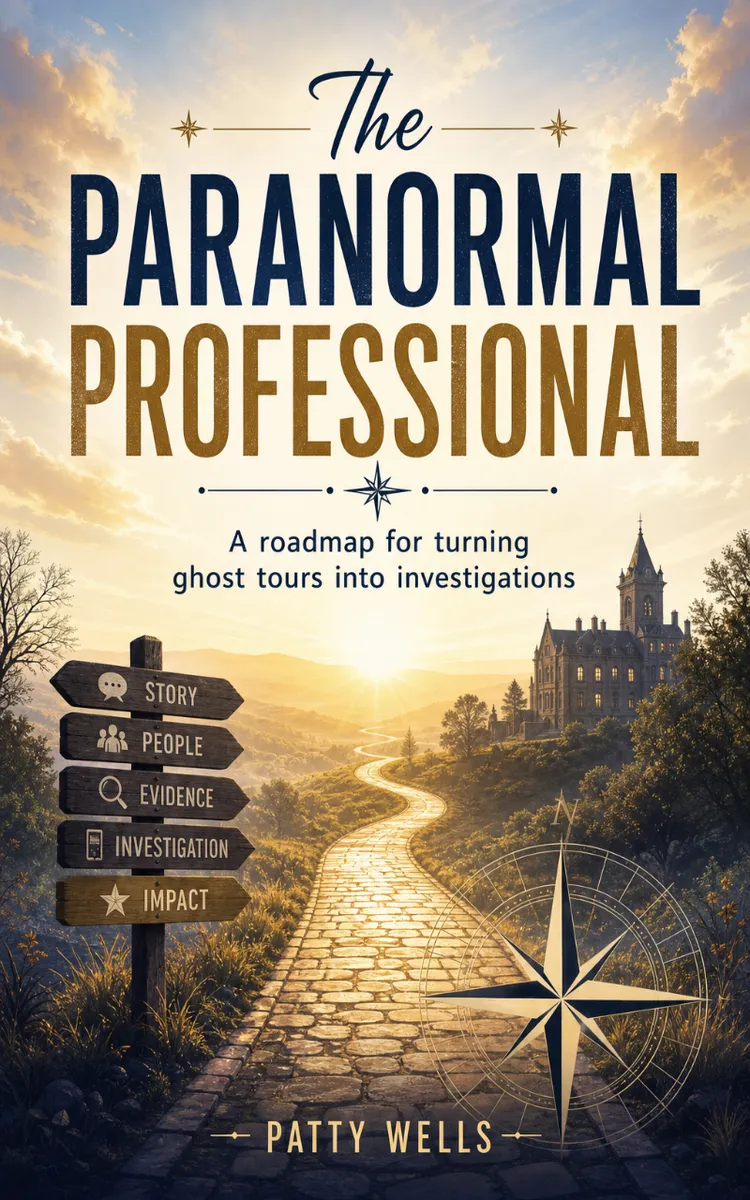
The Paranormal Professional
Created with Inkfluence AI
Career transition from ghost tours to full-time paranormal investigations
Table of Contents
- 1. Claiming Your New Identity
- 2. Unlearning the “Imposter” Story
- 3. Choosing Beliefs That Support You
- 4. Building Boundaries Without Guilt
- 5. Designing a Transition Timeline
- 6. Creating a Proof Log for Credibility
- 7. Practicing Evidence-First Thinking
- 8. Running Safer Field Sessions
- 9. Communicating Like a Professional
- 10. Turning Tours Into Case Skills
- 11. Building a Reliable Equipment Routine
- 12. Interviewing Witnesses With Empathy
- 13. Managing Fear During High-Stakes Nights
- 14. Documenting Evidence Without Overthinking
- 15. Debunking With Respect and Credibility
- 16. Building a Team When You’re Ready
- 17. Overcoming Money Gaps and Income Anxiety
- 18. Handling Criticism Without Losing Focus
- 19. Creating Your Purpose-Driven Investigation Practice
- 20. Going Full-Time With a Launch Plan
Preview: Claiming Your New Identity
A short excerpt from “Claiming Your New Identity”. The full book contains 20 chapters and 32,120 words.
When “Tour Guide” Starts Feeling Too Small
Tanya, 36, had spent years bringing museum visitors face-to-face with the past. She could hold a room’s attention, explain a strange detail without making it sound silly, and notice the moment someone stopped listening and started feeling. On weekends, she led local ghost tours. People loved her stories.
Still, after the last guest wandered away, Tanya often stood under the streetlamp with her recorder in one hand and her tour bag in the other, wondering what she was actually building. Was she a guide who enjoyed paranormal history? Or was she becoming an investigator who happened to lead tours?
That question matters because the label you use for yourself quietly shapes the work you’re willing to do.
Are you protecting the identity you’ve already earned, or claiming the identity you’re ready to grow into?
From Tour Guide to Investigator-in-Training
Old Belief: I’m only a tour guide until I have enough experience, equipment, clients, and proof to call myself an investigator.
New Reality: I can define myself as an investigator-in-training now, while earning the skill, judgment, and trust that make the identity stronger.
Tanya’s old belief sounded responsible. She didn’t want to exaggerate her experience or pretend she had solved cases she hadn’t. That instinct is healthy. Paranormal work needs honesty. But she had accidentally tied identity to arrival. Until she felt fully qualified, she would introduce herself as “just a tour guide who’s interested in investigations.”
The word “just” did more damage than she realized. It made her work sound like a side interest, even though she was already researching locations, documenting reports, learning how to use audio equipment, and thinking carefully about consent and client expectations. Her actions were beginning to match an investigator’s path. Her language hadn’t caught up.
Investigator-in-training is not a flashy title. That’s why it works. It tells the truth about where you are while giving you room to practice. Tanya could say, “I lead historical ghost tours, and I’m currently training as a paranormal investigator.” That sentence didn’t claim expertise. It showed direction.
The Identity Ladder helps you make that shift without pretending. At the bottom is what you’ve done. Above it is what you’re practicing. Then comes how you serve, followed by who you’re becoming. Tanya’s tours belonged on the first rung. Her field notes, equipment practice, interview skills, and careful case preparation belonged on the second. Her developing investigation service belonged on the third. Her chosen identity - investigator-in-training - gave those actions a place to gather.
When your identity changes, your choices change with it. A tour guide may focus mainly on entertaining guests and keeping the route moving. An investigator-in-training also asks: What is the client actually reporting? What can be documented? What should remain private? What would make this work more careful and useful?
That doesn’t mean Tanya had to stop leading tours. Tours could remain part of her income and a valuable way to build communication skills. The shift was not from “tour guide” to “something better.” It was from a narrow label to a fuller one.
The Identity Ladder in Real Life
The Identity Ladder works because it connects a name to evidence. You don’t climb by repeating a title in the mirror. You climb by taking small actions that support it.
For Tanya, the first rung was clear: she had led tours, researched local history, and handled groups. The second rung required deliberate practice. She began keeping a case notebook with sections for witness statements, location details, environmental notes, equipment used, and questions for follow-up. She scheduled one evening each week to review recordings instead of only listening when she felt inspired.
The third rung asked how she wanted to serve. She didn’t want to create fear for attention. She wanted to help people document unusual experiences with care, especially in historic properties where emotional stories and local history were tangled together. That purpose helped her choose better boundaries.
The top rung was not “expert.” It was the identity she could honestly carry into the next season: investigator-in-training. It was specific enough to guide her and humble enough to keep her learning.
Signs this pattern is running your life:
1. You introduce yourself by what you used to do, then quickly explain why your paranormal work “isn’t official yet.”
2. You keep researching equipment, methods, or local cases but avoid documenting your own practice because it might expose what you don’t know.
3. You accept tour work but postpone investigation work until you have a perfect website, a complete kit, or a dramatic case to display.
4. You make decisions based on avoiding embarrassment rather than building the skills your next identity requires.
...
About this book
"The Paranormal Professional" is a self-help book by Anonymous with 20 chapters and approximately 32,120 words. Career transition from ghost tours to full-time paranormal investigations.
This book was created using Inkfluence AI, an AI-powered book generation platform that helps authors write, design, and publish complete books. It was made with the AI Self-Help Book Writer.
Frequently Asked Questions
What is "The Paranormal Professional" about?
Career transition from ghost tours to full-time paranormal investigations
How many chapters are in "The Paranormal Professional"?
The book contains 20 chapters and approximately 32,120 words. Topics covered include Claiming Your New Identity, Unlearning the “Imposter” Story, Choosing Beliefs That Support You, Building Boundaries Without Guilt, and more.
Who wrote "The Paranormal Professional"?
This book was written by Anonymous and created using Inkfluence AI, an AI book generation platform that helps authors write, design, and publish books.
How can I create a similar self-help book?
You can create your own self-help book using Inkfluence AI. Describe your idea, choose your style, and the AI writes the full book for you. It's free to start.
Write your own self-help book with AI
Describe your idea and Inkfluence writes the whole thing. Free to start.
Start writingCreated with Inkfluence AI


