

Read the first chapter
The whole of chapter one, free. About 7 min. Turn the pages with the arrows, your keyboard, or a swipe.
Chapter 1
Asakusa’s Back-Alley Ramen Counters
Destination Snapshot
If you want ramen that feels like it was invented for rainy days and late-night conversations, Asakusa’s back alleys are your place. You’ll find tiny counters tucked behind shopping streets-paper lanterns, steam fogging the glasses, and menus so minimal you’ll be ordering by instinct (or by pointing, politely). This section suits travelers who like getting lost on purpose and don’t mind eating something amazing without a “view” to brag about.
Quick Facts - Best months: Mar-May (lighter crowds), Oct-Nov (comfortable walking); rainy days are a bonus for alley ramen. - Getting there: From Tokyo Station to Asakusa (Asakusa Station): ~40-55 min by train, $3-$7 one-way depending on route. - Budget per day: Budget $55 / Mid-range $110 / Luxury $200 - Languages: Japanese + basic English signage; some shops have ultra-minimal menus. - Currency: JPY (¥) - Time needed: 1-2 days minimum (even if you only care about ramen, you’ll want time to zigzag)
Asakusa is different from other “classic” areas because the ramen isn’t just near big sights-it’s hiding behind everyday storefronts. One minute you’re walking past a dry-goods shop, the next you’re in a 6-seat counter where the cook’s rhythm is the whole show.
Top Sights and Experiences
1. Asakusa Shrine (Sensō-ji) Back Streets Sensō-ji itself is famous, sure, but the real move is walking the side lanes right after you exit the main approach. Hours are typically 6:00-17:00 (varies by season), entry is free, and plan 45-75 minutes if you’re pairing it with ramen hops. Insider tip: when you’re done, don’t head straight toward the nearest station-walk one block away from the crowds and look for narrow streets with warm light leaking out behind sliding doors.
2. Kaminarimon + Nakamise Dōri (Then Escape Immediately) Nakamise Dōri is the “main drag,” with snacks and souvenirs stacked shoulder-high. Typical access is around 24/7 for walking, but stalls run roughly 10:00-18:00 (varies). You’ll only need 30-60 minutes. Insider tip: grab one small snack here if you want, then leave fast-after 11:00 it gets thick, and the best ramen counters in Asakusa are often two streets deeper.
3. Asakusa Underground Market Vibes: Den-en-like Back-Area Shopping Streets The best ramen hunting happens in the in-between blocks where the storefronts feel like they’ve stayed the same for decades. No single “attraction” here-think 1-2 hours of slow wandering around Sumida River-side neighborhoods and side streets. Most places are open daily around 10:00-20:00, but the ramen spots you’ll chase tend to be late lunch to evening. Insider tip: use your map app, but don’t follow it like a robot-zoom in and look for entrances that look “too small to be a restaurant.”
4. Sumida River Walk (For Before/After Ramen Timing) The river path gives you that classic east-side Tokyo rhythm-water, bridges, and a calmer pace than the shrine area. You can walk it anytime, and it’s free. Give it 30-90 minutes. Insider tip: if you’re going for a late bowl, do the river first. The walk helps you time your hunger so you don’t end up eating ramen at the exact moment every counter is slammed.
5. Sanyūtei / Ichikokudo-Style Counter Ramen Hunting (Tiny Shop Strategy) This is the real “experience” behind the chapter: finding the counter ramen tucked behind normal shopping. You’re looking for places where you can see the cooking area from the entrance-often 8-12 seats total. Hours vary by shop, but many open around 11:00 and run through late evening (some close mid-afternoon). Insider tip: show up when you see a line of locals that moves fast-if the line is mostly tourists filming, keep walking. The best counters fill, but they don’t stall.
6. Taito-ward Side Lanes Near Asakusa Station (Where the Steam Hangs Low) The lanes around Asakusa Station can feel like a maze, but that’s the point. Expect daily foot traffic, with shops mostly 10:00-19:00 and ramen counters later. Entry is free; plan 45-90 minutes to wander and stop when something smells right. Insider tip: if the shop has a ticket machine by the entrance, use it even if you don’t fully get the menu-there’s usually a picture, and your order is basically “choose your fate.”
7. Hoppy Street Energy (Drinks Before the Last Bowl) Asakusa has that down-to-earth izakaya feel-short steps, loud laughter, and people ordering quickly. Many bars open around 16:00-18:00 and stay lively into the night. Entry is free, but budget for drinks. Insider tip: do one drink, not five. One beer (or hoppy) keeps you in the local mood; too much and you’ll regret it when the ramen arrives.
Skip These Tourist Traps - Giant snack shopping loops on Nakamise Dōri → Instead, do a quick stroll for one bite, then pivot to the side streets for ramen counters with ticket machines. - Only chasing the “most photographed” shrine spots → Instead, use the shrine as your landmark and spend your time in the blocks just off the main approach. - Overplanning the ramen like it’s a museum exhibit → Instead, let scent + crowd flow guide you-Asakusa is built for spontaneous stops.
Where to Eat and Stay
Asakusa is a “walk-first” neighborhood. You’ll bounce between tiny food alleys and short stretches of shops, so staying close to the station matters less than staying close to the streets that put you near multiple ramen options. Aim for a base where you can walk 10-20 minutes without crossing big barriers-then you can do the classic loop: shrine/river → hoppy/side snack → back-alley bowl.
| Budget Tier | Recommendation | Area | Price/Night | Best For | |---|---|---|---|---| | Budget | Hotel Wing International Asakusa | Asakusa | $90-$130 | Clean, practical base for early ramen hunts | | Mid-range | Asakusa View Hotel | Asakusa | $160-$240 | Comfortable rooms with easy access to the back streets | | Luxury | MIMARU Tokyo Asakusa | Asakusa | $260-$420 | More space for groups; great after long alley-walk days |
Restaurant picks (ramen + the supporting cast)
Ramen Street (Senso-ji area pop-up style counters) (Asakusa) - Japanese ramen. Order the shōyu ramen ($12-$16). It’s a good warm-up if you’re mapping out which alley counters you want next.
Rokkasen (Asakusa) (Asakusa) - Tempura + casual bites. Order the tempura set ($18-$28). The light crunch is perfect if you want something before a heavier bowl.
Uogashi Nihon-Ichi (Asakusa) (Asakusa) - Seafood/izakaya style. Order the sashimi bowl ($14-$22). Great for balancing ramen with something fresh and fast.
Menya Musashi (Asakusa-side area) (Asakusa) - Ramen. Order the miso ramen ($13-$19). If you’re tired after walking, this one hits hard and reliably.
Asakusa Yamatoya (Asakusa) (Asakusa) - Tonkatsu + everyday comfort food. Order the katsu set ($16-$26). Not ramen, but it’s a classic “local strength” meal that keeps you going for night exploring.
Street Food to Try - Ningyō-yaki (Asakusa-style small cakes): $3-$5 - Dango (sweet skewers): $4-$6 - Kushiyaki (grilled skewers at small stalls): $4-$9 each - Taiyaki (fish-shaped sweet): $3-$6
(Note: Asakusa’s most interesting ramen counters are often tiny and change menus often. If a shop’s menu looks like it’s been through war-go with the house shōyu or miso option and follow the crowd. You’ll usually be right.)
Know Before You Go
Packing Checklist - Cash (JPY) in small bills-ticket machines and tiny counters can be picky. - A reusable small bag for napkins and any leftover tickets/receipts. - An umbrella (Asakusa steam + rain = perfect ramen weather, but wet sleeves happen). - Comfortable shoes-side streets are uneven and the counters aren’t “walk-in and out” friendly. - Portable charger-you’ll rely on maps for alley detours. - A simple phrase card (“Shōyu ramen, please” / “No pork, please”) if you need it. - Small appetite plan-pick one main ramen stop, then snack, not full meals. - Earplugs (optional)-some counters are loud in a fun way, but it’s still cramped. - Light layers-steam kitchens can swing temperatures fast.
Useful Phrases 1. Shōyu ramen o kudasai. (Soy-soo rah-men oh koo-dah-sigh) - “Shoyu ramen, please.” 2. Miso ramen o kudasai. (Mee-soo rah-men oh koo-dah-sigh) - “Miso ramen, please.” 3. Osusume wa dore desu ka? (Oh-soo-suh-may wah doh-ray day-soo kah) - “What do you recommend?” 4. Futsū de onegaishimasu. (Foo-tsuu no day oh-neh-gai-shee-mahs) - “Regular size, please.” 5. Kore wa nani desu ka? (Koh-ray wah nan-ee day-soo kah) - “What is this?” 6. Sumimasen, tatoeba… (Soo-mee-mah-sen) - “Excuse me, for example…” (use while pointing)
Money-Saving Tips 1. Do lunch ramen, dinner snack-you’ll save without feeling deprived (lunch bowls often cost less). 2. Use the ticket machine smartly-one “special” add-on can cost more than you expect; start simple. 3. Pick one paid experience (river cruise or a museum nearby) and let walking fill the rest-Asakusa rewards free time. 4. Split a set meal if you’re with someone-sharing skewers or sweets keeps costs down and variety up. 5. Avoid impulse drinks at the first bar you see-Asakusa has similar options a few doors down.
Common Mistakes - Trying to order without checking the ticket machine-many counters don’t do “tell me your order” the way bigger places do; buy the ticket first. - Showing up at peak shrine exit time (late morning/early afternoon) and getting stuck-shift your ramen slot by 30-60 minutes. - Choosing a shop only because it looks “cute”-steam smell and crowd flow matter more than lantern vibes. - Overpacking your plan-Asakusa back alleys are best when you leave room for one unexpected detour.
Next chapter, we’ll keep that same “small-door magic” energy, but switch neighborhoods-so your feet stay busy and your food luck stays sharp.
End of chapter one. 7 more chapters in the full book.
Swipe or use the arrows to turn the page


What's inside: 8 chapters
- 1. Asakusa’s Back-Alley Ramen Counters
- 2. Kichijoji Vinyl Bars After Dark
- 3. Meguro River Cherry-Blossom Side Streets
- 4. Yanaka’s Family-Run Sweet Shops
- 5. Shimokitazawa’s Underground Indie Record Shops
- 6. Tsukiji Outer Market’s Quiet Counter Lunch
- 7. Koenji’s Backstreet Food and Sake
- 8. Ochanomizu’s Bookshops and Tea Stops
About this book
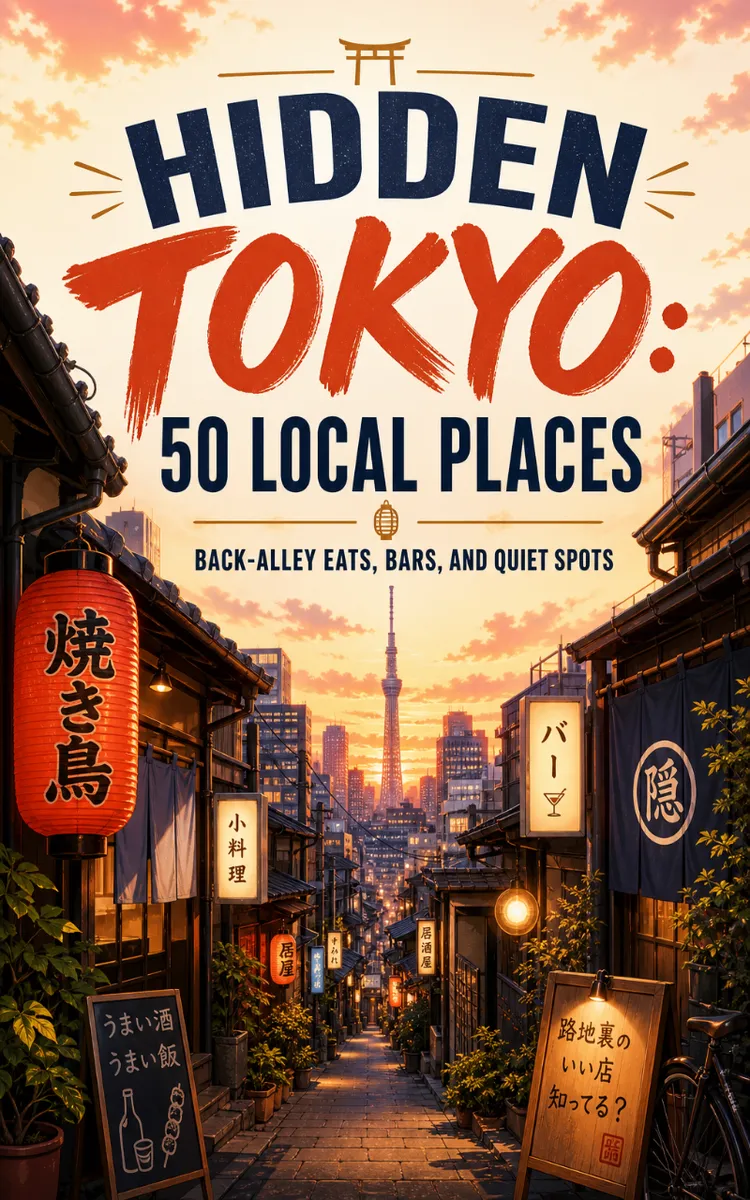
"Hidden Tokyo: 50 Local Places" is a travel book by Inkfluence AI Demo with 8 chapters and approximately 14,272 words. A curated guide to lesser-known Tokyo neighborhoods and local favorites.
This book was created using Inkfluence AI, an AI-powered book generation platform that helps authors write, design, and publish complete books. It was made with the AI Travel Guide Creator.
Frequently Asked Questions
What is "Hidden Tokyo: 50 Local Places" about?
A curated guide to lesser-known Tokyo neighborhoods and local favorites
How many chapters are in "Hidden Tokyo: 50 Local Places"?
The book contains 8 chapters and approximately 14,272 words. Topics covered include Asakusa’s Back-Alley Ramen Counters, Kichijoji Vinyl Bars After Dark, Meguro River Cherry-Blossom Side Streets, Yanaka’s Family-Run Sweet Shops, and more.
Who wrote "Hidden Tokyo: 50 Local Places"?
This book was written by Inkfluence AI Demo and created using Inkfluence AI, an AI book generation platform that helps authors write, design, and publish books.
How can I create a similar travel book?
You can create your own travel book using Inkfluence AI. Describe your idea, choose your style, and the AI writes the full book for you. It's free to start.
Write your own travel book with AI
Describe your idea and Inkfluence writes the whole thing. Free to start.
Start writingCreated with Inkfluence AI


