
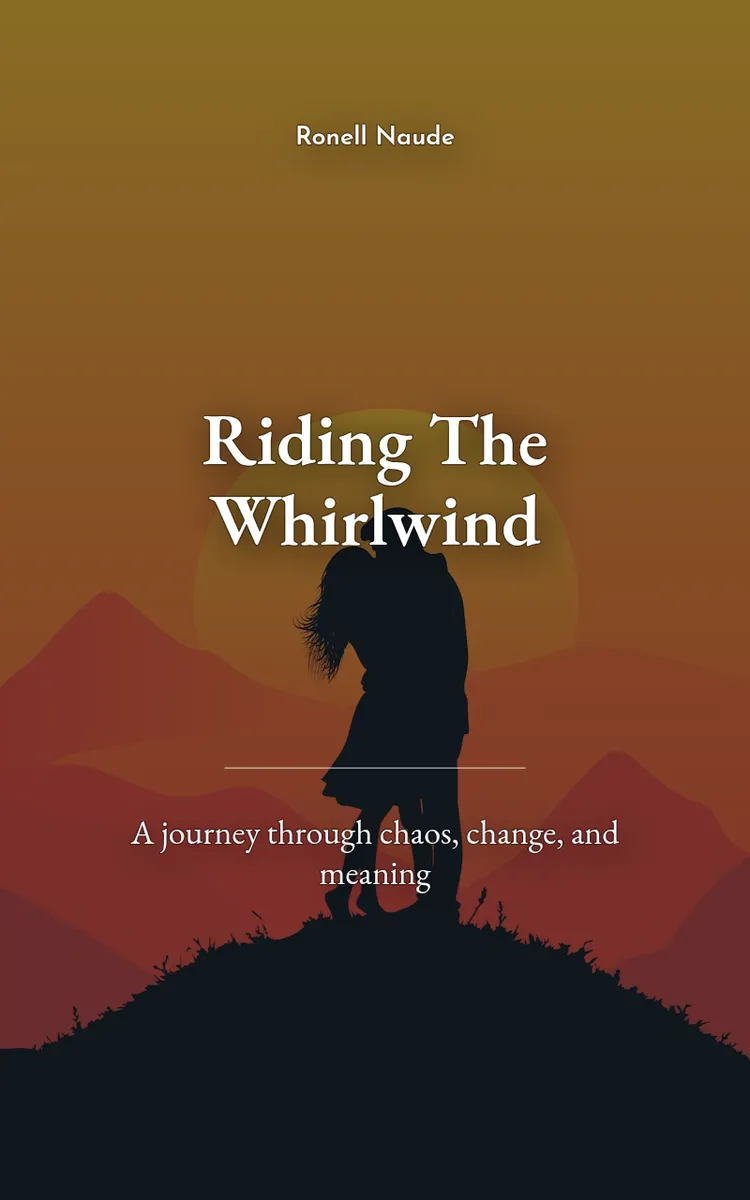
Exploring how people navigate sudden change and uncertainty
Table of Contents
- 1. The Siren That Changes Everything
- 2. Choosing Calmer Breath Over Panic
- 3. Decoding the Note’s Missing Name
- 4. The Evacuation Gate That Won’t Open
- 5. Gas Maps and the Wrong Door
- 6. Admitting She Can’t Save Him Alone
- 7. The Contractor’s Broadcast Confession
- 8. Running Out of Safe Places
- 9. Breaking the Transfer Chain at Dawn
- 10. When the Whirlwind Finally Lets Go
Preview: The Siren That Changes Everything
A short excerpt from “The Siren That Changes Everything”. The full book contains 10 chapters and 21,092 words.
The last text from Tomas arrived while Lina was stepping over a puddle of seawater in Brinewatch Central, the station clock blinking 8:17 in three different minutes.
DON’T TAKE THE NORTH LINE. THEY’RE CLOSING THE DOORS. COME NOW.
She stopped beneath the departure board. Commuters streamed around her, coats brushing her elbows, shoes clicking over the tiled floor. Above them, the electronic map flickered from green to amber. A train announcement dissolved into static.
Lina called him.
The line rang once.
“Lina?” Tomas answered, breathless. “Where are you?”
“Central. What does ‘closing the doors’ mean?”
A hard metallic bang sounded on his end. Then a voice, distant and distorted, shouted something she couldn’t make out.
“Tomas.”
“I’m at home. The evacuation barriers are coming down across the district. They said we have twenty minutes.”
“Who said?”
“Everyone’s saying it. Just get here.”
“Stay inside.”
“I’m not an idiot.”
“You climbed onto the roof during a lightning storm.”
“That was one time.”
“It was three times.”
Another bang. Tomas swore under his breath.
“Lina, listen to me. Don’t use the north line. Don’t use the tunnels under - ”
The station speakers shrieked.
Every screen in Central went black.
For one second, the whole transit hub seemed to pause around the silence. Then the emergency siren began.
It was not the familiar rising wail of a fire alarm. This sound rolled through the station in heavy pulses, low enough to vibrate in Lina’s ribs. People looked upward. A child began to cry. Somewhere near the ticket gates, glass shattered.
Her phone buzzed against her palm.
CITYWIDE EMERGENCY ALERT. EVACUATION PROTOCOL ACTIVE. PROCEED TO DESIGNATED EXIT ZONES. TRANSIT SERVICES SUSPENDED. REMAIN CALM.
The message repeated before she could finish reading it.
On the platform below, a train lurched to a stop. Its doors opened, but no one stepped out. The carriage lights flickered, throwing pale faces across the windows.
“Tomas,” Lina said.
His voice had gone thin. “Did you get the alert?”
“Yes. I’m coming.”
“Not through the station.”
“Then tell me how.”
A deep boom rolled beneath them. The floor shifted, barely, but enough to send a tremor through the metal railings. The departure board sparked. Several people screamed.
“Tomas?”
“Lina, the west bridge is already blocked. Take Harbor Street. Go aboveground.”
“I’m at Central.”
“Then move.”
The call cut out.
Lina shoved the phone into her coat pocket and turned toward the exit. The crowd had already become a wall. People surged toward the stairways, dragging bags, children, one another. A man in a gray suit grabbed her shoulder.
“Is this real?” he demanded.
“Let go.”
“Are they closing the city?”
“I said let go.”
He released her, but the movement carried her sideways into a woman clutching a sleeping baby. The baby woke and wailed. Lina caught the woman’s arm before she fell.
“Sorry,” Lina said.
“Everyone’s sorry,” the woman snapped. “Which way is out?”
Lina looked past her. The main gates had dropped halfway, steel teeth descending from the ceiling. Transit officers in orange vests were trying to force people toward the side corridors, but the crowd pressed against them.
A red sign above the west stairwell flashed: EXIT LOCKDOWN IN PROGRESS.
Lina ran.
Her shoulder struck a column. Her boot slipped on wet tile, and she caught herself against a vending machine. The machine’s glass rattled. Behind her, the siren pulsed again, and the sound traveled through the soles of her feet.
At the side corridor, a transit officer planted both hands against the crowd.
“Back up! Use the east concourse!”
“East is closed!” someone shouted.
“It’s not closed!”
“It is!”
Lina saw the officer’s eyes flick toward the ceiling. Fear, quickly hidden.
She pushed through. “I need Harbor Street.”
“You can’t get there from here.”
“Why not?”
“Flood gate failure in the lower passage.”
“Then where?”
The officer pointed toward a narrow service door. “Maintenance stairs. They’ll take you to the old bus terminal.”
“That door’s locked.”
He glanced behind him as the crowd surged. “Not anymore.”
The door stood open three inches. A black gap breathed cold air into the corridor.
Lina slipped through.
The stairwell smelled of rust, wet concrete, and hot electrical wiring. She descended two flights, one hand sliding along the rail. The station noise faded behind the door, replaced by the clatter of pipes and the sharp slap of water dripping from somewhere above.
Her phone buzzed again.
TOMAS: DO NOT TRUST THE OFFICIAL ROUTE.
She stopped on the landing.
The message had no punctuation. Tomas always used punctuation. He had once corrected her texts for missing commas, then denied doing it when she caught him.
She typed, What route?
The reply came immediately.
TOMAS: THEY’RE FUNNELING PEOPLE EAST.
A second message appeared.
TOMAS: GET OUT BEFORE 8:40.
Lina stared at the time in the corner of the screen.
8:23.
A crash sounded below.
...
About this book
"Riding The Whirlwind" is a fiction book by Ronell Naude with 10 chapters and approximately 21,092 words. Exploring how people navigate sudden change and uncertainty.
This book was created using Inkfluence AI, an AI-powered book generation platform that helps authors write, design, and publish complete books. It was made with the AI Novel Writer.
Frequently Asked Questions
What is "Riding The Whirlwind" about?
Exploring how people navigate sudden change and uncertainty
How many chapters are in "Riding The Whirlwind"?
The book contains 10 chapters and approximately 21,092 words. Topics covered include The Siren That Changes Everything, Choosing Calmer Breath Over Panic, Decoding the Note’s Missing Name, The Evacuation Gate That Won’t Open, and more.
Who wrote "Riding The Whirlwind"?
This book was written by Ronell Naude and created using Inkfluence AI, an AI book generation platform that helps authors write, design, and publish books.
How can I create a similar fiction book?
You can create your own fiction book using Inkfluence AI. Describe your idea, choose your style, and the AI writes the full book for you. It's free to start.
Write your own fiction book with AI
Describe your idea and Inkfluence writes the whole thing. Free to start.
Start writingCreated with Inkfluence AI


