
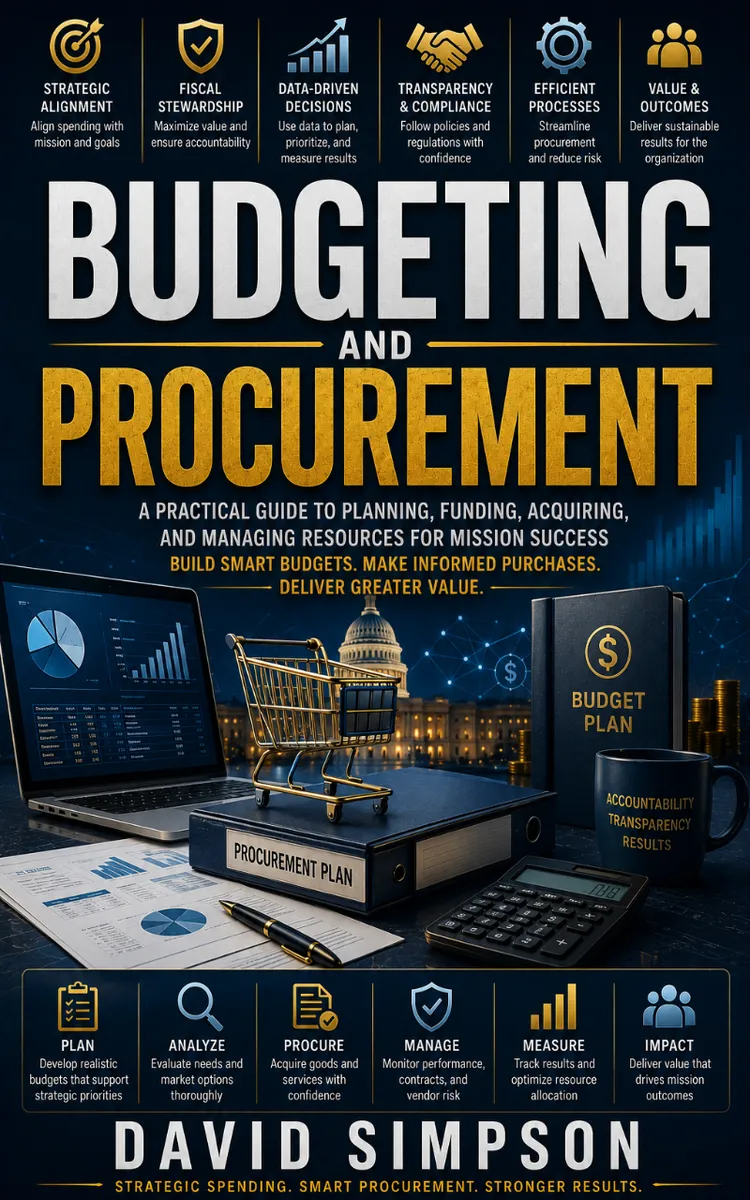
Information Technology Budget Guide
Created with Inkfluence AI
IT budgeting guidance tailored to organization size
Table of Contents
- 1. IT Budget Goals by Organization Size
- 2. Building a One-Page IT Budget
- 3. Mapping IT Costs to Business Outcomes
- 4. Choosing CapEx vs OpEx for IT
- 5. Creating a Baseline IT Spend Model
- 6. Forecasting Headcount and User Growth
- 7. Budgeting for Networks and Connectivity
- 8. Estimating Cloud Costs with FinOps
- 9. Licensing Strategy for SaaS and Suites
- 10. Device Lifecycle Budgeting and Refresh
- 11. Help Desk Staffing and Support Costs
- 12. Security Budgeting for Risk Reduction
- 13. Identity and Access Management Cost Planning
- 14. Backup, DR, and Resilience Budgeting
- 15. Data Storage Tiers and Cost Optimization
- 16. Application Portfolio Budgeting and Rationalization
- 17. Vendor Selection and Pricing Negotiation Tactics
- 18. RFP Budgeting for IT Projects
- 19. Project Budgeting with Agile Release Sizing
- 20. Total Cost of Ownership for IT Decisions
- 21. Building a Contingency and Risk Buffer
- 22. Managing Budget Variance Month-to-Month
- 23. Chargeback and Showback for IT
- 24. Budgeting for Compliance and Audit Readiness
- 25. IT Asset Management for Accurate Forecasting
- 26. Small Organization IT Budget Playbook
- 27. Medium Organization Cost Controls
- 28. Large Organization Portfolio Funding Model
- 29. Enterprise IT Budget Governance and KPIs
- 30. Government IT Budgeting and Appropriation Cycles
- 31. Public Sector Procurement Cost Planning
- 32. Budgeting for IT Training and Change Adoption
- 33. Measuring IT ROI for Budget Justification
- 34. Budgeting for Automation and Self-Service
- 35. Cloud Migration Budget and Timeline Planning
- 36. FinOps Metrics for Ongoing Budget Control
- 37. Avoiding Common IT Budgeting Mistakes
- 38. Creating a Budget Narrative for Approval
- 39. Quarterly IT Budget Review and Reforecast
- 40. Wealth-Minded IT Spending and Asset Strategy
Preview: IT Budget Goals by Organization Size
A short excerpt from “IT Budget Goals by Organization Size”. The full book contains 40 chapters and 71,326 words.
Why Organization Size Changes the Goal
What would happen if your organization had to stop buying technology tomorrow? A small business might lose access to customer records and payment systems within hours. A medium nonprofit might miss grant deadlines because staff cannot reach shared files. A large organization might keep operating, but expose several departments to inconsistent security controls. An enterprise might face contractual, legal, and public-service consequences across many locations.
The right IT budget goal depends on the size, structure, and obligations of the organization - not simply on the number of computers. A small organization needs a short list of dependable tools and a cash plan that prevents surprise repairs. A medium organization needs repeatable systems, documented ownership, and room for growth. A large organization needs shared standards across departments. An enterprise needs governance, resilience, and clear control over thousands of technology decisions.
This distinction solves a common budgeting problem: copying another organization’s spending pattern without copying its responsibilities. After applying the Size-Right Goal Ladder, you can set a practical IT goal, connect each dollar to a business need, and judge whether the budget supports the organization’s actual level of risk.
How the Size-Right Goal Ladder Works
The Size-Right Goal Ladder matches the budget goal to four realities: continuity, control, coordination, and resilience. Each level adds management responsibility. Do not move to a higher level because a department requests more software. Move up when the organization’s size, locations, data, or obligations require stronger control.
1. Small organizations: protect continuity.
Set a goal that keeps essential work running. Identify the few systems the organization cannot operate without, such as email, point-of-sale software, payroll, scheduling, or customer records. Fund reliable devices, backups, updates, and support before adding optional tools. The goal is not to build a large technology department. The goal is to prevent one failed laptop, lost password, or damaged file from stopping the business.
2. Medium organizations: build control.
Set a goal that makes technology predictable across teams. Create a complete equipment list, assign system owners, standardize devices, and document how staff receive access. Fund replacement planning instead of waiting for equipment to fail. A medium organization often has enough staff and systems to create confusion, but not enough resources to absorb repeated mistakes. Clear ownership reduces that waste.
3. Large organizations: coordinate departments.
Set a goal that connects separate technology budgets to shared standards. Establish rules for security, purchasing, data storage, vendor review, and support. Departments may still choose tools for specialized work, but they should follow common requirements. A large organization gains value when it reduces duplicate systems, negotiates purchases consistently, and gives leadership a reliable view of technology risks.
4. Enterprise organizations: fund resilience and governance.
Set a goal that protects operations across locations, business units, and legal environments. Include disaster recovery, independent security testing, supplier oversight, identity controls, and tested plans for major outages. Enterprise budgeting must account for the cost of failure across the whole organization. A short outage in one office differs from a system failure that affects every location, customer, or public service.
To use the ladder, separate the budget into four practical groups: run, protect, improve, and replace. “Run” covers normal operation, such as internet service, software subscriptions, and technical support. “Protect” covers backups, security tools, access controls, and recovery work. “Improve” covers projects that make service faster or easier. “Replace” covers planned equipment and system renewal. This structure shows whether the organization funds basic reliability or spends heavily on new features while neglecting existing systems.
Set a one-year goal and a three-year direction. The one-year goal should name the specific condition you will reach, such as “every employee uses a supported device and every critical file has a tested backup.” The three-year direction should describe the capability the organization needs, such as “all departments follow one access process and recover essential services after a major outage.” These statements give the budget a test that anyone can understand.
A simple planning table can keep the goal proportional to the organization:
...
About this book
"Information Technology Budget Guide" is a finance book by David M Simpson with 40 chapters and approximately 71,326 words. IT budgeting guidance tailored to organization size.
This book was created using Inkfluence AI, an AI-powered book generation platform that helps authors write, design, and publish complete books. It was made with the AI Ebook Generator.
Frequently Asked Questions
What is "Information Technology Budget Guide" about?
IT budgeting guidance tailored to organization size
How many chapters are in "Information Technology Budget Guide"?
The book contains 40 chapters and approximately 71,326 words. Topics covered include IT Budget Goals by Organization Size, Building a One-Page IT Budget, Mapping IT Costs to Business Outcomes, Choosing CapEx vs OpEx for IT, and more.
Who wrote "Information Technology Budget Guide"?
This book was written by David M Simpson and created using Inkfluence AI, an AI book generation platform that helps authors write, design, and publish books.
How can I create a similar finance book?
You can create your own finance book using Inkfluence AI. Describe your idea, choose your style, and the AI writes the full book for you. It's free to start.
Write your own finance book with AI
Describe your idea and Inkfluence writes the whole thing. Free to start.
Start writingCreated with Inkfluence AI


