
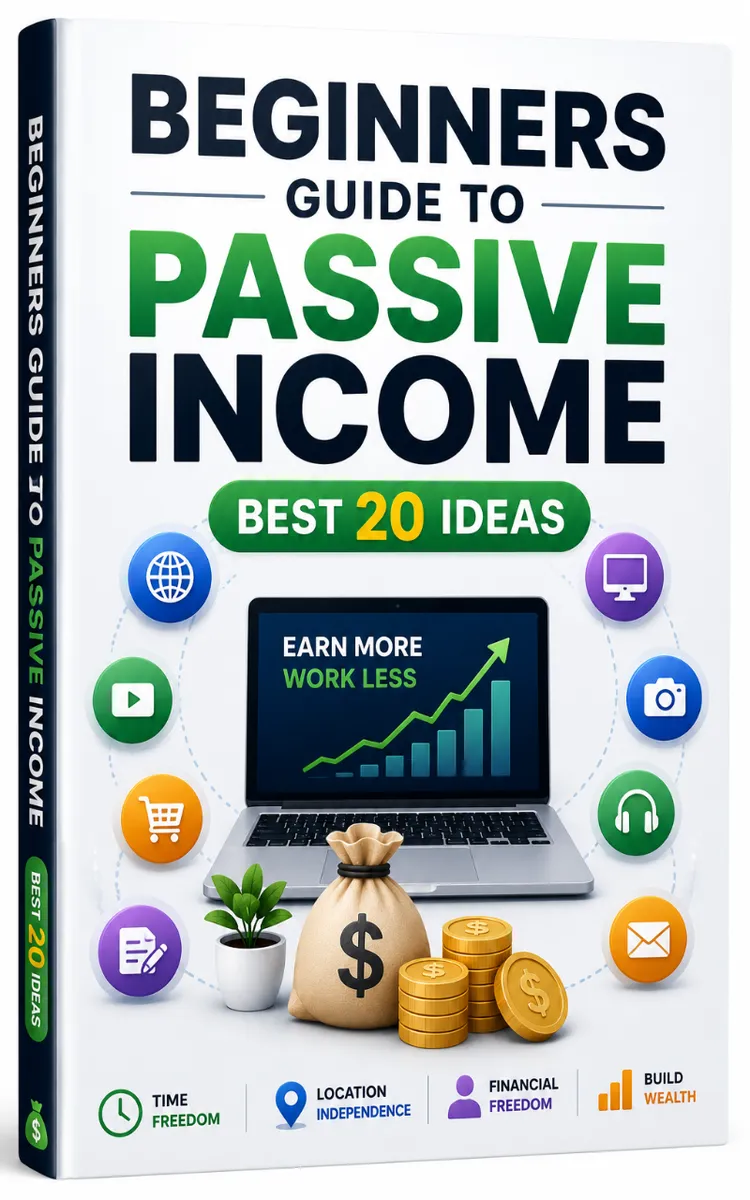
Beginner’s Guide to Passive Income (Best 20 ideas)
Created with Inkfluence AI
Table of Contents
- 1. Affiliate Marketing — Earn by Recommending
- 2. Selling eBooks — Write Once, Sell as long as you live
- 3. 3. Amazon KDP — Self-Publishing Goldmine
- 4. 4. Niche Websites — Build Once, Earn for Years
- 5. 5. Etsy — Sell Digital Downloads on Autopilot
- 6. 6. Domain Flipping — Buy Low, Sell High
- 7. 7. eBay Flipping — Turn Junk Into Cash
- 8. 8. Dropshipping — Sell Without Inventory
- 9. 9. YouTube — Views = Income
- 10. 10. Crypto — Meme Coins, Trading & Passive Yield
- 11. 11. Pinterest Marketing — Free Traffic on Autopilot
- 12. 12. Stock Photography & Video — Shoot Once, earn as long as you live
- 13. 13. Print-on-Demand — Design Once, Ship Never
- 14. 14. Online Courses — Package Your Knowledge
- 15. 15. Faceless Social Media Accounts — Income Without Showing Your Face
- 16. 16. Renting Digital Assets — Websites, Apps & Templates
- 17. 17. Audiobooks & Podcasts — Speak Once, Earn Long
- 18. 18. Renting Digital Assets — Websites, Apps & Templates
- 19. 19. Selling Photos Online — Turn Your Camera Into a Cash Machine
- 20. 20. AI-Powered Businesses — The New Frontier
- 21. Your 30-Day Passive Income Action Plan
Preview: Affiliate Marketing — Earn by Recommending
A short excerpt from “Affiliate Marketing — Earn by Recommending”. The full book contains 21 chapters and 55,576 words.
What Is Affiliate Marketing?Affiliate marketing is one of the simplest passive income models ever invented: you recommend someone else's product, and when someone buys through your unique link, you earn a commission.
You don't create the product. You don't handle customer service. You don't deal with shipping, refunds, or inventory. You simply connect buyers with products they already want - and get paid for the introduction.
It sounds almost too simple. But affiliate marketing generates billions of dollars in revenue every year, and a significant portion of that goes to individual creators, bloggers, and content publishers working from their laptops.
How the Model WorksHere's the basic flow:
You join an affiliate program (free to do)
You get a unique tracking link for each product you promote
You create content - a blog post, a Pinterest pin, a YouTube video, an email - that includes your link
Someone clicks your link and makes a purchase
You earn a commission, typically 3-50% depending on the product and platform
The magic is in step 3. Once that content exists and ranks in Google, gets saved on Pinterest, or sits in someone's inbox - it keeps sending clicks and earning commissions without any further effort from you.
A blog post you wrote two years ago can still be your best earner today. That's the passive part.
The Best Affiliate Networks for BeginnersThere are hundreds of affiliate programs out there. Here are the best starting points:
Amazon Associates
The world's largest affiliate program. You can promote virtually any physical product on Amazon. Commissions are low (1-4%) but the conversion rate is high because everyone trusts Amazon. Best for product review blogs and YouTube channels.
ShareASale
A network hosting thousands of individual brand programs. Commissions are much higher than Amazon, often 10-30%. Great for fashion, home, wellness, and software niches.
Impact & CJ Affiliate
Similar to ShareASale but with bigger brand names. Once you have some traffic, these networks open doors to major retailer programs.
iHerb Affiliate Program
Perfect for health, supplement, and wellness content. Pays 5-10% commission and converts extremely well because iHerb has competitive pricing and ships globally.
Software & SaaS Programs
Some of the highest commissions in affiliate marketing. Tools like ConvertKit, Shopify, and SEO software often pay 20-40% recurring commissions - meaning you earn every month a customer stays subscribed.
The Three Traffic Channels That Work BestAffiliate marketing is only as good as the traffic feeding it. These three channels are the most effective for beginners:
1. Blogging + SEO
Write articles that answer questions people are already searching for. "Best protein powder for women over 40." "Cheapest electricity providers in Finland." "Top tools for Etsy sellers." These informational and comparison articles rank in Google and send consistent, free traffic for years.
The key is targeting low-competition keywords early on, building authority in a specific niche, and publishing consistently.
2. Pinterest
Pinterest is not a social media platform - it's a visual search engine. Pins get discovered through search, not through followers, which means a pin you create today can drive traffic 18 months from now.
Pinterest works especially well for affiliate content in niches like home decor, wellness, finance, food, and fashion. Create a pin that links to your blog post or directly to a product page (check each program's rules on direct linking), and let the platform do the work.
3. Email Marketing
An email list is the most valuable asset an affiliate marketer can own. Unlike social media followers or search rankings, your list can't be taken away by an algorithm change.
Build a free lead magnet - a checklist, a mini guide, a template - to grow your list. Then send regular emails with genuine recommendations. Because your subscribers already trust you, conversion rates from email are dramatically higher than from cold traffic.
Realistic Income PotentialAffiliate marketing income varies enormously depending on niche, traffic volume, and commission rates. Here's a realistic breakdown:
Stage
Monthly Traffic
Monthly Income
Beginner (0-6 months)
0-1,000 visitors
$0-$50
Growing (6-18 months)
1,000-10,000 visitors
$50-$500
Established (18+ months)
10,000-50,000 visitors
$500-$5,000
Authority site (3+ years)
50,000+ visitors
$5,000-$50,000+
These numbers assume a content-based approach with SEO and/or Pinterest. Paid advertising can accelerate results but adds risk.
The Biggest Mistakes Beginners MakePromoting too many products at once
Focus on a small number of products you genuinely know and trust. Scattered promotions dilute your credibility and confuse your audience.
Choosing a niche with no buyer intent
Not all niches convert equally....
About this book
"Beginner’s Guide to Passive Income (Best 20 ideas)" is a general book by Pasi Gauriloff with 21 chapters and approximately 55,576 words. It covers key insights and practical takeaways on the topic.
This book was created using Inkfluence AI, an AI-powered book generation platform that helps authors write, design, and publish complete books.
Frequently Asked Questions
What is "Beginner’s Guide to Passive Income (Best 20 ideas)" about?
"Beginner’s Guide to Passive Income (Best 20 ideas)" is a general book by Pasi Gauriloff covering key insights and practical takeaways on the topic.
How many chapters are in "Beginner’s Guide to Passive Income (Best 20 ideas)"?
The book contains 21 chapters and approximately 55,576 words. Topics covered include Affiliate Marketing — Earn by Recommending, Selling eBooks — Write Once, Sell as long as you live, 3. Amazon KDP — Self-Publishing Goldmine, 4. Niche Websites — Build Once, Earn for Years, and more.
Who wrote "Beginner’s Guide to Passive Income (Best 20 ideas)"?
This book was written by Pasi Gauriloff and created using Inkfluence AI, an AI book generation platform that helps authors write, design, and publish books.
Write your own book with AI
Describe your idea and Inkfluence writes the whole thing. Free to start.
Start writingCreated with Inkfluence AI


