
Read the first chapter
The whole of chapter one, free. About 9 min. Turn the pages with the arrows, your keyboard, or a swipe.
Chapter 1
The Music That Trained America’s Ears
The Ear-Training Ripple Model: When Black Music Rewired What America “Heard” as Normal
A college DJ in 2019 once told a friend that she didn’t just learn songs - she learned how to listen. Her mixes weren’t built around what sounded “pretty.” They were built around timing, groove, and the tiny push-pull between voices and drums. That habit - treating rhythm as something your body understands before your brain explains - didn’t begin in a dorm room. It was trained into mainstream taste over decades by Black music shaping what millions of Americans came to expect from “good sound.”
This chapter follows the ripple from performance to perception. We’ll move from the earliest social spaces where Black musicians refined new musical languages, to the moment those languages entered radio, dance halls, and eventually pop charts. Along the way, we’ll ground the story in how hearing works - how the brain tracks rhythm, predicts patterns, and locks into what it recognizes as “the pocket.”
The central mystery isn’t whether Black artists influenced American music. It’s why the influence often arrived disguised as something else - like a mainstream style that people later treated as if it had always been there, waiting to be discovered rather than built.
If America’s ears were trained, who did the training - and why did it look like entertainment instead of education?
From Church Steps to Radio Waves: How Rhythm Became a National Language
Long before “music taste” was something people talked about online, it was something communities practiced together. In many Black American settings, music wasn’t only for listening; it was for moving, working, mourning, celebrating, and calling people in. That matters because when music is built for shared participation, its structure becomes easier to feel collectively. You don’t just hear a beat - you learn how bodies coordinate around it.
A lot of what we now call rhythm-and-blues, gospel, jazz, and later hip-hop carries an unusually practical kind of intelligence: it teaches the listener where the downbeat is, how long a note can “lean” before it lands, and how a drummer can change the emotional meaning of the same melody. The musical decisions weren’t random. They were responses to specific audiences, instruments, and social situations - then repeated, refined, and spread.
When those sounds traveled, they didn’t arrive as a single package labeled “Black music.” They came as fragments - guitar riffs, vocal phrasing, drum patterns, call-and-response. Radio stations and record labels often marketed these fragments as novel or exotic, but the ear-training effect was still real. Americans began to recognize the sound-world even when they didn’t recognize the source.
The science behind that is less mysterious than it feels. Your brain doesn’t only detect sound; it predicts it. When rhythm is consistent enough to track but flexible enough to surprise, the brain treats it like a conversation - sometimes literally aligning attention to what’s about to happen next. This is why a groove can feel “sticky” after one listen. The pattern becomes a mental model, and the body follows the model.
That’s also why mainstream taste shifted without everyone noticing. A drum break in a dance track could quietly teach millions of listeners that the most exciting moment isn’t the loudest chorus - it’s the moment just before it. A vocal style built on bending pitch and sliding between notes can make “straight” singing feel less alive. Over time, the nation’s listening habits start to tilt.
And then the tilting becomes visible. Once record companies learned what sold, they chased the sound. Once DJs learned what kept dancers moving, they repeated it. Once listeners heard it enough times, it stopped sounding like a new language and started sounding like “music.”
The Human Ear’s Trick: Why Groove Feels Like Knowledge
There’s a special kind of learning that doesn’t look like studying. It happens through repetition, timing, and the body’s desire to synchronize. The ear is not a passive microphone. It’s a pattern detector with nerves and muscles attached. When a beat repeats, your nervous system starts to anticipate the next event. When a musician changes the timing slightly - delaying a snare, stretching a lyric, snapping a bass note into place - the brain has to update its prediction in real time.
That constant updating is part of the pleasure. It’s also part of the “training.” If Black musicians built music where the timing felt alive - where emphasis moved around instead of staying fixed - then listeners who came in as outsiders were gradually coached by the sound itself. They learned what to pay attention to.
A concrete example shows how this works outside of theory. In studios, engineers and producers often talk about transients - the sharp attack at the beginning of a note that helps the brain lock onto rhythm. If you’ve ever compared two recordings of the same drummer - one with crisp, punchy attacks and one with muddier smearing - you already know the difference: one invites your body to join, the other asks you to just listen.
Black music has repeatedly prized that kind of clarity in motion: drum sounds that cut through, basslines that anchor the groove, and vocal delivery that lands meaning on specific syllables rather than smoothing everything into one even stream. Even when production technology changed - vinyl to tape to digital - the underlying musical choices kept pushing attention toward timing and interplay.
This is where the Ear-Training Ripple Model becomes more than a catchy phrase. The “training” doesn’t require a classroom. It happens as listeners move through layers: community performance, recording, broadcast, and then imitation. Each layer adds new listeners, and each new group changes the market - what gets recorded, what gets promoted, what gets copied.
Tanya, 19, a college DJ, described her own listening in terms that sounded almost physical. She said she could tell when a track was “right” before she could explain why - because the groove made her foot want to land on a particular moment. In her DJ booth, that wasn’t a metaphor. It was a practical measure. She watched dance floors, but she trusted her ears first: the sense of where the beat wanted to be, and how the music rewarded that expectation.
When Black music shaped mainstream pop, it shaped that expectation - where the groove lives, how tension builds, and what counts as a satisfying release.
The Unexpected Switch: When Mainstream Pop Adopted Black Timing Before It Adopted Black Stories
Here’s the counterintuitive finding: America often absorbed the rhythmic techniques of Black music faster than it absorbed the cultural context behind them. The surprise is that the nation’s biggest listening changes - the ones you can hear in modern pop drums and vocal phrasing - sometimes happened while the mainstream still treated the music’s origins as background flavor.
That matters because it changes how we explain influence. If you assume mainstream success automatically brings understanding, you’ll miss how power can work through sound alone. A melody might get credited, a chorus might get quoted, but the deeper listening skills - syncopation as a habit, groove as a priority, call-and-response as structure - can spread without a parallel conversation about who created them and why.
One way this shows up is in how pop rhythms increasingly resemble the logic of earlier Black genres: the emphasis on the beat as a vehicle for emotion, the frequent use of breaks and drops as narrative turns, and the idea that a track can be “driven” by rhythm rather than by harmony alone. Even when the lyrics shift toward mainstream themes, the underlying timing often keeps the older blueprint.
The change in understanding is simple but big. It suggests that cultural influence isn’t only about visibility - who gets named, who gets quoted, who gets paid. It’s also about invisibly shaping what the audience learns to enjoy. When the ear learns, the market follows, and the music becomes normal. The origin can stay obscured while the effect becomes everyday.
Tanya noticed that mismatch in her own world. She said listeners would argue about whether a song was “real” or “artificial,” but the real difference, to her, was how the track behaved in time. She’d see people chase the “vibe” without knowing the lineage. In her experience, the beat carried the training even when the story didn’t.
That’s the paradox: the sound can become universal while the credit remains narrow.
Tanya, the Campus Booth, and the Drum Pattern Everyone Copies Without Knowing
Tanya’s DJ setup is the kind of small, everyday technology that makes big cultural shifts possible. On her laptop, she keeps playlists not just of songs but of textures: tracks with tight kick drums, songs where the snare hits feel like punctuation, and vocal recordings that land syllables like rhythmic events. At campus events, she blends familiar mainstream hits with the older records those hits often echo. The crowd doesn’t always recognize the older source, but they react in consistent ways - leaning into the same moments, snapping attention to the same pockets.
One night, she explained the difference between two versions of a similar-feeling rhythm: one that “rides” the beat and one that “pushes” against it. She didn’t frame it as history. She framed it as control. The push version made people move differently - more sudden, more percussive in their steps. The ride version made movement smoother, like the music was steering gently instead of grabbing the collar.
What she was describing is exactly what Black music has often emphasized: the beat isn’t just a steady background. It’s a set of choices about pressure - when to hold back, when to strike, when to let silence feel like part of the groove. Those choices show up in the smallest production decisions: how compressed the drums are, how quickly the hi-hat settles, how the bass enters relative to the kick.
And because Tanya’s audience is listening in that trained way, mainstream pop has to meet them there. Producers aiming for chart success don’t just copy melodies; they copy timing logic. They chase the sensation of inevitability - the feeling that the listener’s body already knows where to land.
This is where the human story connects back to the bigger theme. Tanya is not a historian, and she’s not trying to “prove” anything. She’s doing what DJs do: selecting tracks that make people feel coordinated. Yet her booth reveals how ear-training spreads. Once audiences learn to respond to certain rhythmic behaviors, artists and labels adjust to match the learned response. The influence becomes embedded in the structure of popular sound.
The ripple keeps moving. From community spaces to recordings, from recordings to radio and streaming, from streaming to clubs and campus events - each step adds new listeners who absorb the groove as if it were simply “what music does.”
What This Tells Us About America’s Ears - and About Memory Itself
When you watch how Black music reshaped mainstream sound, you start to see something about human nature: we don’t just remember stories. We remember sensations. A rhythm can become a memory that lives in the body, and once that memory exists, it’s hard to separate the feeling from the source.
Society complicates that further. People tend to remember what’s easy to name - an artist’s name, a song title, a visible trend - while the deeper learning slips by. Timing habits are less likely to be credited, even though they’re often the most durable part of the influence. In other words, the most powerful cultural changes can look like “taste” rather than like transformation.
So the wonder isn’t only that Black artists shaped American pop. It’s that the country’s listening system appears to have adapted - quietly, repeatedly, and across generations - until the new sound felt like the default. And that raises a question that lingers: when the ear becomes trained, what else becomes “normal” without anyone noticing the lesson was taught?
End of chapter one. 7 more chapters in the full book.
Swipe or use the arrows to turn the page


What's inside: 8 chapters
- 1. The Music That Trained America’s Ears
- 2. Hidden Architects of the Civil Rights Wins
- 3. The Inventions Behind Everyday Freedom
- 4. Foodways That Became National Comfort
- 5. Sports Legends Who Rewired Team America
- 6. Language Shaped by Black Storytelling
- 7. Science and Medicine’s Quiet Breakthroughs
- 8. What America Becomes When We Remember
About this book
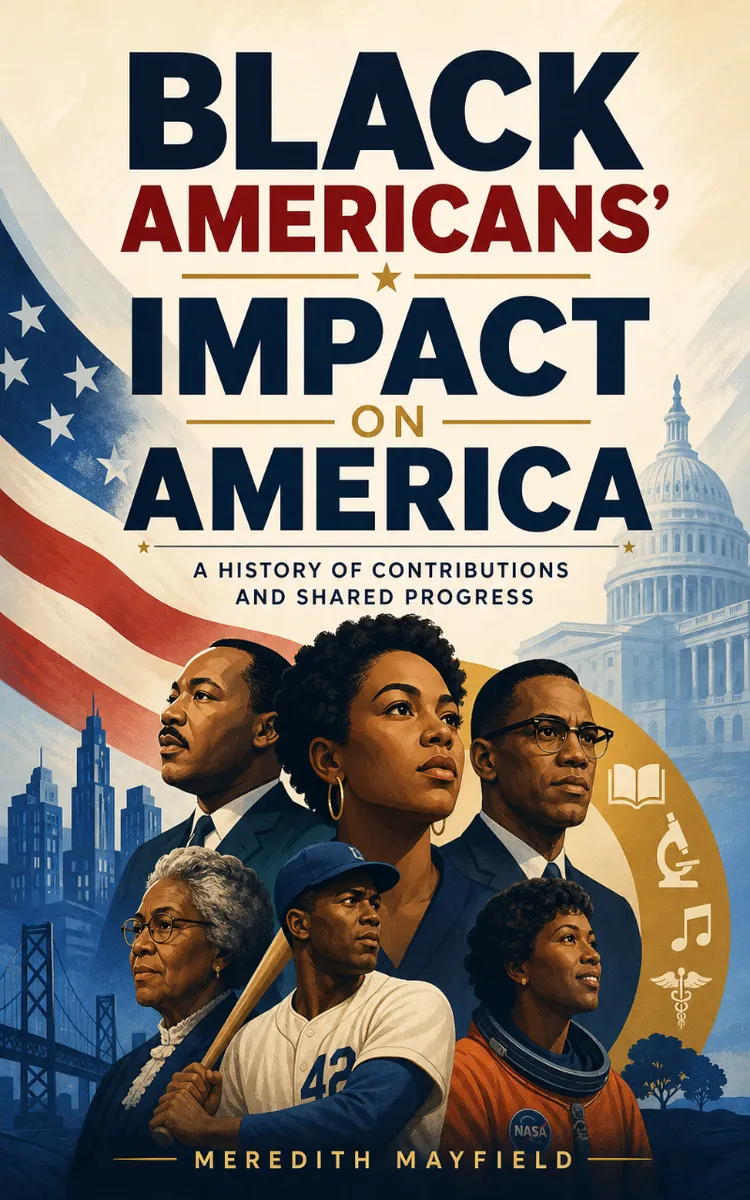
"Black Americans’ Impact On America" is a curiosity book by Meredith Mayfield with 8 chapters and approximately 13,457 words. Historical and cultural contributions of Black Americans to U.S.
This book was created using Inkfluence AI, an AI-powered book generation platform that helps authors write, design, and publish complete books.
Frequently Asked Questions
What is "Black Americans’ Impact On America" about?
Historical and cultural contributions of Black Americans to U.S. society
How many chapters are in "Black Americans’ Impact On America"?
The book contains 8 chapters and approximately 13,457 words. Topics covered include The Music That Trained America’s Ears, Hidden Architects of the Civil Rights Wins, The Inventions Behind Everyday Freedom, Foodways That Became National Comfort, and more.
Who wrote "Black Americans’ Impact On America"?
This book was written by Meredith Mayfield and created using Inkfluence AI, an AI book generation platform that helps authors write, design, and publish books.
Write your own curiosity book with AI
Describe your idea and Inkfluence writes the whole thing. Free to start.
Start writingCreated with Inkfluence AI


