
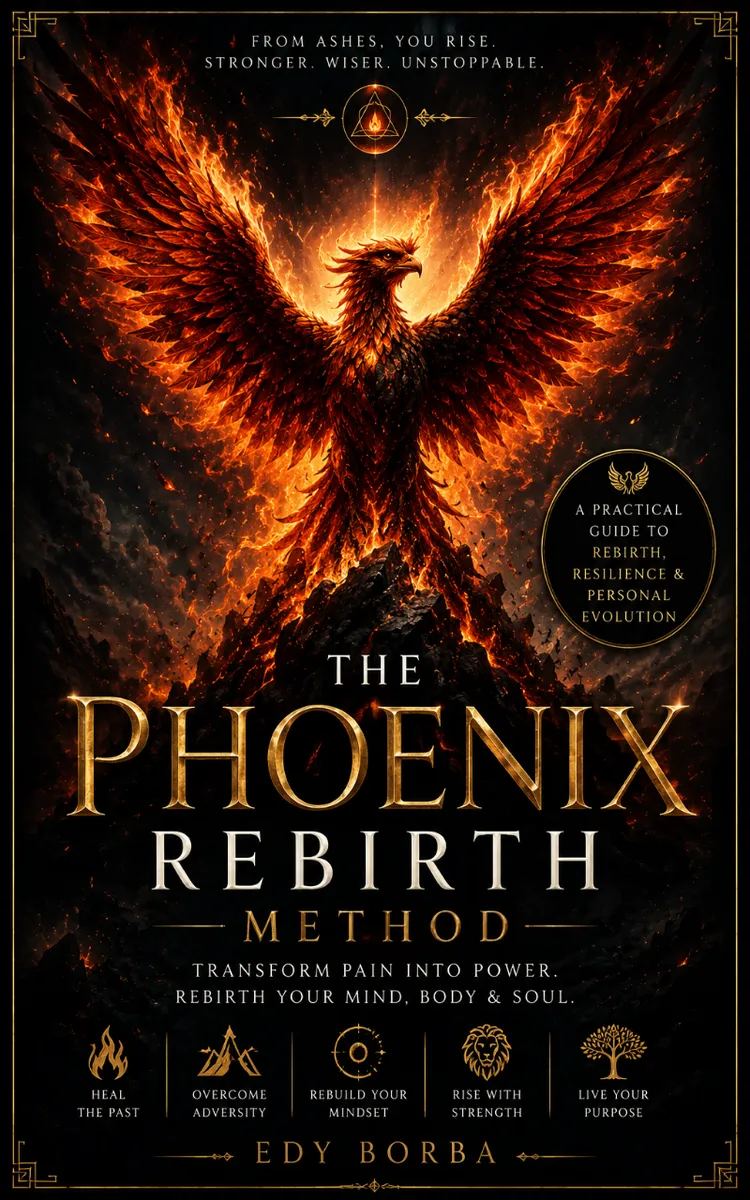
The Phoenix Rebirth Method
Created with Inkfluence AI
Emotional recovery and mindset rebuilding after collapse
Table of Contents
- 1. Rebuild Your Identity From Ashes
- 2. Break the Belief Chains That Hurt
- 3. Turn Emotional Collapse Into Recovery
- 4. Integrate Trauma Without Re-Living It
- 5. Build Discipline Through Fire Routines
- 6. Master Emotions With the Pulse Map
- 7. Awaken Purpose After Failure
- 8. Restore Confidence With Shadow Integration
Preview: Rebuild Your Identity From Ashes
A short excerpt from “Rebuild Your Identity From Ashes”. The full book contains 8 chapters and 12,006 words.
Picture This
The night it hits you isn’t loud. It’s worse than loud. It’s quiet. You’re scrolling through old messages like you’re searching for a missing limb-same conversation, different ending. You replay the moment they pulled away, then the moment you begged, then the moment you finally stopped texting and pretended you didn’t care. Your chest tightens like your body is trying to keep the old story alive. Because if the story is alive, then at least it feels familiar.
Then the shame arrives wearing your voice. So this is who you are. Not “this happened.” Not “you got hurt.” Your mind compresses the whole collapse into an identity: unlovable, foolish, broken, too much, not enough. Even when you’re functioning-working, paying bills, showing up-inside you’re still living in the courtroom of that old narrative, waiting for the sentence that explains why it all went wrong.
What if that old story isn’t your truth-just your mind refusing to let you be new?
The Mindset Shift
Old Belief: “The breakup/failure proves something permanent about who I am.”
New Reality: “The collapse revealed a pattern in my mind-not my identity. I can rewrite it into Phoenix truth.”
That shift matters because shame works like glue. It sticks to the identity, not the event. When you label yourself-“I’m the one who gets left,” “I’m the one who messes things up”-your brain stops looking for what you can change. Why try? You’ve already decided the outcome in advance. You’re not rebuilding a life; you’re defending a verdict.
Leila, 34, international event producer, learned this the hard way. After a long relationship imploded right before a career milestone, she did the “productive” thing first. She worked harder, posted her wins, hosted meetings with a smile sharp enough to cut. But at night, her mind replayed everything with the same conclusion: I ruined it. Not “we didn’t work out.” Not “it was complicated.” Her identity had fused to the pain. So every time she tried to move forward, shame pulled her back, like a magnet under the floor.
The Phoenix Identity Rewrite is how you cut that magnet cleanly. You stop asking, “What did I do wrong?” as if punishment will resurrect what’s gone. You start asking, “What story am I repeating that keeps me stuck?” Then you replace identity-based shame with Phoenix identity-resilient, chosen, and unfinished. Not “perfect.” Not “over it.” Finished is for endings. Phoenix is for fire.
Here’s the concrete example: Leila caught herself saying, “I’m embarrassing.” She wasn’t just upset-she was claiming identity. So she rewrote it in present tense, in her own language, like a contract with her future: “I made a mistake under pressure, and I’m learning. I’m not embarrassing-I’m rebuilding.” The wording wasn’t magic. The shift was. Her mind moved from self-attack to self-direction. That’s the difference between hiding in ashes and stepping into light.
Going Deeper
Your mind clings to the old story because it thinks the story is protection. The brain loves patterns the way your body loves oxygen. If you can predict the pain, you can “prepare” for it. That’s why the narrative gets louder after heartbreak or collapse-it’s your mind trying to prevent surprise, even if the surprise it’s preventing is your own growth.
Identity-based shame is especially sticky because it feels like certainty. Events are messy. People change. Timing is brutal. But identity? Identity sounds final. “I’m unlovable” feels like a complete explanation. And when your nervous system is overwhelmed, it prefers an explanation-even a cruel one-over uncertainty. The old story becomes a blanket. It might suffocate you, but at least it’s familiar.
So when you rewrite the identity, you’re not just changing thoughts. You’re changing the emotional job your mind is doing. Instead of shame guarding you from rejection, Phoenix identity teaches your mind: We can survive the truth and still move. That’s emotional mastery in motion-quiet, ruthless, real.
Signs this pattern is running your life:
1. You keep collecting “evidence” that you’re to blame, even when the situation clearly had more than one cause. Your brain calls it accountability. Your body calls it punishment.
2. You avoid new chances because they might “confirm” the old story. You don’t fear failure-you fear the identity it would assign you.
3. You can’t stop rehearsing the same conversation in your head, like replaying it will finally produce a different ending. It won’t. It only keeps the wound awake.
4. You feel relief when you’re hurt by the old story-because at least pain is proof you’re paying attention. That relief is the trap.
Le verdict (the verdict): Your identity isn’t what happened-it’s what you keep deciding it means.
Reflection & Self-Assessment
Answer these like you’re talking to the part of you that’s been bleeding in silence. Don’t polish. Don’t perform. Just tell the truth.
1....
About this book
"The Phoenix Rebirth Method" is a self-help book by Edicarlos Content Creator · Self-Knowledge & Personal Development with 8 chapters and approximately 12,006 words. Emotional recovery and mindset rebuilding after collapse.
This book was created using Inkfluence AI, an AI-powered book generation platform that helps authors write, design, and publish complete books. It was made with the AI Self-Help Book Writer.
Frequently Asked Questions
What is "The Phoenix Rebirth Method" about?
Emotional recovery and mindset rebuilding after collapse
How many chapters are in "The Phoenix Rebirth Method"?
The book contains 8 chapters and approximately 12,006 words. Topics covered include Rebuild Your Identity From Ashes, Break the Belief Chains That Hurt, Turn Emotional Collapse Into Recovery, Integrate Trauma Without Re-Living It, and more.
Who wrote "The Phoenix Rebirth Method"?
This book was written by Edicarlos Content Creator · Self-Knowledge & Personal Development and created using Inkfluence AI, an AI book generation platform that helps authors write, design, and publish books.
How can I create a similar self-help book?
You can create your own self-help book using Inkfluence AI. Describe your idea, choose your style, and the AI writes the full book for you. It's free to start.
Write your own self-help book with AI
Describe your idea and Inkfluence writes the whole thing. Free to start.
Start writingCreated with Inkfluence AI


