

Read the first chapter
The whole of chapter one, free. About 5 min. Turn the pages with the arrows, your keyboard, or a swipe.
Chapter 1
Seeing the Root: When Self-Hatred Meets God’s Truth
Self-hatred can sound like a courtroom verdict you keep delivering to yourself - “I’m the problem,” “I’ll never get it right,” “I don’t deserve good things.” It often shows up right after you make a mistake, miss a workout goal, mess up a conversation, or fall behind on something you care about. And once that voice gets comfortable, it starts to treat God’s love like a misunderstanding you haven’t earned yet.
The good news is this: God doesn’t ask you to perform your way out of self-hatred. He invites you to see what’s really happening - name it, trace it back, and replace it with truth. When the accusations get loud, God’s Word can be louder (and clearer).
Scripture
1 John 3:20
“If our hearts condemn us, we know that God is greater than our hearts, and he knows everything.”
Self-hatred loves condemnation; God replaces it with a bigger truth than your feelings.
Reflection
Let’s name what self-hatred sounds like. For many people, it’s not just “I don’t like myself.” It’s sharper than that - sentences that accuse your character instead of addressing a specific behavior. You might hear things like, “I’m worthless,” “I’m disgusting,” “I’m too much,” or “I’m not enough.” Sometimes it’s quieter: “Maybe they’re just being nice,” “I don’t deserve to be heard,” “I should’ve known better.” Either way, the pattern is the same: it moves from a real moment (“I failed,” “I got rejected,” “I messed up”) to a permanent label about who you are.
Where does it come from? Often, self-hatred grows from repeated messages - spoken by others, learned through criticism, or absorbed from painful seasons. Maybe you were told you were “too sensitive,” “not smart enough,” “hard to love,” or “always disappointing.” Maybe you learned to measure your worth by results. And over time, those messages can start running automatically in your mind, like a bad song you didn’t even choose. The strangest part is that self-hatred can feel familiar and even “true,” because it sounds like your own voice. But familiarity isn’t proof.
God’s Word reframes identity by confronting the source of the accusation. John says that when your heart condemns you, you don’t have to agree with it. Self-hatred is not God’s verdict; it’s a counterfeit courtroom. God is greater than your heart, and He knows everything. That means He isn’t surprised by your failures, your past, or your struggle. He also isn’t impressed by your self-condemnation. He’s not waiting for you to hate yourself “enough” before He lets you be whole.
In daily life, this looks practical. You might be cleaning up a mess from earlier in the day - email replies, a missed deadline, a harsh tone you used with your family - and your mind immediately starts stacking evidence against you: “See? You’re unreliable.” Instead of arguing with your feelings or pretending you never did wrong, you can bring the moment into the light of truth. You can say, “I made a mistake. I can take responsibility. But I’m not going to let this one moment become my identity.” That’s not denial. That’s alignment.
Here’s another common struggle: self-hatred makes you confuse clarity with confusion. You might think, “If I stay hard on myself, I’ll improve.” But condemnation doesn’t usually produce steady growth. It tends to produce either shrinking (“I won’t try again”) or frantic overwork (“I have to prove I’m worth something”). God’s truth doesn’t just correct behavior - it restores belonging. God’s truth doesn’t flatter you; it steadies you. It helps you face what’s real without turning it into a sentence about your soul.
And yes, this will feel different from the voice you’ve heard for years. That’s because it is different. Self-hatred speaks in absolutes - always, never, worthless, ruined. God’s Word speaks in reality and redemption - there is forgiveness, renewal, and a path forward. You’re not being asked to pretend you’re fine. You’re being invited to stop agreeing with the lie that you’re condemned beyond repair.
So when the accusation comes, don’t just react. Notice the type of statement. Is it about a specific action, or is it a character attack? Is it temporary (“I messed up”) or permanent (“I am a mess”)? The moment you can name the difference, you’re already stepping out of the trap.
Spiritual exercise
• Name the accusation (2 minutes, no explaining).
Grab a notebook and write the exact sentence your self-hatred uses. Keep it simple and plain - whatever it says in your head. Then write a second line underneath: “God’s truth says…”
Example: If your sentence is “I’m a failure,” your truth line might be “God is greater than my heart, and He knows everything.” (That’s your anchor from 1 John 3:20.)
• Journal with one targeted question (5 minutes).
Set a timer for five minutes and answer:
“What moment today is my self-hatred trying to turn into an identity?”
If you want a starter, write: “When I, my mind responds by saying, and I start believing ___.” Then add: “God, help me separate my mistake from my worth.”
• Do a timed truth prayer (3 rounds of 30 seconds).
Set a phone timer for 30 seconds. Pray this way, three times:
• Round 1: “God, my heart is condemning me. I’m naming it.”
• Round 2: “Your Word is greater than my heart. Teach me the truth.”
• Round 3: “Help me take the next right step without turning to self-hate.”
Keep it short. No performance. You’re practicing agreement with God’s perspective, not trying to sound spiritual.
Small note that matters: don’t skip the naming part. If you don’t name the accusation, it stays slippery. But when you write it down, you can actually see the shape of the lie - and that’s when truth becomes usable.
Closing Prayer
God, I bring You the voice that condemns me. I don’t want to call my hurt a verdict. Teach me to separate my mistakes from my identity, and help me trust Your Word when my heart feels loud. Give me clarity, courage, and peace to take the next right step. In Jesus’ name, amen.
End of chapter one. 6 more chapters in the full book.
Swipe or use the arrows to turn the page


What's inside: 7 chapters
- 1. Seeing the Root: When Self-Hatred Meets God’s Truth
- 2. Trust Over Turmoil: Choosing God When Feelings Say “No”
- 3. Prayer That Heals: Bringing Pain to the Father
- 4. Hope Rewritten: Replacing Lies with God’s Promises
- 5. Surrender the Story: Letting God Redefine You
- 6. Grace in Motion: Forgiveness, Repentance, and Renewal
- 7. Living Free: A New Identity Rooted in God’s Love
About this book
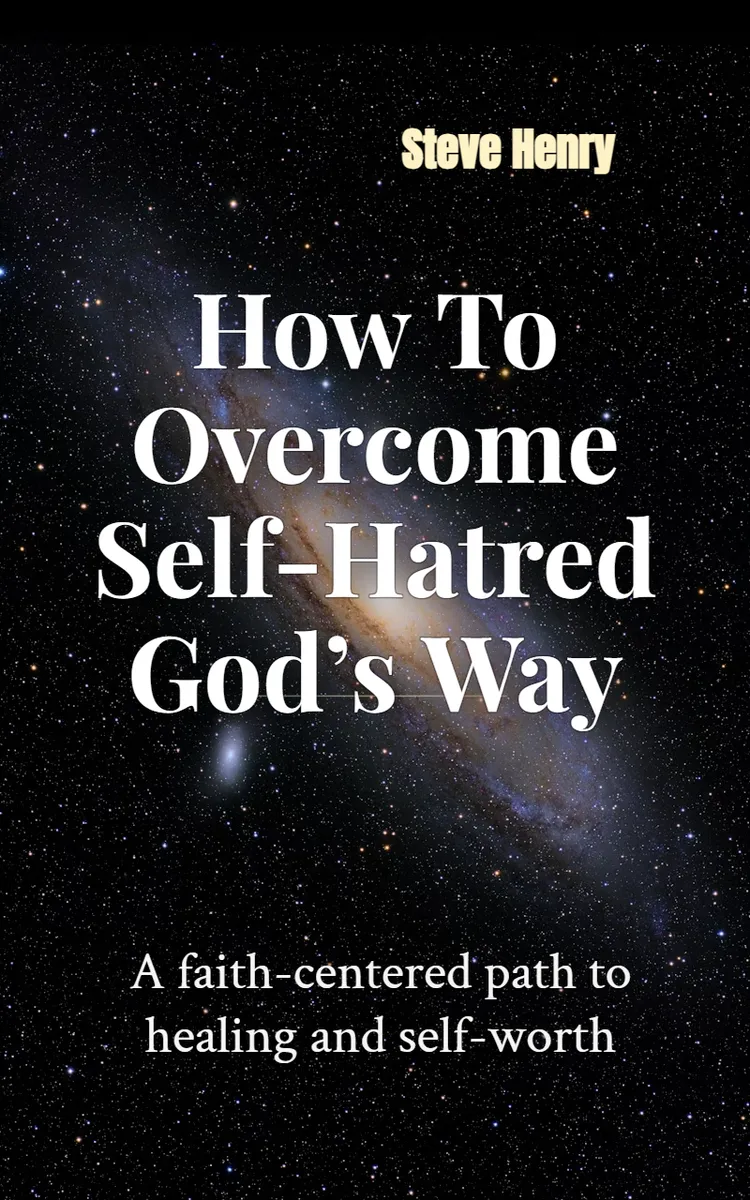
"How To Overcome Self-Hatred God’s Way" is a religious devotional book by Steve Henry with 7 chapters and approximately 6,770 words. Faith-based guidance to overcome self-hatred.
This book was created using Inkfluence AI, an AI-powered book generation platform that helps authors write, design, and publish complete books.
Frequently Asked Questions
What is "How To Overcome Self-Hatred God’s Way" about?
Faith-based guidance to overcome self-hatred
How many chapters are in "How To Overcome Self-Hatred God’s Way"?
The book contains 7 chapters and approximately 6,770 words. Topics covered include Seeing the Root: When Self-Hatred Meets God’s Truth, Trust Over Turmoil: Choosing God When Feelings Say “No”, Prayer That Heals: Bringing Pain to the Father, Hope Rewritten: Replacing Lies with God’s Promises, and more.
Who wrote "How To Overcome Self-Hatred God’s Way"?
This book was written by Steve Henry and created using Inkfluence AI, an AI book generation platform that helps authors write, design, and publish books.
Write your own religious devotional book with AI
Describe your idea and Inkfluence writes the whole thing. Free to start.
Start writingCreated with Inkfluence AI


