
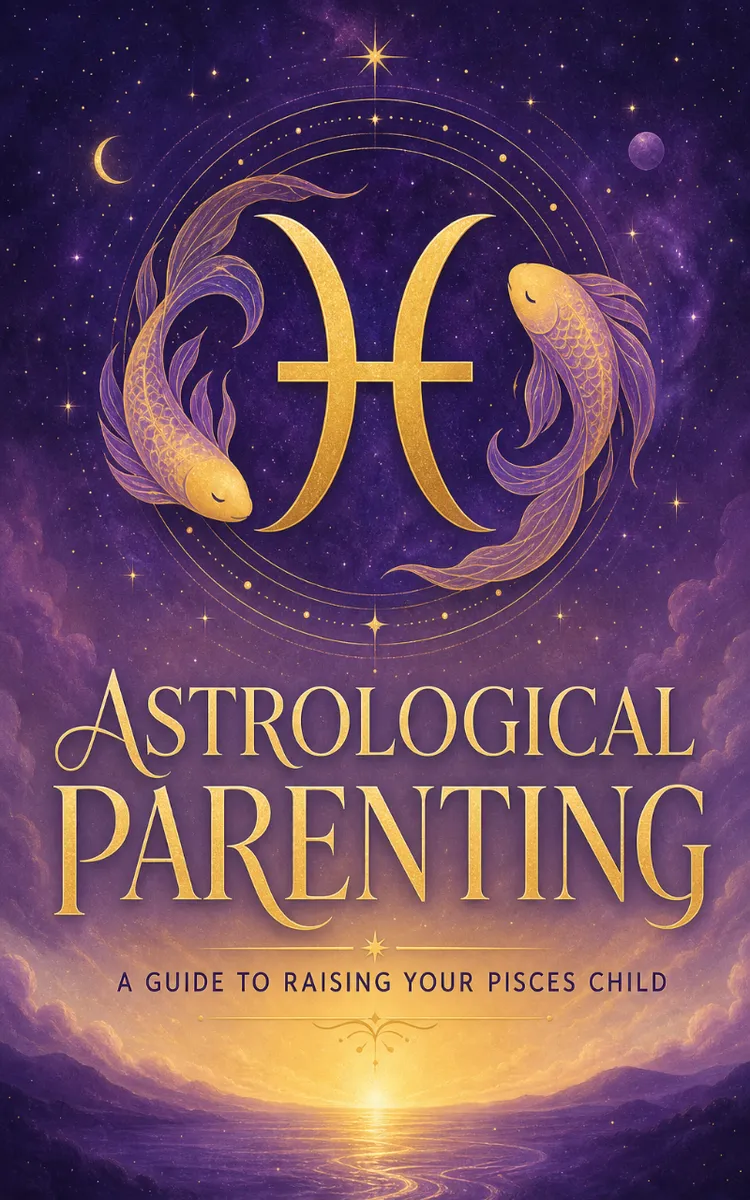
Astrological Parenting
Created with Inkfluence AI
Parenting guidance tailored to a Pisces child’s traits
Table of Contents
- 1. Naming Your Pisces Child’s Gifts
- 2. Rewriting Beliefs Behind Big Feelings
- 3. Building Boundaries Without Killing Empathy
- 4. Communicating Like a Pisces Heart
- 5. Creating Routines That Feel Safe
- 6. Turning Imagination Into Confidence
- 7. Repairing After Emotional Storms
- 8. Living Purpose Through Compassionate Action
Preview: Naming Your Pisces Child’s Gifts
A short excerpt from “Naming Your Pisces Child’s Gifts”. The full book contains 8 chapters and 13,780 words.
When “Nice” Isn’t Enough: Naming Your Pisces Child’s Gifts in Real Life
Nadia, 34, an early-childhood educator, used to watch a familiar pattern play out in her classroom. A little Pisces kid would drift toward the group - soft eyes, gentle voice, the kind of kid who could spot who was having a hard day before anyone said anything. Then, when it was time to talk about strengths, adults would reach for the safest label: “He’s nice.” “She’s sweet.” It sounded harmless… until Nadia noticed how quickly “nice” became a cage. The child started to hide their feelings instead of sharing them, as if sweetness meant they weren’t allowed to need anything in return.
At home, it looked even messier. The same child might be wildly imaginative in the bath, then shut down when asked what they wanted. They’d say, “I don’t know,” even though Nadia could see their mind working - absorbing the room, feeling the mood, making meaning out of everything. Nadia would go home thinking, What if we’re praising the right behavior but not naming the actual gift? And if we don’t name it clearly, how will they ever believe they have one?
What if the words you use to describe your Pisces child are quietly shaping whether they feel confident - or invisible?
---
The Celestial Identity Map: Turning Pisces Sensitivity Into a Real Identity Statement
Old Belief: “Pisces kids are just sensitive and dreamy, so we should keep it simple - praise good behavior and let their personality be what it is.”
New Reality: “Pisces kids thrive when you name their gifts in a child-friendly way - so they can carry a clear identity statement that matches who they truly are.”
Nadia saw this shift the moment she stopped trying to “sum up” the child and started translating their traits. Instead of “nice,” she tried something more specific and grounded in the child’s lived experience. When the kid comforted a friend without being asked, Nadia didn’t just praise the moment. She gave the moment a name.
She’d kneel at eye level and say, “You’re a feelings helper. You notice what people need, and you use your heart to make things softer.” Then, when the kid drew a picture that looked like a whole story (not just a picture), Nadia added, “You’re also a story-maker. Your brain turns feelings into pictures and words.”
That’s the core move: you’re not forcing a label. You’re offering a mirror.
And here’s the concrete example Nadia used in her classroom: one child kept saying, “I’m bad at sharing.” It wasn’t that the child didn’t care. It was that they cared too much - they felt the loss in their body. Nadia didn’t argue with the feeling. She changed the name. “You’re not bad at sharing. You’re protective of your treasures. Your heart works hard to keep what matters safe.” The next day, the child still needed time - but they were less ashamed. They could practice sharing as a skill, not as proof they were “wrong.”
Why does this matter so much? Because Pisces kids don’t just respond to praise - they respond to meaning. When their gifts are named clearly, they stop asking, “Am I too much?” and start asking, “How do I use my gifts well?”
---
Why Pisces Needs Words That Feel Like Home (Not Just Compliments)
Pisces energy is like a tuning fork. It picks up what’s around them - tone, tension, atmosphere - and then it translates that into emotion, imagination, and empathy. If adults only use vague praise (“good job,” “sweet,” “nice”), the child may feel seen for behavior but not understood for how their inner world actually works. That’s where confidence gets slippery.
When you name the gifts, you’re doing something powerful: you’re giving your child an identity that can hold their sensitivity without turning it into shame. You’re also helping them separate who they are from what they’re struggling with. A Pisces child can be a “feelings helper” and still be overwhelmed. They can be a “story-maker” and still need help finishing tasks. Clear identity statements make room for growth instead of forcing perfection.
There’s also a practical side. When a child has an identity statement, they can explain themselves. Instead of melting down and you guessing, they can say something like, “I’m feeling too many feelings right now” or “My brain is making a story and I need a minute.” That one shift reduces power struggles because the child isn’t trying to prove they’re okay - they’re trying to get understood.
Signs this pattern is running your life
1. Your Pisces child gets labeled as “shy,” “sensitive,” or “sweet,” but they don’t seem to stand taller after hearing it.
2. When they struggle, they say things like “I’m bad at this” instead of “I’m having a hard time.”
3. You catch yourself praising the behavior but still feeling like the real “why” is missing.
4. They shut down when asked “What do you like?” but they light up when they can talk about feelings, stories, or what something means to them.
...
About this book
"Astrological Parenting" is a self-help book by M.A. Hershey with 8 chapters and approximately 13,780 words. Parenting guidance tailored to a Pisces child’s traits.
This book was created using Inkfluence AI, an AI-powered book generation platform that helps authors write, design, and publish complete books. It was made with the AI Self-Help Book Writer.
Frequently Asked Questions
What is "Astrological Parenting" about?
Parenting guidance tailored to a Pisces child’s traits
How many chapters are in "Astrological Parenting"?
The book contains 8 chapters and approximately 13,780 words. Topics covered include Naming Your Pisces Child’s Gifts, Rewriting Beliefs Behind Big Feelings, Building Boundaries Without Killing Empathy, Communicating Like a Pisces Heart, and more.
Who wrote "Astrological Parenting"?
This book was written by M.A. Hershey and created using Inkfluence AI, an AI book generation platform that helps authors write, design, and publish books.
How can I create a similar self-help book?
You can create your own self-help book using Inkfluence AI. Describe your idea, choose your style, and the AI writes the full book for you. It's free to start.
Write your own self-help book with AI
Describe your idea and Inkfluence writes the whole thing. Free to start.
Start writingCreated with Inkfluence AI


