
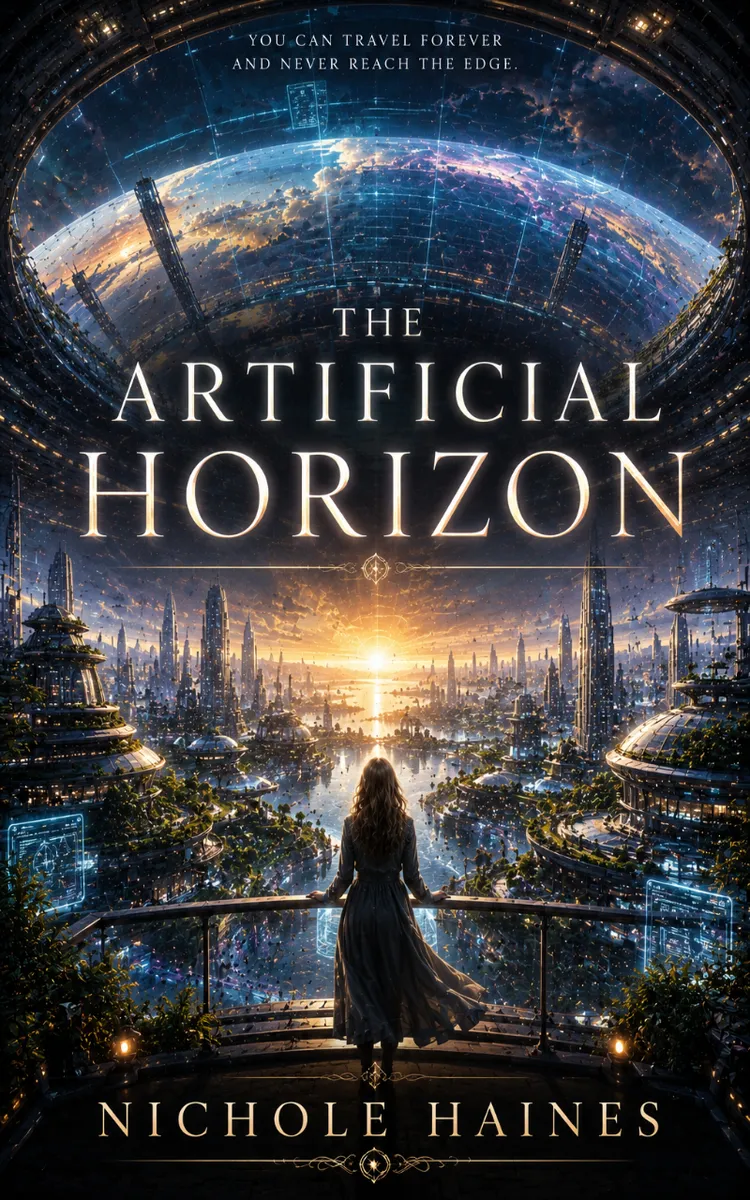

A journey reveals a procedurally generated horizon with twists
Table of Contents
- 1. The Road That Never Ends
- 2. A Cartographer’s Note in the Mud
- 3. Following Footprints That Reappear
- 4. The River That Spells Back
- 5. The Stranger Who Knows Your Name
- 6. The Tunnel That Rewrites Distance
- 7. Mara’s Map That Predicts You
- 8. The Watchtower With No City
- 9. A Key Made of Yesterday’s Metal
- 10. The Coordinate That Moves Away
- 11. The Broken Radio That Answers
- 12. Eidolon Station’s Map Fragment
- 13. Rafiq’s Choice to Trust Her
- 14. The Countdown That Eats Light
- 15. The Chamber With Your Memories
- 16. The Panel That Opens Into Weather
- 17. Mara’s Real Reason for Eidolon
- 18. The Envelope That Burns on Use
- 19. A Door Appears in Plain Sight
- 20. Eidolon’s Voice Behind the Wall
- 21. The Memory That Isn’t His
- 22. A Guard Drone Made of Light
- 23. The Foreign Memory’s Hidden Map
- 24. The Generator’s Mouth Is a Loop
- 25. Rafiq Refuses to Erase the Corridor
- 26. A Door Opens Only for Mara
- 27. Mara’s Plan to Break the Ahead
- 28. The Hidden Tunnel Smells Like Rain
- 29. Sky Above, Edge Still Missing
- 30. Rafiq Loses Mara’s Thread
- 31. The Lens That Sees the Ahead
- 32. Refusing Acknowledgment Breaks Reality
- 33. The Entity Names the Real Edge
- 34. Rafiq Cuts the Feedback Loop
- 35. The Horizon Turns Into a Door
- 36. A Stable World With Missing Names
- 37. The Radio Calls Back Without a Voice
- 38. Eidolon Ruins Under a Real Sky
- 39. Mara’s Letter in a Sealed Wall
- 40. Reaching the Edge by Letting Go
- 41. The Road That Keeps Going
Preview: The Road That Never Ends
A short excerpt from “The Road That Never Ends”. The full book contains 41 chapters and 102,980 words.
Rafiq Osei’s compass needle trembled like it was trying to remember what north meant. The road under his boots was packed dust and grit, pale as bone, with pebbles that clicked when he shifted his weight. Above, the sky stayed the same washed color all day - never deepening, never dimming - so the light had nowhere to go. He walked with the hand-drawn map tucked inside his coat, the paper already softened at the creases from days of sweat and weather, and he checked the compass at every hour because it was the only thing that still felt honest.
The landmark he’d been chasing showed on the map as a dark smudge at the edge of the page: a cluster of stones arranged like ribs. Rafiq had copied it from an earlier traveler’s sketch weeks ago - maybe months, time had started to feel like another rumor out here. The sketch had promised certainty. A ribbed cairn, a crooked marker, something you could point to and say, there. He wanted to reach it before his own doubts grew teeth.
The road kept its promise at first. It didn’t split, didn’t wander off into scrub or broken earth. It ran straight under that constant pale sky, the horizon flat and patient, the sound of his footsteps the only rhythm he could measure. When the wind came, it worried the dust into thin swirls that snagged on the edge of his mouth and made his tongue taste like old plaster. He pulled his scarf higher and kept moving, following the line he’d drawn with a careful pen - distance marks spaced like prayers, each one tied to the compass bearing.
By afternoon, the ribs were almost close enough to count. He could see the change in the road’s texture where the dust darkened into a faint track of packed stone. The cairn itself rose ahead, not tall, but distinct: pale rocks standing in an arc, like someone had tried to build a skeletal shelter and stopped halfway through. Relief hit him so hard it felt like a mistake, like his body didn’t know what to do with good news.
He slowed, letting his breath settle. The compass needle steadied for the first time in hours, pointing with crisp obedience toward the cairn. Rafiq touched the map through the coat to make sure it was still there. The paper seemed almost heavier when he needed it.
Then the road made a sound.
It wasn’t thunder. It was a soft, dry scrape, as if someone were dragging a board across packed earth. Rafiq stopped so abruptly his boot slid, leaving a shallow groove behind. The compass needle jerked, spun once, and locked again - not toward the cairn, but along the road’s centerline. The ribs were still there, only now they looked fractionally wrong, as though the stones had been shifted between glances.
“Hold,” he muttered, the word fogging against his scarf. He knelt and brushed dust aside with his fingers. The grit stuck to his skin, gritty and cold, and underneath the packed road he found a seam - thin, almost invisible, running across the width like the edge of a hidden panel.
He looked up. The cairn’s stones had the same arc, the same pale color, but the angle of the arc changed when he blinked. Rafiq stood, his knees aching from the sudden movement. His map, pressed to his chest, suddenly felt like a lie someone had told him politely.
He walked toward the cairn with care, boots measuring each step. The air stayed dry. There was no scent of wet stone, no mineral smell that would have made the rocks feel real. The only sound was his own movement and the faint hiss of dust sliding down the road’s slope.
At the cairn, he expected to find something - names carved into the largest stone, a mark, a notch that matched the earlier sketch. Instead, the stones looked freshly arranged. Their edges were too clean, their surfaces too uniform, as if they’d been placed by a hand that didn’t understand weather.
Rafiq pressed his palm against the nearest rock. It felt cool, but not in the way stone does after days in the sun - more like a cold surface laid out to mimic cold. He ran his thumb over a line where he remembered a notch from the sketch. The notch wasn’t there. The line he found was smooth, unbroken, like the rock had never been touched.
A low click sounded behind him.
Rafiq turned sharply. Along the road, just ahead of his previous footprint, a small marker protruded from the dust - flat, rectangular, and the same pale tone as the stones. He hadn’t seen it a moment ago. It sat at an angle, as if it had been nudged into place by a bored foot.
He stared at it, then at his map. The map showed a ribbed cairn and, beyond it, a trail marker with a single black slash. This was a marker with a slash - only the slash looked different, thicker, as if redrawn.
Rafiq crouched and brushed dust off the marker. A faint symbol emerged beneath his fingertips: a circle broken by a line, repeated in smaller etchings around the edge. He didn’t recognize the design at first....
About this book
"The Artificial Horizon" is a fiction book by Nichole Haines with 41 chapters and approximately 102,980 words. A journey reveals a procedurally generated horizon with twists.
This book was created using Inkfluence AI, an AI-powered book generation platform that helps authors write, design, and publish complete books. It was made with the AI Novel Writer.
Frequently Asked Questions
What is "The Artificial Horizon" about?
A journey reveals a procedurally generated horizon with twists
How many chapters are in "The Artificial Horizon"?
The book contains 41 chapters and approximately 102,980 words. Topics covered include The Road That Never Ends, A Cartographer’s Note in the Mud, Following Footprints That Reappear, The River That Spells Back, and more.
Who wrote "The Artificial Horizon"?
This book was written by Nichole Haines and created using Inkfluence AI, an AI book generation platform that helps authors write, design, and publish books.
How can I create a similar fiction book?
You can create your own fiction book using Inkfluence AI. Describe your idea, choose your style, and the AI writes the full book for you. It's free to start.
Write your own fiction book with AI
Describe your idea and Inkfluence writes the whole thing. Free to start.
Start writingCreated with Inkfluence AI


