
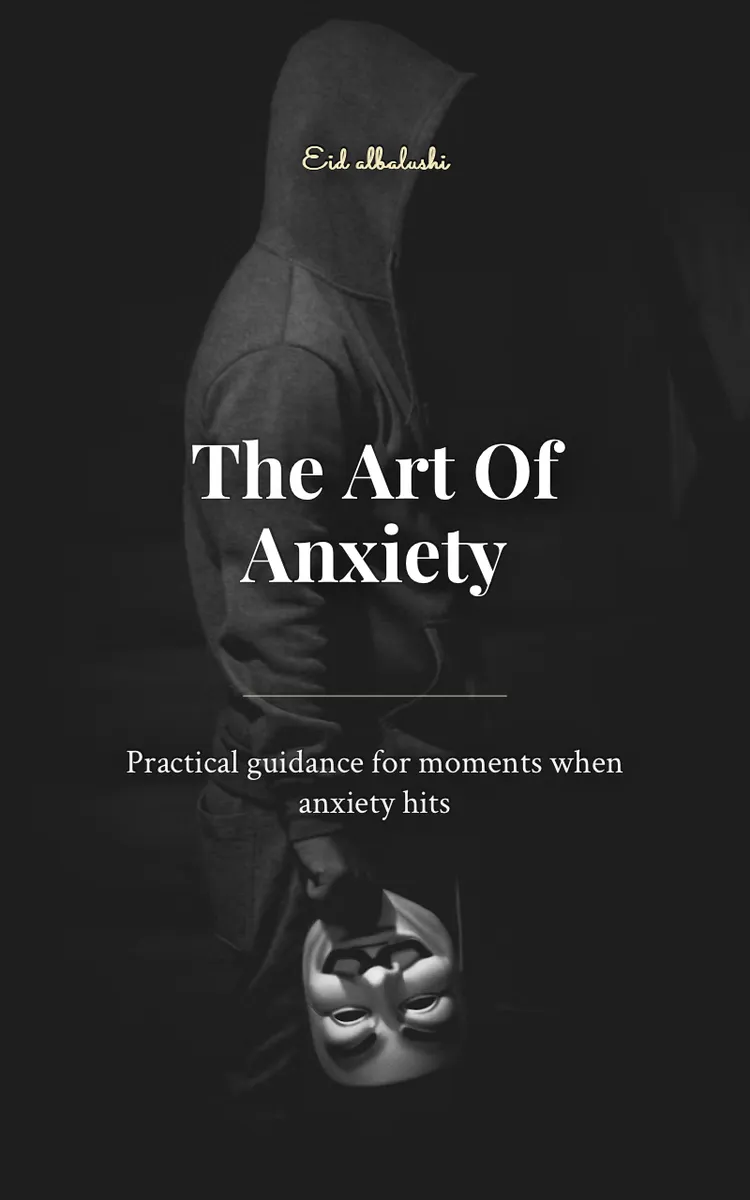
Calm Through Anxiety
Created with Inkfluence AI
Coping strategies and advice for managing anxiety episodes
Table of Contents
- 1. Defusing Catastrophic Thoughts Fast
- 2. Rewriting Anxiety Beliefs With Evidence
- 3. Building a Calming Routine Under Stress
- 4. Practicing Exposure Without Avoidance
- 5. Choosing Values When Anxiety Shows Up
Preview: Defusing Catastrophic Thoughts Fast
A short excerpt from “Defusing Catastrophic Thoughts Fast”. The full book contains 5 chapters and 8,488 words.
Catching the Anxiety Spiral Before It Hits “Catastrophe Mode”
Have you ever felt your brain do that quick little switch - everything goes from “fine” to “this is definitely going to go terribly”? One message goes unread for a few minutes and suddenly it’s not just a busy day. It’s: they’re mad, something’s wrong, I’m about to mess everything up. Your body starts acting like the threat is real - tight chest, hot face, fast thoughts - and you can practically hear the panic lining up its evidence.
Talia, 34, a project manager, knows that moment well. She’ll be halfway through a normal workday - spreadsheets, meetings, small decisions - when a coworker sends a vague note like, “Can we talk soon?” And her mind fills in the rest: blame, delays, her competence questioned, the whole project collapsing like dominoes. By the time she realizes she’s spiraling, she’s already arguing with imaginary outcomes in her head, trying to “solve” something that hasn’t happened yet.
What if the fastest way out of anxiety wasn’t calming down - what if it was catching the spiral earlier, before your thoughts harden into catastrophe?
The Stop-Name-Soften Loop for Anxiety Spirals
Here’s the shift that changes everything for early spirals.
Old Belief: “If I just think harder, I’ll figure out what’s wrong and stop the panic.”
New Reality: “My brain is running a threat story. I don’t need to solve it - I need to interrupt the story.”
When an anxiety spiral starts, your mind often behaves like a detective with no real case. It hunts for clues, connects dots, and builds a courtroom case for worst-case outcomes. But the more you chase the “answer,” the more your brain learns: this is important, keep going. The spiral gets stronger because you keep feeding it attention and urgency.
Talia noticed this pattern when she tried to “handle it” by re-reading every message, replaying every past conversation, and mentally preparing for the worst. It felt productive - like she was preventing disaster. But it also kept her body stuck in alarm. The moment she started using the Stop-Name-Soften Loop, she didn’t have to be fearless. She just had to be early.
In a real moment, she’d catch it like this: she’d feel the heat rise, then she’d say (out loud or in her head), “Stop.” Not “stop thinking” like that ever works, but “stop feeding the catastrophe storyline.” Then she’d name it: “This is a threat story.” Finally, she’d soften it: “My brain is predicting. Predictions aren’t facts.” That last part is key. Softening doesn’t mean “everything’s fine.” It means “I’m not obligated to treat this thought like truth.”
Signs Your Anxiety Spiral Is Running the Show (and Not You)
The Stop-Name-Soften Loop works because anxiety spirals usually follow a predictable path. Your mind starts with a real signal (a delay, an uncertainty, a feeling). Then it guesses the worst meaning. Then it treats that meaning like an emergency. You end up steering your day based on a story your brain wrote quickly and confidently.
That “story confidence” is what makes spirals so sticky. Your thoughts don’t just appear - they feel compelling. They sound specific. They feel urgent. And because they’re loud, you start believing you must respond right now.
Here are common signs this pattern is taking the wheel:
1. You start “solving” something that hasn’t happened yet. You’re planning, rehearsing, preparing arguments, or searching for proof - like your future is already in the room.
2. Your body reacts before you can explain the reason. Chest tightness, stomach drop, racing thoughts - like your nervous system is hearing an alarm even when your mind is still trying to catch up.
3. Your thoughts narrow into one track: worst-case. You can’t seem to access “maybe” or “it could be okay.” It’s all or nothing: disaster or failure.
4. You get sucked into “checking” behaviors. Refreshing messages, rereading emails, scanning for tone, asking questions you already know won’t calm you - because the spiral needs new input.
The point isn’t to silence anxiety - it’s to stop treating your threat story like a reliable narrator.
Why “Stop-Name-Soften” Works (Even When You Don’t Feel Calm Yet)
The Stop-Name-Soften Loop interrupts the spiral at the exact moment your mind tries to lock in a catastrophe meaning. You’re not arguing with the thought. You’re changing your relationship to it.
Stop creates a tiny pause between the thought and your reaction. That pause matters because anxiety thrives on momentum. If you keep moving - thinking, checking, debating - you keep the spiral alive. Stop is like catching your foot before it hits the escalator.
Name gives the thought a label: “threat story,” “catastrophe prediction,” “my brain is escalating.” Naming tells your brain, “This is a mental event.” Without a label, thoughts feel like instructions....
About this book
"Calm Through Anxiety" is a self-help book by Eid albalushi with 5 chapters and approximately 8,488 words. Coping strategies and advice for managing anxiety episodes.
This book was created using Inkfluence AI, an AI-powered book generation platform that helps authors write, design, and publish complete books. It was made with the AI Self-Help Book Writer.
Frequently Asked Questions
What is "Calm Through Anxiety" about?
Coping strategies and advice for managing anxiety episodes
How many chapters are in "Calm Through Anxiety"?
The book contains 5 chapters and approximately 8,488 words. Topics covered include Defusing Catastrophic Thoughts Fast, Rewriting Anxiety Beliefs With Evidence, Building a Calming Routine Under Stress, Practicing Exposure Without Avoidance, and more.
Who wrote "Calm Through Anxiety"?
This book was written by Eid albalushi and created using Inkfluence AI, an AI book generation platform that helps authors write, design, and publish books.
How can I create a similar self-help book?
You can create your own self-help book using Inkfluence AI. Describe your idea, choose your style, and the AI writes the full book for you. It's free to start.
Write your own self-help book with AI
Describe your idea and Inkfluence writes the whole thing. Free to start.
Start writingCreated with Inkfluence AI


