
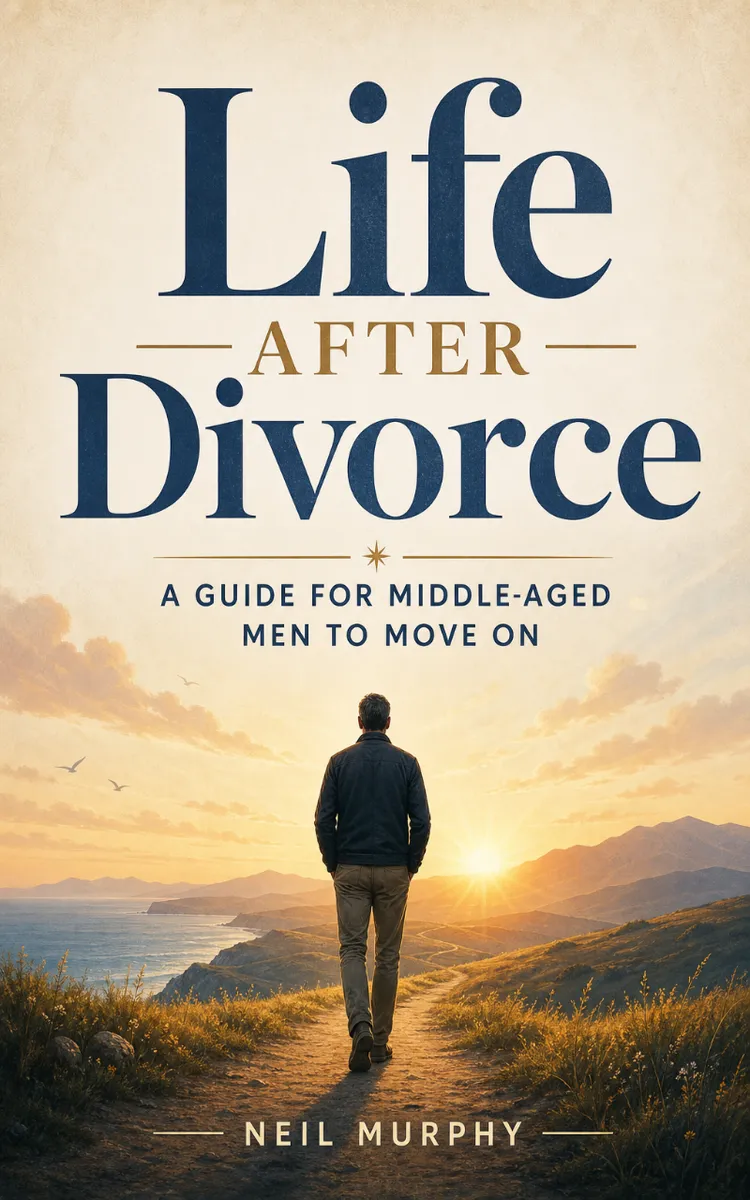
Life After Divorce
Created with Inkfluence AI
Moving on after divorce and rebuilding life
Table of Contents
- 1. Rebuilding Identity After Divorce
- 2. Challenging Divorce-Story Beliefs
- 3. Letting Grief Move Through You
- 4. Building Boundaries Without Guilt
- 5. Communicating With Calm, Not Control
- 6. Designing a Life You Look Forward To
- 7. Rebuilding Social Confidence and Friendships
- 8. Choosing Purpose After Divorce
Preview: Rebuilding Identity After Divorce
A short excerpt from “Rebuilding Identity After Divorce”. The full book contains 8 chapters and 12,451 words.
When the Marriage Ends, the Mirror Changes
A few weeks after the divorce papers were signed, you stand in the kitchen holding a mug you don’t really want. The house is quiet, but your head isn’t. You notice the old family calendar still hanging by the fridge, with school events, birthdays and appointments written in your ex-wife’s handwriting.
For years, your role was clear. Husband. Father. Provider. The man who fixed things, paid bills and knew where everyone needed to be on Saturday morning. Now some of those jobs have gone, or they happen only on certain days. You may still be a father and a decent man, but the daily structure that proved it to you has disappeared.
That can leave a nasty question sitting in the background: if the marriage is over, what does that say about me?
Your marriage ended; your worth did not.
From Failed Marriage to Separate Identity
Old Belief: If my marriage failed, I must have failed as a man.
New Reality: A marriage can end without becoming a verdict on your value.
It’s understandable that your mind joins these two things together. Marriage isn’t just a relationship. It can become your address, routine, reputation and sense of purpose. When it breaks, the loss feels personal because so much of your identity was tied to it.
But being part of a marriage and being a worthwhile man are not the same thing. A relationship is something you take part in. Your character is what you bring to it, how you behave when life is difficult, and what you choose to do after the ending.
Take a man who spent twenty-two years working long hours in his own plumbing business. At home, he was also the one who handled repairs, school runs and weekend jobs. After the divorce, he moved into a small flat and saw his children on set days. He began telling himself, “I’m not really a husband anymore, and I’m not much of a father when they’re not here.”
That conclusion sounds emotionally convincing. It still isn’t true. His role had changed, but his ability to be reliable, caring and useful had not vanished. He needed to stop measuring his worth by how much of the old household he occupied.
This is where the Identity Reset Map helps. It separates three things that divorce tends to jumble together: what has ended, what remains, and what you’re ready to build. The marriage belongs in the first category. Your values, skills, friendships, fatherhood and capacity to grow belong in the second and third.
The point isn’t to pretend the loss doesn’t hurt. It’s to stop allowing the loss to explain your entire identity.
The Identity Reset Map and the Signs You’ve Lost Yourself
Your mind often looks for a simple explanation after a painful ending. “I wasn’t enough” is simple, even if it’s unfair. It can feel easier than facing the more complicated truth: two people, two histories and a long list of pressures can produce an ending without reducing either person to a single label.
Start by drawing three columns on a piece of paper:
| What ended | What remains | What I’m building |
|---|---|---|
| The marriage and shared home | My relationship with my children | A calmer home |
| Being a husband | My honesty and work ethic | Better friendships |
| Daily family routines | My practical skills | A life chosen deliberately |
Be specific. Don’t write “everything”. That word may match the pain, but it hides the facts. If your Saturday football routine has ended, write that down. If your ability to coach your son has not ended, put that in the middle column.
The map works because it gives your mind somewhere accurate to stand. You’re not denying the empty chair at the table. You’re refusing to call the empty chair proof that you’re empty too.
Signs the old identity is running your life
1. You introduce yourself through the divorce.
Nearly every conversation begins with “Since the split…” even when the subject has nothing to do with it.
2. You treat your ex-wife’s opinion as the final judgement on you.
If she says you were distant, difficult or selfish, you hear “You are permanently a bad man,” rather than “There may be something worth examining.”
3. You feel guilty whenever you enjoy yourself.
A meal with a mate or a Saturday morning on the golf course feels like betrayal, because suffering seems to be the only role left.
4. You keep performing old duties to prove you still matter.
You volunteer for every practical task, even when it leaves you exhausted, hoping usefulness will earn back a place that has changed.
The shift is not about becoming a different man overnight. It’s about seeing that your worth can’t depend on one role, one home or one person’s approval.
Your identity needs more than one pillar, especially after the marriage pillar falls.
Questions That Put Your Worth Back in Your Own Hands
1....
About this book
"Life After Divorce" is a self-help book by Neil Murphy with 8 chapters and approximately 12,451 words. Moving on after divorce and rebuilding life.
This book was created using Inkfluence AI, an AI-powered book generation platform that helps authors write, design, and publish complete books. It was made with the AI Self-Help Book Writer.
Frequently Asked Questions
What is "Life After Divorce" about?
Moving on after divorce and rebuilding life
How many chapters are in "Life After Divorce"?
The book contains 8 chapters and approximately 12,451 words. Topics covered include Rebuilding Identity After Divorce, Challenging Divorce-Story Beliefs, Letting Grief Move Through You, Building Boundaries Without Guilt, and more.
Who wrote "Life After Divorce"?
This book was written by Neil Murphy and created using Inkfluence AI, an AI book generation platform that helps authors write, design, and publish books.
How can I create a similar self-help book?
You can create your own self-help book using Inkfluence AI. Describe your idea, choose your style, and the AI writes the full book for you. It's free to start.
Write your own self-help book with AI
Describe your idea and Inkfluence writes the whole thing. Free to start.
Start writingCreated with Inkfluence AI


