
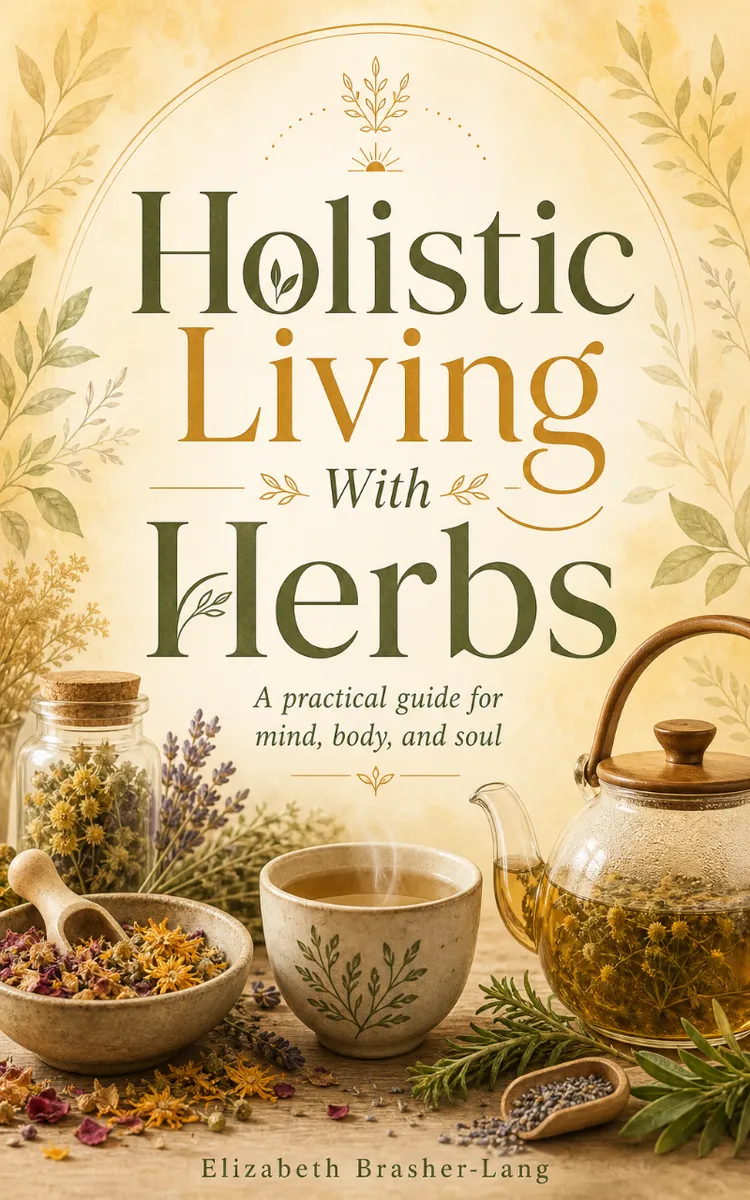
Holistic Living With Herbs
Created with Inkfluence AI
Holistic daily living using herbal remedies
Table of Contents
- 1. Your Holistic Baseline Checklist
- 2. Herb Safety, Quality, and Sourcing
- 3. Choosing Herbs by Your Symptoms
- 4. Tea Rituals for Daily Support
- 5. Infusions, Decoctions, and Tinctures
- 6. Creating a Simple Herbal Pantry
- 7. Herbal Bath and Body Care Basics
- 8. Mindful Breathing with Herbal Scents
- 9. Tracking Results and Adjusting Safely
- 10. Building Your Ongoing Holistic Routine
Preview: Your Holistic Baseline Checklist
A short excerpt from “Your Holistic Baseline Checklist”. The full book contains 10 chapters and 19,017 words.
Have you ever bought an herbal product, used it for a few days, and then wondered why it didn’t “stick” with your life? That usually happens when you pick herbs for the symptom you notice, not for the stress patterns, habits, and health goals that keep creating the symptom in the first place. A good herbal routine needs a starting line you can actually measure.
This chapter gives you a clear way to set that starting line. You will learn how to assess your current stress level, your daily habits, and your specific health goals - then choose an herbal focus that matches your real-life needs. You will also learn how to adjust your focus when your body tells you something different than you expected.
You’ll finish with a practical baseline checklist and a simple way to decide, “What herb category should I try first, and what should I track so I know it’s helping?” That’s what makes holistic living feel doable instead of random.
The Whole-Life Baseline Ladder: your stress, habits, and goals starting point
Your mind, body, and soul all feel stress - but they feel it through different channels. Your mind may feel “wired,” distracted, or heavy. Your body may show it as tight muscles, poor sleep, digestive changes, or low energy. Your soul may show it as frustration, irritability, or a sense that life runs you instead of the other way around. When you choose herbs without checking the source, you often end up chasing the loudest symptom, not the pattern beneath it.
The Whole-Life Baseline Ladder helps you find that pattern. It works like a ladder with three rungs you check in order:
1) Stress (what your body and nervous system deal with day after day)
2) Habits (what you repeat - sleep timing, meals, hydration, movement, screen time, alcohol, and coping routines)
3) Health goals (what you want to improve, stated in plain, trackable terms)
Why does this help? Because herbs usually support systems, not miracles. If your stress is high and your sleep is chaotic, an herb that supports relaxation may work better than an herb aimed at digestion - at least at first. If your goal is calmer digestion but you eat late every shift and skip water, herbs may help, but your habits will keep pulling the outcome back.
Talia, 31, works nights as a nurse. She doesn’t have time for long “research phases,” so she needs a baseline that tells her what to try first and how to judge it quickly. She also needs it to work with shift work - so she tracks what changes on her schedule, not what looks perfect on paper. That’s the point of this ladder: it respects real life.
Takeaway prompt: Before you choose herbs, ask yourself one question: “What pattern keeps showing up in my days?” This ladder helps you name that pattern.
How to assess stress, habits, and goals (so your herbal focus fits)
To choose the right herbal focus, you need three sets of answers. Don’t overthink - use simple observations and a few quick numbers you can write down. You’ll use these answers to pick a first herbal category (for example: sleep support, stress support, digestion support) and a clear way to track results.
Start with stress, because it drives so many other body signals.
1) Score your stress signals for three days
Pick one place to write daily notes (a notes app, paper, or a small notebook). Each day, answer these fast prompts:
- How hard did it feel to calm your mind at bedtime? (0-10)
- How tense did your body feel? (0-10)
- How often did you feel “on edge” during your shift? (0-10)
Add the three numbers for a single “stress score.”
Example: Talia notices she scores 8/10, 7/10, 6/10 on three different nights. Her stress score stays high and steady. That tells her that “relaxation support” deserves priority over “random symptom fixes.”
2) Map your habits that create the stress
Use a habit map with only the essentials. For each item, write what you do on work days and off days:
- Sleep timing (when you fall asleep and when you wake up)
- Caffeine (type and cutoff time)
- Meals (when you eat and how often you skip)
- Hydration (how many times you refill a water bottle)
- Movement (minutes of walking or stretching)
- Screen time close to sleep (minutes)
- Alcohol or smoking (if relevant)
Example: Talia works nights, so her sleep timing shifts. She also realizes she drinks coffee later than she thinks - often after her first break. Her habit map shows one clear lever: caffeine timing and sleep consistency.
3) Turn your health goal into a trackable outcome
Keep your goal specific. Instead of “feel better,” write:
- “Sleep faster” (time-to-sleep target)
- “Wake up fewer times” (night awakenings)
- “Less bloating after meals” (how often it happens)
- “More steady energy” (energy dip timing)
Use “how often” or “how long” so you can notice change.
...
About this book
"Holistic Living With Herbs" is a how-to guide book by Elizabeth Brasher-Lang with 10 chapters and approximately 19,017 words. Holistic daily living using herbal remedies.
This book was created using Inkfluence AI, an AI-powered book generation platform that helps authors write, design, and publish complete books. It was made with the AI Ebook Generator.
Frequently Asked Questions
What is "Holistic Living With Herbs" about?
Holistic daily living using herbal remedies
How many chapters are in "Holistic Living With Herbs"?
The book contains 10 chapters and approximately 19,017 words. Topics covered include Your Holistic Baseline Checklist, Herb Safety, Quality, and Sourcing, Choosing Herbs by Your Symptoms, Tea Rituals for Daily Support, and more.
Who wrote "Holistic Living With Herbs"?
This book was written by Elizabeth Brasher-Lang and created using Inkfluence AI, an AI book generation platform that helps authors write, design, and publish books.
How can I create a similar how-to guide book?
You can create your own how-to guide book using Inkfluence AI. Describe your idea, choose your style, and the AI writes the full book for you. It's free to start.
Write your own how-to guide book with AI
Describe your idea and Inkfluence writes the whole thing. Free to start.
Start writingCreated with Inkfluence AI


