
The Future of Publishing Belongs to Creators, Not Gatekeepers
The traditional publishing industry is crumbling under its own weight. Discover how AI, direct-to-audience platforms, and creator ownership are democratizing content creation and why now is the perfect time to build your publishing empire.
Quick Answer
The future of publishing belongs to independent creators, not traditional gatekeepers. Self-published authors now earn more collectively than traditionally published authors, and AI book writing tools have compressed the timeline from months to minutes. Creators who own their content, audience, and distribution will dominate the next decade of digital publishing.
The Old Guard is Falling
For centuries, publishing was controlled by a select few - the gatekeepers who decided what stories got told, which voices were heard, and who could make a living from their words. Traditional publishers wielded enormous power, taking 85-90% of book revenues while authors struggled to survive on meager advances and royalty checks that arrived years after publication.
But that world is crumbling. Fast.
The rise of self-publishing platforms, social media audiences, and now AI-powered creation tools has fundamentally shifted the power dynamic. Today, a creator with a laptop and an internet connection has more publishing power than the largest publishing houses had just 20 years ago.
The numbers tell the story: In 2023, self-published authors earned more collectively than traditionally published authors for the first time in history. Over 2 million books were self-published last year, compared to just 300,000 from traditional publishers. And the gap is widening every month.
This isn't just a trend - it's a revolution. And if you're a creator, entrepreneur, or thought leader, this is your moment.
Why Traditional Publishing is Broken (And Can't Be Fixed)
The traditional publishing model was built for a world that no longer exists. It's slow, expensive, and fundamentally misaligned with how content is created and consumed today.
Consider the typical traditional publishing timeline: Write your manuscript (6-12 months), find an agent (6-12 months), shop to publishers (3-6 months), wait for publication (12-18 months). By the time your book hits shelves, the market has moved on, your insights are outdated, and you've lost momentum with your audience.
Meanwhile, you've signed away your rights. The publisher owns your content, controls pricing, dictates cover design, and decides marketing strategy. You get 10-15% royalties if you're lucky, paid quarterly with a 90-day delay, after returns, and only after you've "earned out" your advance.
The advance sounds good - $10,000, maybe $50,000 if you're established. But that's not a payment - it's a loan against future royalties. And the dirty secret of traditional publishing is that most books never earn out. Authors never see another penny beyond that advance.
Even worse, publishers have no incentive to market your book unless you're already a celebrity. The bulk of marketing falls on the author anyway - you're expected to leverage your audience, do your own publicity, and drive sales. So you're doing the marketing work while the publisher keeps 85% of the revenue.
This system worked when publishers controlled distribution and marketing channels. But in a world where anyone can publish to Amazon, create a following on social media, and reach millions directly through email and content platforms, what exactly are publishers providing?
The answer, increasingly, is nothing you can't do better yourself.
The Creator Economy Has Already Won
While traditional publishers scramble to maintain relevance, the creator economy has exploded into a $100+ billion industry. Creators are building audiences, monetizing content, and generating life-changing income - all without asking permission from gatekeepers.
Look at the numbers: YouTube creators collectively earn over $30 billion annually. Newsletter writers on Substack have built million-dollar businesses. Course creators regularly generate six and seven figures. Podcast hosts monetize through sponsorships, premium subscriptions, and community memberships.
What do all these successful creators have in common? They own their audience relationships. They control their distribution. They set their own prices. And they keep the lion's share of revenue.
Publishing is no different. Self-published authors on Amazon can earn 70% royalties - more than 6x what traditional publishers offer. They control pricing, update content in real-time, test different covers and descriptions, and see sales data instantly. They own their work and can license it however they choose.
The best part? They can move at the speed of relevance. Spot a trending topic? Write and publish an ebook in weeks, not years. Get feedback from readers? Update your content immediately. Want to bundle your book with a course or consulting? You own the rights - do whatever you want.
This is why smart creators are treating books not as standalone products, but as content assets in a larger ecosystem. Your ebook becomes a lead magnet that builds your email list. Your email list becomes the foundation for a course. Your course students become coaching clients. Your coaching experience informs your next book.
This flywheel is how modern creators build sustainable businesses. And it only works when you own the entire value chain.
AI: The Great Equalizer for Content Creators
The final nail in traditional publishing's coffin is artificial intelligence. AI tools have democratized content creation in ways that seemed impossible just two years ago.
The barrier to creating professional content used to be time and skill. Writing a quality book required months of focused work. Editing required expensive professionals. Cover design meant hiring designers. Audiobook production required studios and voice actors. Each step added cost and complexity that favored large publishers with deep pockets.
AI has obliterated these barriers.
Today's AI writing tools can help you draft content 10x faster while maintaining quality and your unique voice. They don't replace human creativity - they amplify it. You bring the ideas, insights, and experiences. AI handles the mechanical work of turning thoughts into polished prose.
Need to write a comprehensive guide? AI can help structure it, suggest chapter flows, and draft sections based on your outline. Stuck on how to explain a concept? AI can provide multiple angles and examples. Want to ensure consistency across 200 pages? AI maintains tone and style effortlessly.
The same goes for audiobooks. Text-to-speech technology has evolved to the point where AI-generated audiobooks are virtually indistinguishable from human narration. What used to cost $3,000-$5,000 and take weeks to produce can now be done in hours for a fraction of the cost.
This isn't about cutting corners - it's about removing friction. The value of your content is in your unique insights, experiences, and perspective. AI simply lets you express that value faster and in more formats.
The result? A solo creator can now compete with entire publishing houses. You can produce multiple books per year, each available in ebook, print, and audiobook formats. You can test ideas quickly, iterate based on feedback, and build a content catalog that generates passive income for years.
Traditional publishers can't compete with this speed and flexibility. They're still operating on 18-month timelines while creators move in weeks. They're still debating cover designs in committee meetings while creators A/B test five different options with real audiences. They're still negotiating audiobook rights while creators publish all formats simultaneously.
The game has changed. And creators hold all the cards.
Building Your Creator-Owned Publishing Empire
So how do you actually build a sustainable publishing business as a creator? It starts with understanding that you're not just writing books - you're building a media company.
First, identify your niche and audience. The riches are in the niches. Don't try to compete in broad categories like "business" or "self-help." Instead, focus on specific problems for specific people. "Email marketing for real estate agents" beats "digital marketing." "Strength training for busy executives" beats "fitness."
Second, build your distribution before your product. This is backwards from traditional publishing, but it's how smart creators operate. Start with social media, a newsletter, or a blog. Build an audience of 1,000-10,000 people who care about your niche. Then create content specifically for them.
When you have an audience first, several magical things happen: You validate demand before investing time in creation. You can pre-sell content and fund production. You have a built-in marketing channel. And you get real-time feedback to make your content better.
Third, treat your content as a product line, not a one-off project. Your first ebook validates the market and builds your list. Your second goes deeper on a subtopic and generates more revenue. Your third compiles lessons learned. Your fourth creates a framework. Each piece reinforces the others and expands your ecosystem.
Fourth, master the economics of creator publishing. Your costs are minimal - mostly time and tools. Your margins are incredible - 70%+ on ebooks, even higher on direct sales through your website. Your scalability is infinite - once created, digital products cost nothing to replicate. This means even modest sales can generate meaningful income.
A $27 ebook selling 100 copies per month generates $1,890 monthly revenue at 70% royalties. That's $22,680 per year from one ebook. Now imagine having five ebooks, plus audiobook versions, plus a course, plus coaching. Suddenly you're looking at a six-figure creator business.
The math works because you keep the revenue. There's no publisher taking 85%. No agent taking 15%. No distributor taking their cut. The money flows directly to you.
The Tools You Need to Compete (Without a Publisher)
The creator publishing revolution is powered by accessible tools that handle everything traditional publishers used to control:
Content Creation: AI writing assistants like Inkfluence AI help you draft, edit, and refine content faster than ever. They maintain consistency, suggest improvements, and help you overcome writer's block. What used to take 200 hours now takes under an hour.
Distribution: Amazon KDP reaches millions of readers worldwide. Your own website gives you direct relationships and higher margins. Email lists provide a recurring distribution channel you own completely. You don't need permission from gatekeepers - you have direct access to readers. If Amazon is part of your plan, review the KDP SEO checklist so your book can be discovered in search.
Production: AI-powered audiobook creation turns text into professional narration. Print-on-demand services handle physical books with no upfront costs. Ebook formatting tools ensure your content looks professional across all devices. You can produce all formats independently.
Marketing: Social media platforms give you free access to millions of potential readers. Email marketing tools let you build and nurture your audience. Content marketing through blogs and videos establishes authority and drives traffic. SEO tools help readers find your work organically.
Analytics: Real-time sales data shows exactly what's working. Reader feedback through reviews and direct communication guides improvements. A/B testing lets you optimize covers, descriptions, and pricing. You see everything - no waiting for quarterly statements.
The total cost of these tools? Maybe $100-300/month to run a professional creator publishing business. Compare that to the 85% revenue share traditional publishers take, and the ROI is obvious.
More importantly, these tools give you control. You decide when to publish, how to price, what to create next, and how to market. No waiting for approval. No negotiating with committees. No fighting to get your voice heard.
You're the publisher. You make the calls.
Why Now is the Perfect Time to Start
If you've been sitting on book ideas, waiting for the "right time" to start publishing, that time is now. Here's why:
AI tools are mature: The technology has evolved past the "impressive but limited" phase. Today's AI tools can genuinely help you create professional-quality content. They're reliable, accessible, and increasingly affordable.
Audiences are ready: Readers have embraced self-published content. The stigma that used to exist is gone. Readers care about quality and value, not publisher logos. If your content helps them, they'll buy it - regardless of how it was published.
Competition is still minimal: Yes, millions of books are published each year. But the vast majority are low-effort, low-quality content dumps. High-quality, focused content in specific niches still has relatively little competition. There's enormous opportunity for creators who do the work.
The infrastructure is built: All the tools, platforms, and services you need already exist and are proven. You're not betting on unproven technology or building distribution from scratch. The highway is paved - you just need to drive.
Your audience is waiting: Whatever your expertise, experience, or insights, there's an audience hungry for that knowledge. The internet has created infinite niches with passionate communities. You don't need mass appeal - you need to serve your specific people exceptionally well.
Most importantly, the window for being early to this revolution is closing. Right now, you can still establish yourself as a leader in your niche before it gets crowded. You can build an audience while distribution costs are low. You can create a content catalog that generates income for years.
In five years, creator publishing will be saturated. Every expert will have books. Every niche will have established authorities. The opportunities that exist today won't be there.
But right now, today, you can claim your space. You can start building. You can become the authority in your niche before the crowd arrives.
Take Back Control of Your Content (and Your Income)
The future of publishing isn't about who has the best connections to agents and publishers. It's not about who can secure the biggest advances or land spots in bookstores.
The future of publishing is about creators who control their content, own their audiences, and build sustainable businesses around their expertise.
You don't need permission to publish. You don't need validation from gatekeepers. You don't need to give away 85% of your revenue to intermediaries who add minimal value.
What you need is: A niche you understand deeply. An audience you can serve exceptionally well. Content that delivers real value. Tools that amplify your capabilities. And the commitment to build consistently.
That's it. No agent. No publisher. No advance. No waiting for approval.
Just you, your expertise, and direct relationships with the people who need what you know.
The publishing revolution is here. The tools exist. The audiences are ready. The economics work.
The only question is: Will you claim your piece of it?
Because make no mistake - someone in your niche is building their creator publishing empire right now. They're writing content, building an audience, and positioning themselves as the authority.
That someone could be you. Should be you.
The future of publishing belongs to creators. Not gatekeepers.
It's time to take what's yours.
Frequently Asked Questions
How much does it cost to start creator publishing?
You can start with nearly zero investment. Free tools exist for writing, Amazon KDP publishing is free, and basic marketing can be done through social media. To operate professionally, budget $100-300/month for AI writing tools, email marketing, and design software. This is far less than traditional publishing costs or revenue shares. If you are launching on Amazon, use the Amazon KDP SEO checklist to avoid simple keyword and listing mistakes.
How long does it take to create an ebook with AI tools?
With AI assistance, you can draft a quality 20,000-30,000 word ebook in 2-4 weeks, compared to 3-6 months traditionally. This includes outlining, writing, editing, and formatting. The key is AI handles the mechanical writing while you focus on insights, structure, and refinement.
Can AI-generated content really compete with traditionally published books?
Absolutely. AI tools amplify human creativity - they don't replace it. You provide the expertise, insights, and unique perspective. AI handles drafting and editing mechanics. The result is professional-quality content that reflects your knowledge and voice. Many bestselling self-published books already use AI assistance.
What royalty rates can I expect as a self-published creator?
Amazon KDP offers 70% royalties on ebooks priced $2.99-$12.99 (35% for other price points). Selling directly through your website, you keep 95-97% after payment processing fees. Compare this to traditional publishing's 10-15% royalties, and the economics are clear. You earn 5-7x more per sale as a creator publisher. Pair solid economics with discoverability using the KDP SEO checklist.
Do I need a large audience before publishing my first book?
No, but having even a small audience (1,000-5,000 people) dramatically increases your success. Start building your audience while writing through social media, a newsletter, or a blog. This validates demand, creates launch momentum, and provides feedback to improve your content. You can publish without an audience, but building one first makes everything easier.
How do I market my book without a publisher's resources?
Modern book marketing is about direct audience relationships, not traditional publicity. Focus on content marketing (blog posts, videos, social media), email list building, and community engagement. These strategies cost little but time and are more effective than traditional advertising. Your personal platform and audience connections are far more valuable than a publisher's outdated marketing approach.
What's the difference between self-publishing and creator publishing?
Self-publishing typically means one-off book projects uploaded to Amazon. Creator publishing is building a sustainable business where books are content assets in a larger ecosystem - integrated with courses, newsletters, coaching, and community. You're not just publishing books; you're building a media company around your expertise.
Is the creator publishing market already too saturated?
No. While millions of books publish annually, most are low-quality content dumps in broad categories. Focused, high-quality content in specific niches still has minimal competition. The key is serving a specific audience exceptionally well, not competing in general categories. There's enormous opportunity for quality creators willing to do the work.

Founder, Inkfluence AI
Sam is the founder of Inkfluence AI. He built the platform to make book creation accessible to everyone - from first-time authors to seasoned publishers.
Helpful links
Ready to Create Your Own Ebook?
Start writing with AI-powered tools, professional templates, and multi-format export.
Get Started FreeRelated Articles
 AI Writing
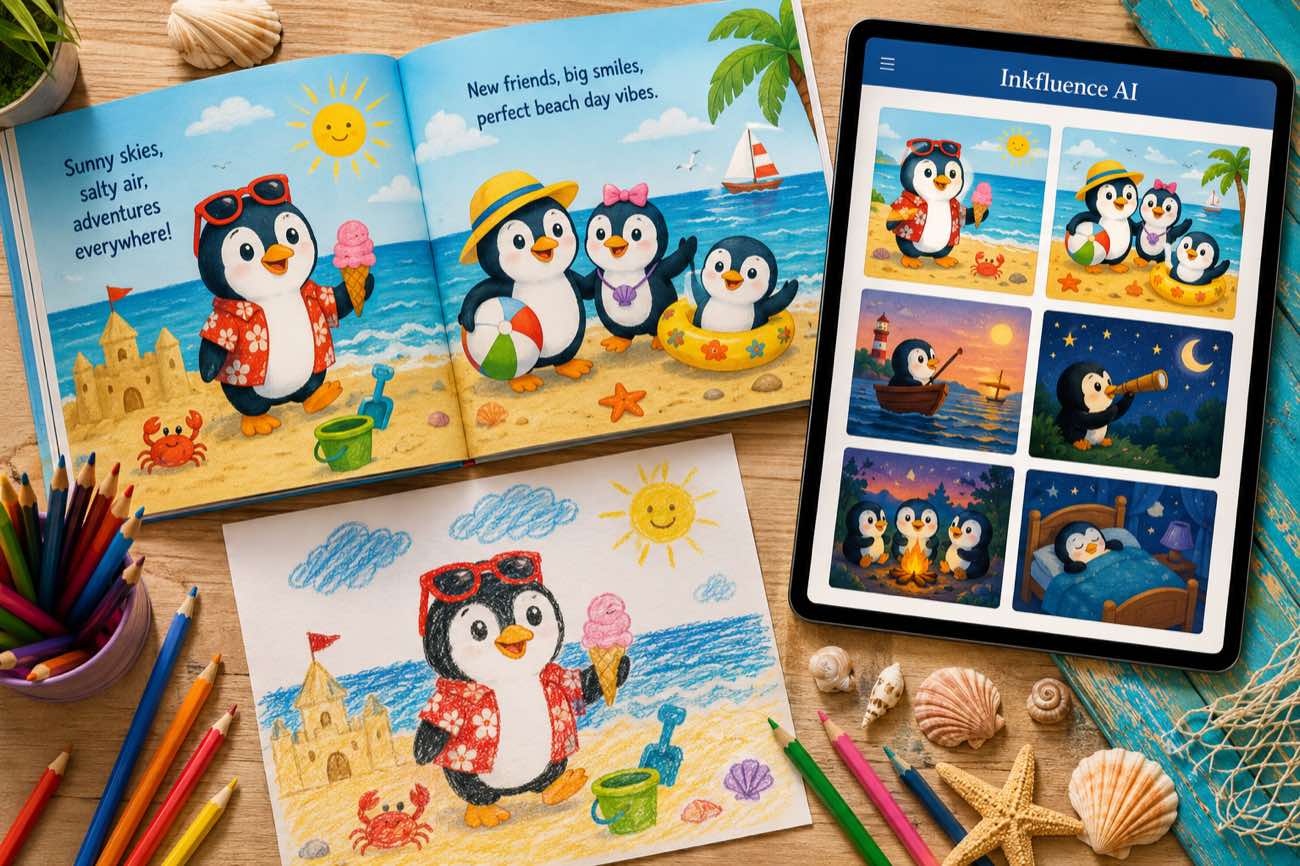
 How to Make a Children's Picture Book with AI: Idea to Printed Book in a Day
The complete 2026 workflow for making a fully illustrated children's picture book with AI: age-band word counts, page planning, consistent characters, cover design, and publishing it on Amazon KDP with the right disclosure.
 AI Writing
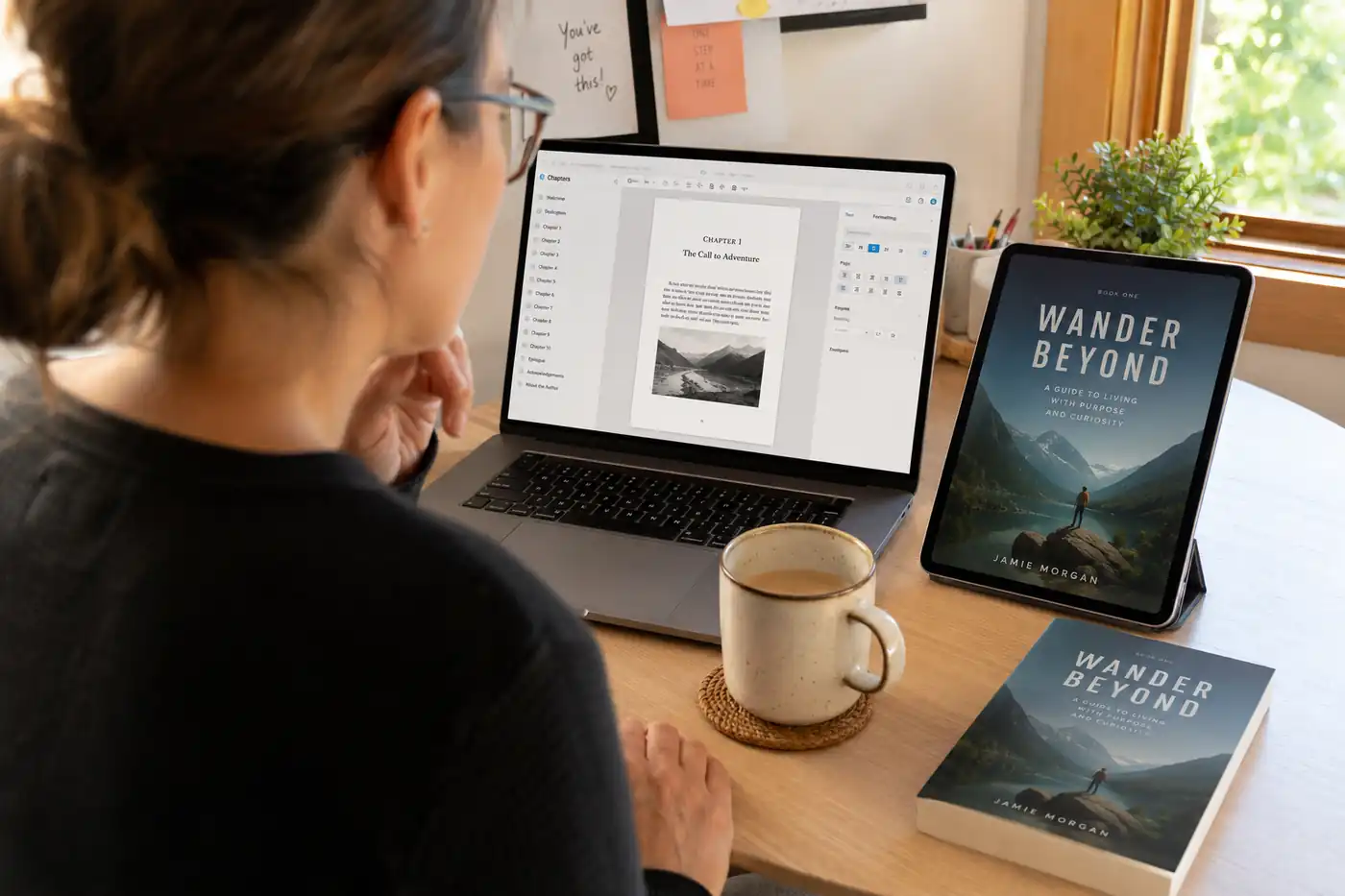
 The 9 Best Ebook Creators in 2026: AI, Formatting, and Design Tools Compared
Not every "ebook creator" does the same job. We compare the 9 best tools of 2026 across three categories: AI generators that write the book, formatting tools that typeset it, and design tools that make it beautiful, with verified pricing for each.
 AI Writing
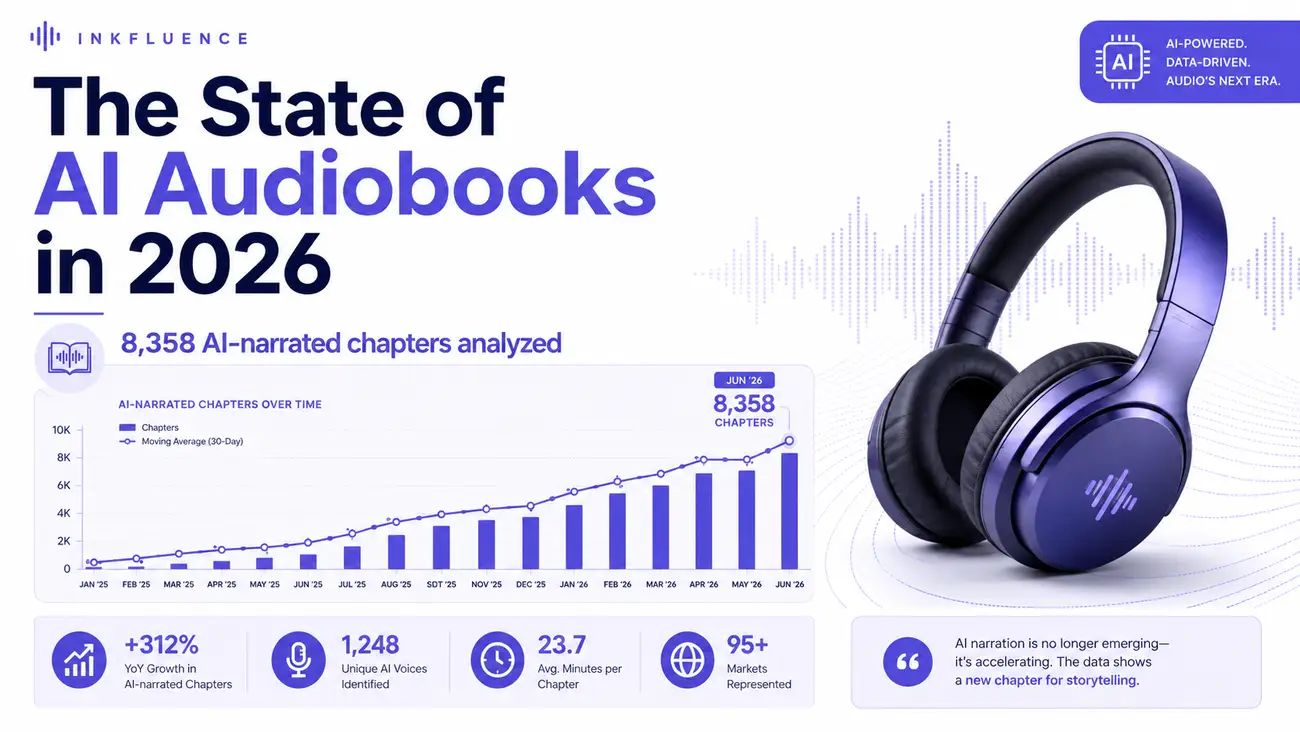
 The State of AI Audiobooks in 2026: What 8,358 AI-Narrated Chapters Reveal
We looked at 8,358 chapters our users narrated into audiobooks with AI. Monthly narration grew from a handful of chapters in late 2025 to nearly 3,000 a month by mid-2026, 99% of jobs finished cleanly, and listeners consistently pick natural, conversational voices over dramatic ones. Here is the first-party data and what it means for authors.
Get ebook tips in your inbox
Join creators getting weekly strategies for writing, marketing, and selling ebooks.