
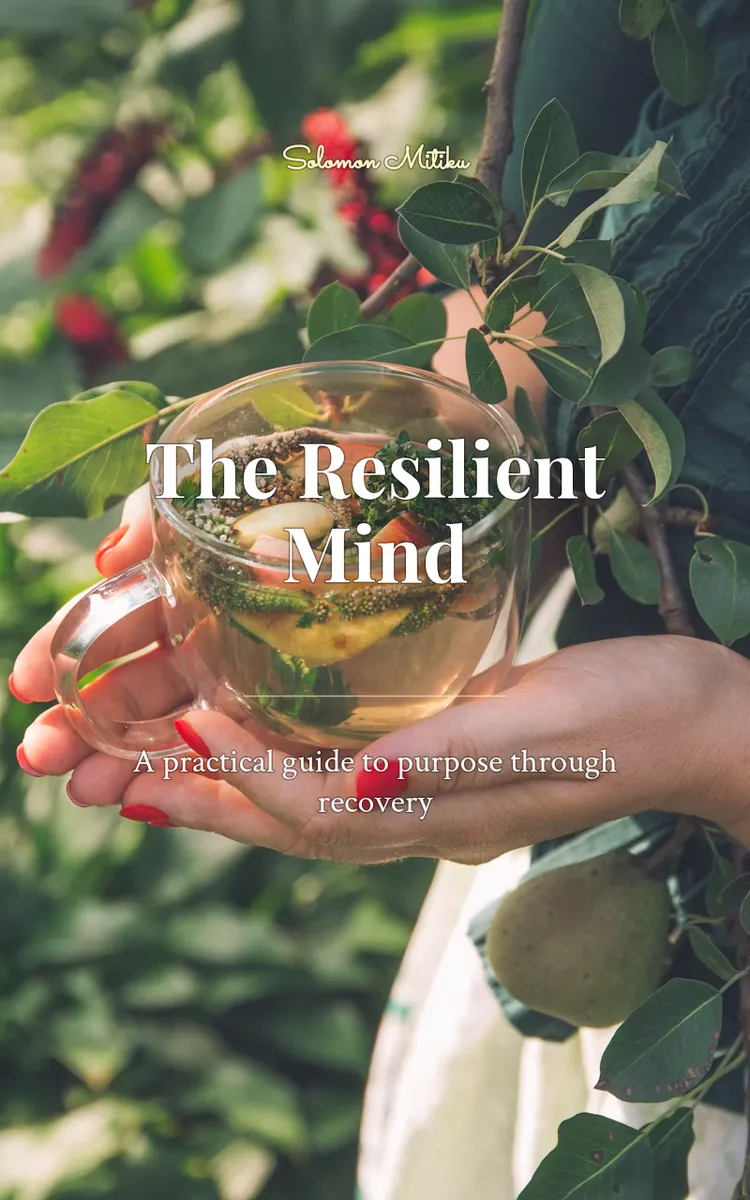
The Resilient Mind
Created with Inkfluence AI
Evidence-based strategies for stress, anxiety, depression, resilience, and purpose
Table of Contents
- 1. Rewriting Your Stress Story
- 2. Building Anxiety-Proof Thinking
- 3. Turning Depression Into Action
- 4. Strengthening Resilience With Mindfulness
- 5. Designing Purpose and Support Systems
Preview: Rewriting Your Stress Story
A short excerpt from “Rewriting Your Stress Story”. The full book contains 5 chapters and 8,838 words.
Your brain doesn’t just “have stress” - it writes a story about what stress means, and that story runs your body.
On a Tuesday night, Nadia, 34, a nurse on rotating shifts, got paged about a patient “possibly declining.” The facts were simple: check in, assess, act. But her mind did something extra. It flashed to worst-case outcomes, grabbed old memories of “last time,” and turned the hallway into a spotlight. Her shoulders climbed. Her stomach tightened. Before she even finished her first assessment, she felt like she was already losing.
That’s the sneaky part of stress. It’s not only the event. It’s the meaning your thoughts assign to the event - fast, automatic, and often unfair. And the good news is: if we can rewrite the meaning, we can change the stress response.
- You’ll recognize stress as a thought pattern, not just a feeling.
- You’ll learn how to shift from “threat story” to “working story” using daily cognitive reframes.
- You’ll map cause-and-effect so your reactions stop feeling random.
- You’ll finish with a short challenge you can start today.
The Stress Story Reframe Map: The Habit of Mind That Keeps You On High Alert
The most recognizable pattern looks like this: you notice a trigger, your mind instantly frames it as danger, and your body reacts like danger is real - even if you’re safe and capable. For Nadia, the trigger wasn’t just the page. It was the moment her brain decided, “This could go badly,” and then began scanning for proof. She’d replay previous shifts, search for signs, and interpret neutral information as warning. Her thoughts were loud and fast, like they were trying to protect her. But the protection came with a cost: she couldn’t think clearly. She was “on,” not centered.
Here’s what it often sounds like from the inside: “I should handle this.” “What if I miss something?” “They’ll blame me.” “If I slow down, something will worsen.” And then the body follows: tight chest, racing pulse, shallow breathing, irritability with coworkers, and that mental fog where you can’t remember what you were just about to do. The thought habit isn’t dramatic every day. Sometimes it’s subtle - like a constant low-level “uh-oh” that never fully drops. Your brain keeps checking, rehearsing, and bracing, even when the situation has moved on.
Nadia noticed her pattern one shift when she caught herself mid-sentence: she was advising a coworker while her mind was still back in that “what if it gets worse” loop. The moment she realized she was living in the story instead of the moment, her shoulders eased - just a little. Not magically cured, not instantly calm. But the grip loosened. If you’ve ever felt stress “stick” after the trigger passed, does that sound like something you recognize in yourself?
What If Your Stress Story Is Actually Hijacking Your Focus?
Here’s the question most people never ask: What if the purpose of my stress thoughts isn’t to help me - it’s to keep me trapped in a threat loop? That question flips the usual script. Instead of treating stress thoughts as truth (“This is dangerous”), you start treating them as a habit (“This is my brain trying to manage uncertainty”). When you can see the habit, you can interrupt it.
Let’s make it concrete. Nadia’s “threat story” looked like: “A patient might decline = I’m responsible for preventing disaster. If I’m not perfectly on top of everything, something awful will happen.” That story didn’t just create anxiety. It created a narrow, panicked focus. She would over-check, double-ask, and second-guess her own instincts - then feel exhausted and guilty for not feeling calm. After a while, the story became self-sealing: even when she did a good job, her mind said, “Yeah, but it could’ve gone wrong,” so she never got a full “done.”
Then she tried a reframe that didn’t pretend everything was fine. She didn’t say, “Don’t worry.” She asked a different meaning-question in the moment. When the page came, she ran a quick mental swap: “What is the next right action?” and “My job is assessment and care, not predicting the outcome.” Same workload, same stakes. But the story shifted from “prevent catastrophe” to “do the next step well.” Her body still stirred - because yes, stress is real. But the edge changed. Her breathing came deeper. Her thoughts slowed enough to stay organized. She finished tasks with less mental noise.
Try this on your own life: next time you feel that familiar flare-up, don’t ask, “Why am I so stressed?” Ask, “What story is my brain telling right now about what this means?” That’s where the leverage lives. Not in fighting the feeling. In rewriting the meaning.
The Stress Story Reframe Map: How Thoughts Turn Into Stress (and How to Flip the Chain)
1. When you notice a trigger (a message, a mistake, a tight deadline, a sudden silence)…
2. You feel a surge of alarm in your body (tight chest, heat in your face, racing thoughts)…
3....
About this book
"The Resilient Mind" is a self-help book by Solomon Mitiku with 5 chapters and approximately 8,838 words. Evidence-based strategies for stress, anxiety, depression, resilience, and purpose.
This book was created using Inkfluence AI, an AI-powered book generation platform that helps authors write, design, and publish complete books. It was made with the AI Self-Help Book Writer.
Frequently Asked Questions
What is "The Resilient Mind" about?
Evidence-based strategies for stress, anxiety, depression, resilience, and purpose
How many chapters are in "The Resilient Mind"?
The book contains 5 chapters and approximately 8,838 words. Topics covered include Rewriting Your Stress Story, Building Anxiety-Proof Thinking, Turning Depression Into Action, Strengthening Resilience With Mindfulness, and more.
Who wrote "The Resilient Mind"?
This book was written by Solomon Mitiku and created using Inkfluence AI, an AI book generation platform that helps authors write, design, and publish books.
How can I create a similar self-help book?
You can create your own self-help book using Inkfluence AI. Describe your idea, choose your style, and the AI writes the full book for you. It's free to start.
Write your own self-help book with AI
Describe your idea and Inkfluence writes the whole thing. Free to start.
Start writingCreated with Inkfluence AI


