
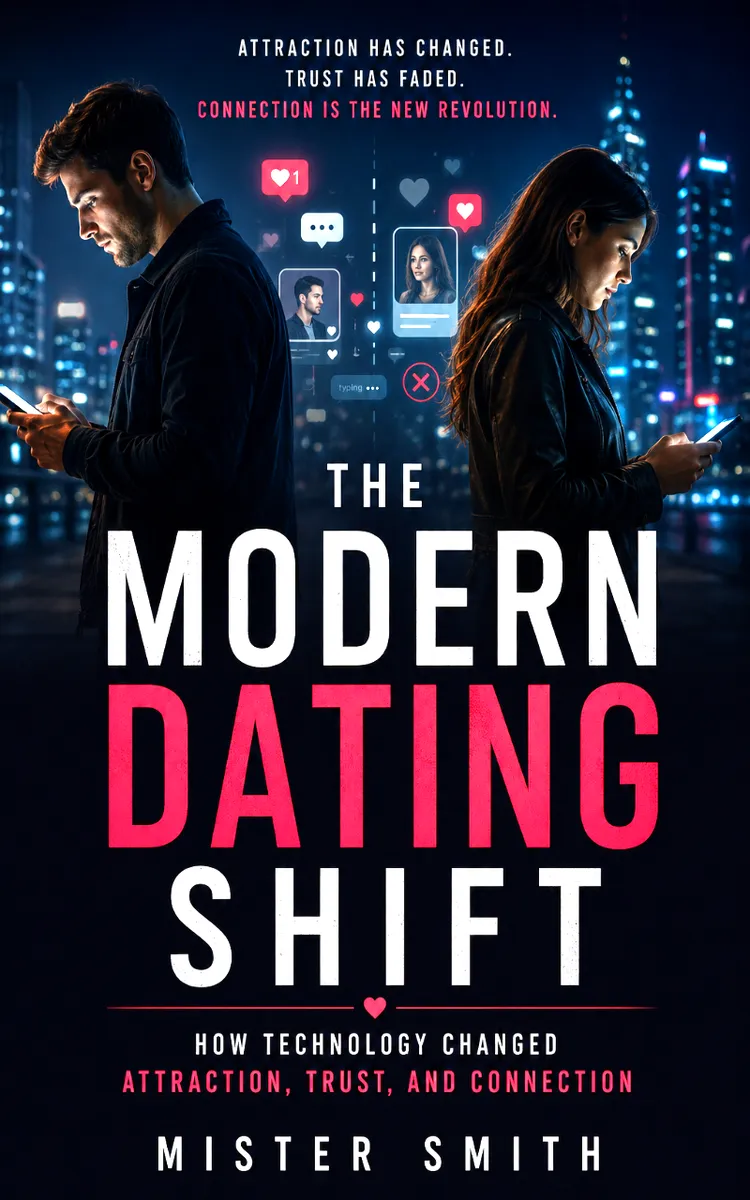
The Modern Dating Shift
Created with Inkfluence AI
Imported from text file
Table of Contents
- 1. Dating Became a Marketplace
- 2. Endless Options Changed Dating
- 3. Self-Marketing and Image
- 4. Attention Became Currency
- 5. The New Dating Behaviors
- 6. Chasing Excitement
- 7. The Pressure on Men
- 8. The Pressure on Women
- 9. Why Nobody Trusts Anyone Anymore
- 10. Rebuilding Trust and Connection
Preview: Dating Became a Marketplace
A short excerpt from “Dating Became a Marketplace”. The full book contains 10 chapters and 11,007 words.
Dating used to have more friction, and that was not always a bad thing. Most people met through real life: friends, work, school, church, a bar, or some shared space where there was already a reason to talk. You were not just a picture, a height, a job title, or a few lines in a bio. People could see how you carried yourself, how you talked, how you treated others, and whether there was actually something there in person.
The past was not perfect. People still got rejected, cheated on, used, and disappointed. The difference is that dating moved slower. There was more room for someone to grow on you, before you wrote them off completely.
Now, dating feels more like a screening process. Everyone is both applying and judging at the same time. Your pictures, job, lifestyle, body, height, humor, politics, and even texting style can get you filtered out before a real conversation even happens. People are not just meeting anymore; they are sorting.
That is part of why dating feels so transactional now. Apps trained people to think in terms of options, upgrades, replacements, and better deals. If one person does not spark instant excitement, another profile is right there. That kind of speed makes people less patient, less curious, and less willing to let anything develop naturally.
After a while, dating starts to feel like a marketplace. People track who texted first, who replied too slowly, who showed too much interest, who paid, who planned, who had more options, and who gave more than they got back. The emotional part gets buried under strategy. Once dating starts feeling like a deal, connection is usually the first thing that gets lost.
The digital profile has replaced the human introduction. You are not being judged by your presence in a room anymore. You are being judged by how well you packaged yourself before the other person even knows what it feels like to talk to you. That creates a shallow first-impression culture because the system itself is shallow.
Speed has replaced patience. On an app, one boring message, one awkward opener, or one small delay can end the whole thing. There is no real reason to sit through a dull moment, when the app is basically promising a fresh start three swipes away. That rewards quick judgment and punishes the slow build that real connection often needs.
The result is a culture where people are constantly filtered but rarely seen. Someone can reject you over height, income, age, politics, body type, or one bad picture before they ever hear your voice. That makes the person on the screen feel less real. Once someone feels less real, ignoring them, ghosting them, or dismissing them becomes a lot easier.
That is why so many single people feel exhausted. They are not just dating anymore. They are managing a funnel, judging other people, trying to be judged favorably, and pretending it does not bother them. The whole system starts to prioritize the search over the actual connection. Instant filtering has turned attraction into something that feels more like checking boxes. Before you ever hear someone’s voice or see how they act around people, they have already been judged by height, job, location, politics, lifestyle, and whatever else sits on a profile. People end up making decisions about each other from a handful of static details before a real interaction even happens. The problem is that profiles rarely show the things that actually matter once you meet in person.
At first, this kind of filtering feels efficient. It feels like you are saving time by removing people who do not fit your ideal on paper. The issue is that real compatibility has never been fully predictable. A profile can tell you someone’s age, job, or hobbies, but it cannot show emotional maturity, chemistry, reliability, presence, or how they make you feel in a room.
Modern dating has pushed people into becoming cautious evaluators. Profiles get scanned for red flags, dealbreakers, and reasons to move on before a conversation even starts. Instead of looking for reasons to connect, people often look for reasons to eliminate. When the goal becomes avoiding disappointment at all costs, good connections can get filtered out along with the bad ones.
The result is that organic discovery starts disappearing. The conversation no longer feels like getting to know someone. It starts feeling like verifying whether the profile matched the expectation. The curiosity that used to drive early attraction gets replaced by evaluation. Once people start feeling like entries in a database, connection is usually the first thing to suffer. First-impression culture has shortened the timeline of attraction down to seconds. In real life, first impressions used to be shaped by body language, tone of voice, confidence, humor, and the situation itself. You could notice how someone carried themselves or how they interacted with other people. Dating apps removed most of that and replaced it with pictures and short profiles....
About this book
"The Modern Dating Shift" is a self-help book by Mister Smith with 10 chapters and approximately 11,007 words. Imported from text file.
This book was created using Inkfluence AI, an AI-powered book generation platform that helps authors write, design, and publish complete books. It was made with the AI Self-Help Book Writer.
Frequently Asked Questions
What is "The Modern Dating Shift" about?
Imported from text file
How many chapters are in "The Modern Dating Shift"?
The book contains 10 chapters and approximately 11,007 words. Topics covered include Dating Became a Marketplace, Endless Options Changed Dating, Self-Marketing and Image, Attention Became Currency, and more.
Who wrote "The Modern Dating Shift"?
This book was written by Mister Smith and created using Inkfluence AI, an AI book generation platform that helps authors write, design, and publish books.
How can I create a similar self-help book?
You can create your own self-help book using Inkfluence AI. Describe your idea, choose your style, and the AI writes the full book for you. It's free to start.
Write your own self-help book with AI
Describe your idea and Inkfluence writes the whole thing. Free to start.
Start writingCreated with Inkfluence AI


