
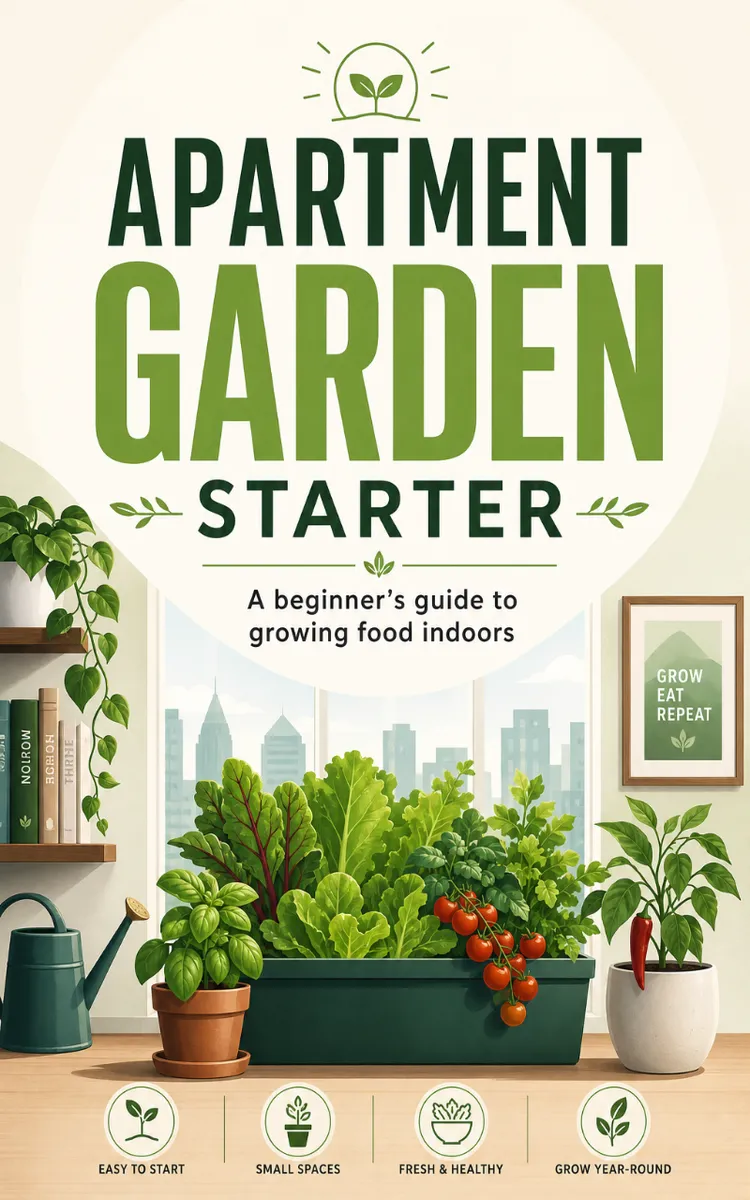
Apartment Garden Starter
Created with Inkfluence AI
Your apartment can grow real food, but only if you stop guessing and start matching plants to your actual space. Light you can access, air you can manage, and watering you can control are the difference between “maybe it will work” and steady harvests. Apartment Garden Starter shows you how to choose a setup you can maintain on busy weeks, plan where plants will live on a normal day, and prevent the most common early problems before they start. You will learn beginner steps for small-space growing, from picking the right light to building a simple routine that fits your kitchen. Start small, set yourself up for success, and watch your first sprout turn into repeatable, on-demand flavor.
Table of Contents
- 1. Introduction: Growing in Small Spaces
- 2. Why start an apartment garden?
- 3. What to expect: Time, costs, and rewards.
- 4. Chapter 1: Know Your Space
- 5. Chapter 2: Pots and Planters
- 6. Chapter 3: Soil and Water Basics
- 7. Chapter 4: The Best Apartment Plants
- 8. Chapter 5: Care and Troubleshooting
Preview: Introduction: Growing in Small Spaces
A short excerpt from “Introduction: Growing in Small Spaces”. The full book contains 8 chapters and 10,359 words.
Small-space gardening works when you match plants to the limits of your apartment: light you can actually get, air you can actually measure, and water you can actually control. Start by picking a setup you can maintain on busy weeks, not just your best-week energy.
Apartment gardens also reward simple planning. If you know where your plants will sit, how warm that spot gets, and how quickly soil dries there, you prevent most early problems before they start. Ask yourself a quick question: “Where will my plants live on a normal day - near a window, on a balcony, or under a small grow light - and will I pass by that spot daily?”
Choosing the Right Light for Apartment GrowingPlants need usable light, not just “bright feelings.” Place herbs and greens on the brightest windowsill you have, usually a south- or west-facing one in many homes. If your window space stays dim most of the day, plan for a small grow light and keep it close enough to reach the leaves without making the plants feel stretched.
Takeaway: Pick one light plan (window or grow light) and commit to it before you buy plants.
Checking Apartment Temperature and Plant ComfortMost common apartment plants grow best when your growing spot stays fairly steady. Move plants away from cold window glass in winter and away from hot, dry spots near radiators or heat vents. If your apartment swings a lot between day and night, choose tougher beginner plants and avoid starting delicate seedlings in the coldest corners.
Takeaway: Treat temperature like an ingredient - your plants need the right range consistently.
Reading Humidity and Preventing Dry-Air StressDry indoor air can make leaves look tired even when you water correctly. Notice how your plants respond after watering: if soil stays wet but leaves droop, you may have a humidity or airflow issue. Run a small, gentle fan for even air movement, and keep plants off directly blocked heat sources.
Takeaway: Aim for steadier leaf comfort, not just more watering.
Building a Simple Setup You Can MaintainBefore you pot anything, decide your “plant zone.” Choose surfaces with easy access to water, stable placement, and room for containers to drain. Plan for a tray under pots so water doesn’t ruin floors, and leave enough space for leaves to spread without constantly brushing other plants.
Takeaway: Make your daily routine easy - your garden should fit your life, not fight it.
Quick Start Checklist Before You Buy PlantsUse this fast check so you don’t end up with plants in the wrong place:
Identify your brightest spot and test it for a few hours across the day.
Feel for airflow near the spot and keep plants away from drafts and heat blasts.
Decide where excess water will go (a tray or sink access).
Choose beginner-friendly plants that match your light level.
Takeaway: Buy plants that fit your current space, then upgrade your setup only after you see what thrives.
Once you lock in light, temperature, humidity, and a practical plant zone, the rest gets much easier - choosing containers and getting watering right will start to feel predictable instead of guessy.
About this book
"Apartment Garden Starter" is a how-to guide book by ava mixon with 8 chapters and approximately 10,359 words. Your apartment can grow real food, but only if you stop guessing and start matching plants to your actual space. Light you can access, air you can manage, and watering you can control are the difference between “maybe it will work” and steady harvests.
This book was created using Inkfluence AI, an AI-powered book generation platform that helps authors write, design, and publish complete books. It was made with the AI Ebook Generator.
Frequently Asked Questions
What is "Apartment Garden Starter" about?
Your apartment can grow real food, but only if you stop guessing and start matching plants to your actual space. Light you can access, air you can manage, and watering you can control are the difference between “maybe it will work” and steady harvests. Apartment Garden Starter shows you how to choose a setup you can maintain on busy weeks, plan where plants will live on a normal day, and prevent the most common early problems before they start. You will learn beginner steps for small-space growing, from picking the right light to building a simple routine that fits your kitchen. Start small, set yourself up for success, and watch your first sprout turn into repeatable, on-demand flavor.
How many chapters are in "Apartment Garden Starter"?
The book contains 8 chapters and approximately 10,359 words. Topics covered include Introduction: Growing in Small Spaces, Why start an apartment garden?, What to expect: Time, costs, and rewards., Chapter 1: Know Your Space, and more.
Who wrote "Apartment Garden Starter"?
This book was written by ava mixon and created using Inkfluence AI, an AI book generation platform that helps authors write, design, and publish books.
How can I create a similar how-to guide book?
You can create your own how-to guide book using Inkfluence AI. Describe your idea, choose your style, and the AI writes the full book for you. It's free to start.
Write your own how-to guide book with AI
Describe your idea and Inkfluence writes the whole thing. Free to start.
Start writingCreated with Inkfluence AI


