
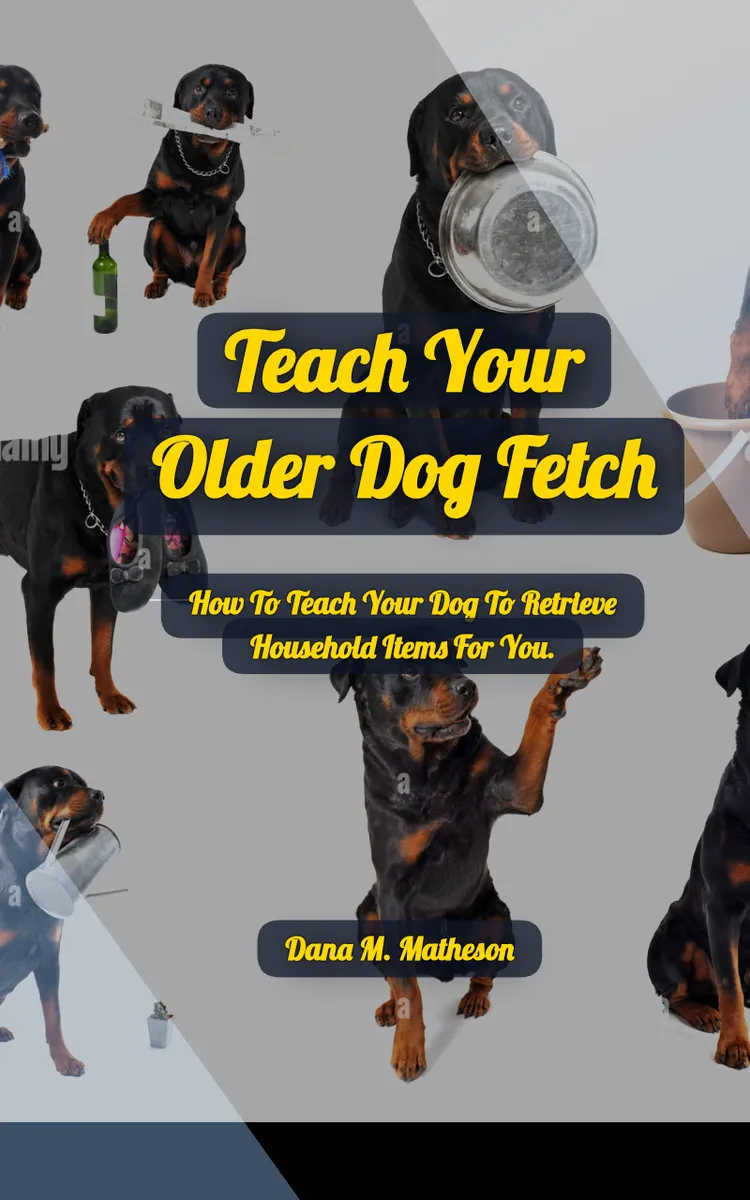
Teach Your Older Dog Fetch
Created with Inkfluence AI
Dog training for older dogs: fetch, retrieval, mental stimulation
Table of Contents
- 1. Teach the Fetch Cue and Return
- 2. Slipper Retrieval with Target Tossing
- 3. Household Item Retrieval by Category
- 4. Reward Timing for Older Dogs
- 5. Mental Sharpness with Fetch Challenges
- 6. Chapter 6
Preview: Teach the Fetch Cue and Return
A short excerpt from “Teach the Fetch Cue and Return”. The full book contains 6 chapters and 9,452 words.
Why a reliable fetch-and-bring matters for older dogs (and you)
Have you ever watched your older dog trot out to a toy, then pause like they forgot the rest of the job? That “almost fetch” moment usually means your dog can chase, but they don’t yet have a clear cue for what to do next - or a simple plan for returning it to you.
A solid fetch-and-bring behavior solves two real problems at once. First, it gives your dog a repeatable routine: hear the cue, fetch, bring back, and get paid. Second, it turns everyday walks and play into quick mental work, not just physical exercise. When your dog understands the sequence, you spend less time chasing a dropped item and more time building confidence.
After you finish this chapter, you’ll be able to teach one clear cue (for example, “Fetch”), a return habit (bringing the item back to you), and a reward timing that keeps your dog engaged. You’ll also know how to run short sessions - think 2 to 5 minutes - so your older dog stays successful instead of worn out.
Ask yourself this as you read: when your dog brings something to you, do they reliably do it on cue, or do they do it “sometimes, when they feel like it”? Your goal is dependable, cue-based returns.
The Cue-Reward-Return Loop for fetch-and-bring
Older dogs often do well when training stays simple and predictable. The Cue-Reward-Return Loop gives you that predictability. You cue one clear behavior, you reward right at the moment your dog does the right part, and you end the session while your dog still wants to work.
Use this loop for every rep, even if your dog already chases. The loop makes “fetch” mean more than running after a toy - it means running after the toy and then deciding to come back.
1. Pick one fetch cue and say it the same way every time.
Choose a word you’ll use for the rest of this training (for example, “Fetch”). Say it once, at a calm volume, right before you toss the item. If you say “Fetch, get it, bring it” all in one breath, your dog won’t know which part earns the reward.
2. Start with easy throws that land within 3 to 6 feet (about 1 to 2 meters).
Use short distances so your older dog can win quickly. If the throw goes farther than your dog can comfortably pick up and return, you’ll see more wandering and drop-and-wander behavior.
3. Reward the return, not just the chase.
Wait for your dog to bring the item back toward you (or place it in a consistent spot). Then reward immediately. If you reward the moment they grab the toy but you ignore the return, your dog learns to pick it up and keep it - because that’s where the “good stuff” happens.
4. Release and reset fast: end on success.
Use a simple release word like “All done” once your dog earns the reward. Then pick up the item, reset, and run the next rep after a short pause (about 20 to 30 seconds). This keeps sessions upbeat and prevents the “I’ve done enough” slump.
A quick definition you’ll use a lot here: “Return” means your dog comes back with the item and ends the rep in your space. You can build that space by rewarding when your dog reaches you, or when they drop the item at your feet - pick one and stick with it.
Tanya, age 62, helped her older dog learn slippers first because slippers sit in a clear “home base” zone near the door. She didn’t start with the whole house. She started with a single slipper throw from 4 feet away and rewarded the instant the slipper came back into her reach. The cue-to-return connection clicked fast because the distance stayed easy and the reward timing stayed strict.
Practical takeaway: Use the Cue-Reward-Return Loop every rep. If you change the cue, the distance, or the reward moment, you slow down learning.
Put the Cue-Reward-Return Loop to work: a 7-day fetch setup
Let’s walk through a realistic routine you can run with an older dog who already chases but doesn’t reliably bring back.
You’ll train in short sessions and keep the rules consistent. Your dog should finish each rep thinking, “That was clear. I can do that again.”
Setup you’ll use every day
Pick a single item first. For older dogs, a soft, easy-to-grip toy works well, or a slipper with a thick, grippy sole. You want something your dog can pick up comfortably.
Use small, smelly treats you can feed quickly - pea-sized pieces work well because you can reward fast without interrupting the flow.
Your daily routine (7 days)
Run one session per day for a week. If your dog is very eager, you can do two short sessions with a break in between, but start with one.
1. Day 1: Reward the first return you see.
Stand or kneel where you can reach your dog without leaning. Toss the item 3 to 6 feet. Say “Fetch” once. When your dog grabs it, wait. Reward the moment the item comes into your reach (or when your dog steps back toward you with it).
Expected outcome: Your dog starts to understand that the “good moment” happens on the way back.
2....
About this book
"Teach Your Older Dog Fetch" is a how-to guide book by Dana M. Matheson with 6 chapters and approximately 9,452 words. Dog training for older dogs: fetch, retrieval, mental stimulation.
This book was created using Inkfluence AI, an AI-powered book generation platform that helps authors write, design, and publish complete books. It was made with the AI Ebook Generator.
Frequently Asked Questions
What is "Teach Your Older Dog Fetch" about?
Dog training for older dogs: fetch, retrieval, mental stimulation
How many chapters are in "Teach Your Older Dog Fetch"?
The book contains 6 chapters and approximately 9,452 words. Topics covered include Teach the Fetch Cue and Return, Slipper Retrieval with Target Tossing, Household Item Retrieval by Category, Reward Timing for Older Dogs, and more.
Who wrote "Teach Your Older Dog Fetch"?
This book was written by Dana M. Matheson and created using Inkfluence AI, an AI book generation platform that helps authors write, design, and publish books.
How can I create a similar how-to guide book?
You can create your own how-to guide book using Inkfluence AI. Describe your idea, choose your style, and the AI writes the full book for you. It's free to start.
Write your own how-to guide book with AI
Describe your idea and Inkfluence writes the whole thing. Free to start.
Start writingCreated with Inkfluence AI


