
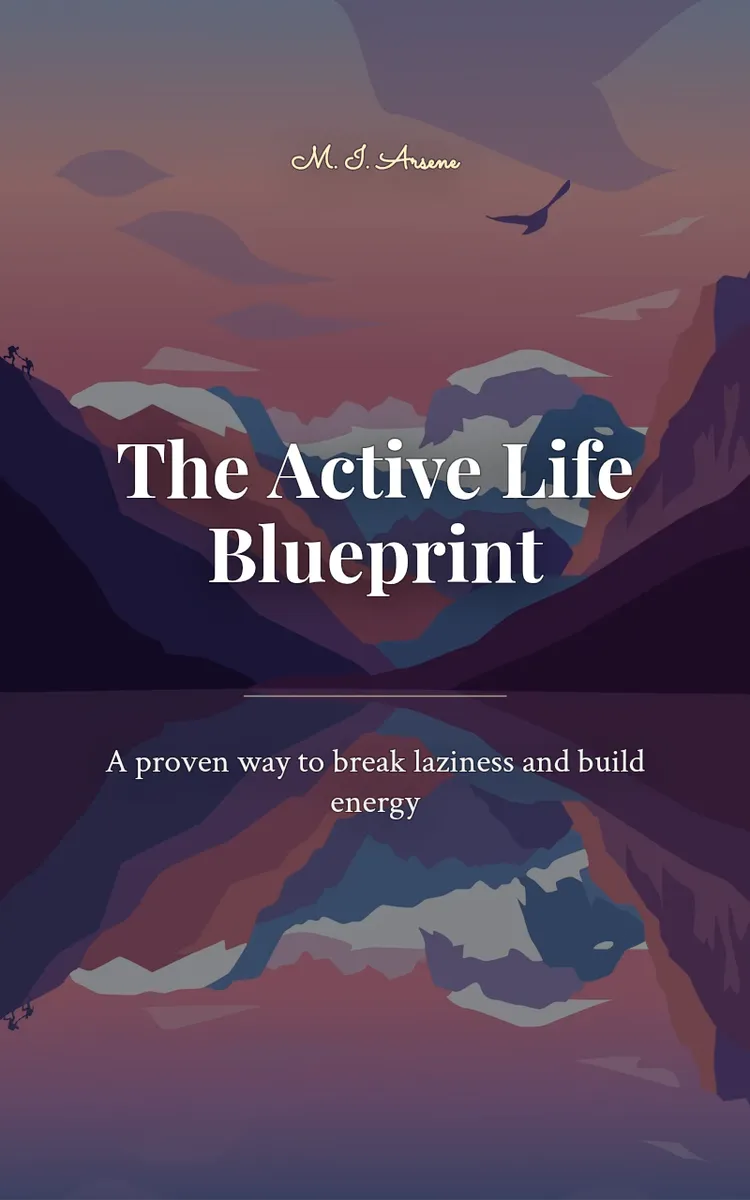
Overcoming laziness and building daily action and energy
Table of Contents
- 1. Rewriting Your Lazy Identity
- 2. Defusing the All-or-Nothing Beliefs
- 3. Designing a 10-Minute Starter Habit
- 4. Building Energy With Frictionless Systems
- 5. Using the Two-Track Daily Plan
- 6. Mastering Momentum Through Micro-Commitments
- 7. Breaking the Scroll-to-Skip Loop
- 8. Resilience and Purpose After Setbacks
Preview: Rewriting Your Lazy Identity
A short excerpt from “Rewriting Your Lazy Identity”. The full book contains 8 chapters and 11,717 words.
The Story You Tell Before You Move
The alarm goes off, and your hand finds the phone before your feet find the floor. You tell yourself you’ll get up in five minutes. Then five becomes twenty. You miss the walk, delay the email, skip the workout, and carry that familiar sentence into the rest of the day: “I’m just lazy.”
By evening, the sentence feels like evidence. You didn’t act, so you must be the kind of person who doesn’t act. Tomorrow, you promise, you’ll finally become disciplined. But the next morning begins with the same story - and the story quietly makes the same choices for you.
Are you fighting laziness, or repeating an identity that keeps producing it?
From “I’m Lazy” to “I’m Becoming Active”
Old Belief: I’m lazy, so I need to force myself to do more.
New Reality: I’ve practiced an inactive identity, and I can practice a more active one through small daily actions.
That shift matters because “lazy” sounds permanent. It turns a behavior into a personality. Missing one workout becomes “I never stick with anything.” Leaving dishes overnight becomes “I’m hopeless.” Once you label yourself, your brain starts looking for proof. Every delayed task gets added to the case against you.
But an identity isn’t a prison sentence. It’s a story supported by repeated actions. If you’ve spent months saying, “I’m not a morning person,” staying in bed feels consistent. If you’ve said, “I always quit,” stopping after one difficult week feels almost expected. The story reduces the discomfort of change by making change seem pointless.
Here’s the practical reframe: don’t wait to feel like an active person before you act. Use action to give yourself evidence that you’re becoming one. When you put on your shoes and walk for ten minutes, you’re not merely exercising. You’re casting a vote for the identity, “I’m someone who moves.” When you open the document and work for five minutes, you’re proving, “I start even when I don’t feel ready.”
This is the Identity-to-Action Loop. Your identity influences your actions, your actions create evidence, and that evidence strengthens your identity. The loop can keep you stuck - or carry you forward. A person who says, “I’m lazy” avoids action, gathers more evidence, and believes the label more deeply. A person who says, “I’m practicing being active” takes one manageable action, gathers new evidence, and makes the next action easier.
You don’t need a dramatic transformation today. You need one piece of evidence that your old story isn’t the whole truth.
Spotting the Old Identity at Work
The old identity rarely announces itself with a grand speech. It usually sounds casual. “I’ll do it later.” “I need the right mood.” “I’ve always been like this.” Those phrases feel harmless, but they often protect the same pattern: avoid the first uncomfortable step, then use the lack of progress as proof that you can’t change.
Pay attention to the moment before you disengage. That’s where the identity story usually appears. You may feel tired, but the deeper message is often, “People like me don’t follow through.” The goal isn’t to argue with every thought. It’s to recognize the script before it directs your behavior.
The old identity survives by turning temporary resistance into permanent character.
Signs this pattern is running your life:
1. You describe behavior as a fixed trait.
“I’m lazy,” “I’m unreliable,” or “I have no discipline” leaves no room for a different choice today.
2. You wait for motivation to prove who you are.
If you only act when you feel energetic, low-energy moments become automatic cancellations.
3. You treat one missed action as a final verdict.
Skipping Tuesday’s walk becomes “I’ve failed again,” so Wednesday no longer feels worth attempting.
4. You choose tasks that protect the old story.
You keep planning, researching, and organizing instead of doing the small action that would create real evidence.
Take a normal weekday morning. You planned to stretch before work, but you wake up stiff and reach for your phone. The old story says, “You’re too tired. You never keep promises.” The active-life identity doesn’t demand a heroic workout. It asks, “What would a person who keeps moving do for the next two minutes?” Maybe the answer is standing beside the bed and doing three slow stretches. That action is small, but it breaks the agreement with the old identity.
Questions That Expose the Story
1. What exact sentence do you say about yourself when you avoid an important action?
Write the sentence word for word. It might be, “I’m lazy,” or something more polished, such as, “I work better under pressure.” Seeing the sentence clearly makes it easier to challenge.
2. Where did this identity show up today - in your body, your work, or your home?
Choose one specific moment....
About this book
"The Active Life Blueprint" is a self-help book by M. I. Arsene with 8 chapters and approximately 11,717 words. Overcoming laziness and building daily action and energy.
This book was created using Inkfluence AI, an AI-powered book generation platform that helps authors write, design, and publish complete books. It was made with the AI Self-Help Book Writer.
Frequently Asked Questions
What is "The Active Life Blueprint" about?
Overcoming laziness and building daily action and energy
How many chapters are in "The Active Life Blueprint"?
The book contains 8 chapters and approximately 11,717 words. Topics covered include Rewriting Your Lazy Identity, Defusing the All-or-Nothing Beliefs, Designing a 10-Minute Starter Habit, Building Energy With Frictionless Systems, and more.
Who wrote "The Active Life Blueprint"?
This book was written by M. I. Arsene and created using Inkfluence AI, an AI book generation platform that helps authors write, design, and publish books.
How can I create a similar self-help book?
You can create your own self-help book using Inkfluence AI. Describe your idea, choose your style, and the AI writes the full book for you. It's free to start.
Write your own self-help book with AI
Describe your idea and Inkfluence writes the whole thing. Free to start.
Start writingCreated with Inkfluence AI


