
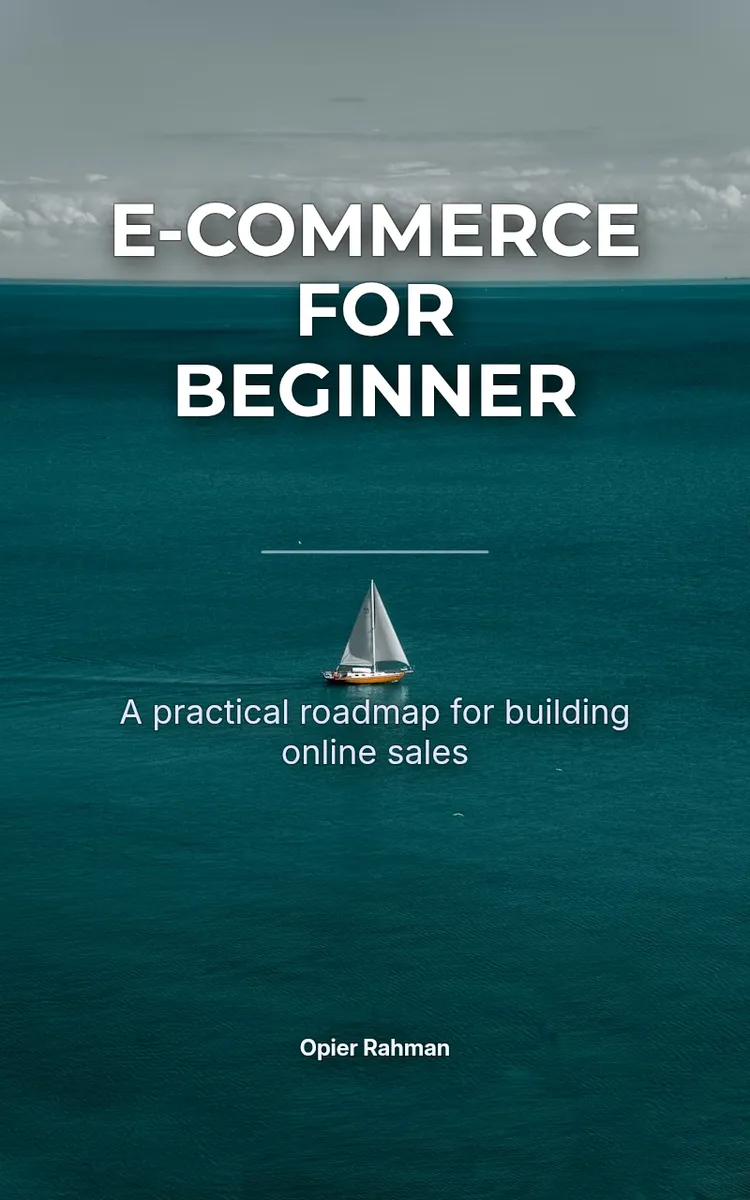
Read the first chapter
The whole of chapter one, free. About 7 min. Turn the pages with the arrows, your keyboard, or a swipe.
Chapter 1
Choosing a Profitable Product Niche
Why Product Niche Choice Can Make or Break Your Store
What if you build a store, launch ads, and still get crickets - not because you marketed badly, but because the product never had a real buyer? That’s the niche problem in plain terms: you pick something you like, or something you think will sell, and you find out too late that demand doesn’t show up when you need it.
This chapter solves that mistake. You’ll learn how to validate demand before you invest heavily, define the audience you can actually reach, and choose a niche you can profit from sustainably - not just for a month, but long enough to build repeatable operations. By the end, you’ll know exactly what to measure, how to test your assumptions, and how to decide between “interesting product” and “profitable niche.”
You also get a framework you can reuse every time you consider a new product line: the Niche Profit Triangle. You’ll apply it to a real e-commerce seller case (Talia, 34) so you can see how the thinking works when the numbers get messy and the decision feels risky.
The Niche Profit Triangle: Validate Demand, Define Audience, Pick a Sustainable Niche
Most niche-picking advice sounds like this: “Find a market with demand and passion.” That’s not actionable. You need a method that forces you to check three things that directly affect profit and survival: whether people want to buy, whether you can reach them, and whether you can keep selling without getting crushed by costs or competition.
The Niche Profit Triangle gives you that structure. It has three corners you measure separately, then combine into one decision. If you skip a corner, you’ll bias your choice and you’ll feel it later in ad costs, return rates, or supplier issues.
Here’s what each corner means in real store terms:
1. Demand You Can Prove You confirm buyers exist right now and you can detect it through search interest, category activity, active listings, and pricing behavior. You look for evidence that people repeatedly purchase, not one-off curiosity.
2. Audience You Can Reach You define who buys and why they buy, then you check whether you can consistently market to them using the channels you actually have. Audience reach is about targeting and message fit, not wishful thinking.
3. Profit You Can Keep You estimate your unit economics with the product’s real costs: landed cost (what you pay to get it to you), packaging, shipping, fees, and returns. Then you verify you can still profit after those costs, even when sales volume changes.
This triangle prevents the most common trap: chasing demand with a product you can’t market effectively, or chasing an audience you can reach but can’t profit from due to margins, returns, or supply instability. When all three corners line up, you get a niche you can operate, not just a product you can list.
Now let’s make it concrete with Talia, 34, an e-commerce marketplace seller who already sells two categories. She noticed her best items started to slow down, and her margins tightened because shipping costs rose and her supplier increased prices. She didn’t want another “random test.” She wanted a niche where she could keep margins steady and build a catalog that makes sense together.
Talia started by writing down three candidate niches based on her experience and supplier access - then she validated each one using the triangle. She didn’t begin with a store. She began with proof.
Putting the Triangle to Work: A Demand + Audience + Profit Validation Plan
Use this as a repeatable workflow. You’ll run it for 2-4 niche candidates, then you’ll pick one and move into product selection and listing tests.
Step-by-step scenario (Talia’s path)
1. Pick 3 niche directions you can source and support Talia chose niches that shared similar fulfillment needs so her operations wouldn’t break. For example, she avoided niches that required specialized packaging she didn’t already use.
Expected outcome: You reduce operational risk before you validate demand.
2. Prove demand with a “repeat-buy signal” test For each niche, Talia checked whether the marketplace showed active sales patterns: lots of current listings, stable pricing, and multiple sellers offering similar items. She also looked for product variations that suggest ongoing purchases (sizes, bundles, refills, accessories).
Expected outcome: You gain confidence that buyers keep coming back or keep needing related items.
3. Define the audience using a buyer-job statement Talia wrote a simple sentence for each niche: “A person buys this niche because they solve [specific problem] in [specific situation].” Then she matched that statement to the way buyers talk in reviews and listing titles: not marketing language, buyer language.
Expected outcome: You stop targeting “everyone” and start targeting a real use-case.
4. Run a reach check using channel fit She asked: where do buyers already discover these items? On marketplaces, she checked search terms people use. On social platforms, she checked what content formats perform for that use-case (how-to, comparisons, “before/after,” problem/solution). She didn’t bet on fancy ads first; she checked whether the audience responds to the kind of message she could produce.
Expected outcome: You confirm you can build traffic with a message that matches buyer intent.
5. Calculate profit with real costs and conservative assumptions Talia built a unit-cost sheet for each candidate niche including: - item cost from supplier - packaging cost - shipping (to buyer) estimate - marketplace selling fees - expected return rate based on product type (she used her own history and supplier feedback) - cost of discounts if the niche tends to require promotions
Then she tested two scenarios: a “steady” selling price and a “competitive pressure” selling price.
Expected outcome: You prevent margin surprises that kill cash flow.
6. Score each niche using the triangle Talia gave each corner a simple score from 1 to 5: - Demand You Can Prove - Audience You Can Reach - Profit You Can Keep
She didn’t average blindly. She looked for weak corners. A niche with strong demand but weak profit got rejected. A niche with strong profit but unclear demand got rejected.
Expected outcome: You make a clear decision based on evidence, not preference.
When Talia finished, one niche scored high on all three corners. Demand looked steady, the audience had a clear use-case she could message, and profit held up even under competitive pricing. She chose it and moved on to selecting specific products inside the niche.
Quick checklist
• Choose 2-4 niche candidates you can source and fulfill without major changes. - Look for repeat-buy signals: active listings, product variations, and ongoing marketplace activity. - Write a buyer-job statement for each niche using buyer language. - Confirm channel fit: can you reach this audience with the message formats that already work? - Build a unit-cost sheet with marketplace fees, shipping, packaging, and conservative return assumptions. - Score each corner (Demand, Reach, Profit) and reject niches with a weak corner.
This workflow forces the decision to happen in your spreadsheet and your notes, not in your heart.
Common Mistakes That Break Niche Validation (and How to Fix Them)
Even careful operators fall into predictable traps. Here are the ones that show up most often when people try to validate demand and pick a niche.
Treating “search interest” as proof of purchases Search interest can tell you people look. It cannot guarantee they buy at your price, through your channels, with your costs. You need purchase-adjacent signals: active sellers, stable pricing, and product variations that indicate ongoing transactions.
Do this: Prioritize niches where you see current listings with comparable items and you can estimate a realistic selling price after fees. Not this: Picking a niche because a keyword looks busy while the category appears thin on current products.
Choosing a niche you can market, but can’t fulfill profitably Some niches look easy to promote. They also come with higher shipping complexity, frequent returns, or supplier instability. If your profit corner is weak, you’ll feel it every time you run ads or offer promotions.
Do this: Calculate profit using landed cost, fees, and shipping before you launch. Run a competitive pricing scenario, not just your ideal price. Not this: Counting on “better ads” or “higher conversion” to fix a margin problem.
Defining your audience too broadly If your audience is “people who want X,” you’ll spend money to reach everyone and convert almost no one. Broad targeting also makes it hard to write product copy that matches buyer intent.
Do this: Define the buyer-job statement and tie it to a specific situation and problem the product solves. Then build your listing content around that situation. Not this: Targeting “general interest” and hoping buyers figure out the use-case on their own.
Your Next Move: Decide What You’ll Validate This Week
You don’t need a perfect niche on day one. You need a decision process that reduces expensive guesses. The Niche Profit Triangle gives you that by forcing demand, audience reach, and profit sustainability into one clear lens.
Start this week with your shortlist: pick 2-4 niche candidates and run the validation steps above until you can score each corner. Then choose one niche where you have evidence in all three corners, not just one. When you finish, you should be able to answer three questions without hedging: Who buys? Why do they buy? And can you make money after fees, shipping, and returns?
As you move into the next part of the book, you’ll take this niche decision and turn it into product selection and listing tests that match how buyers actually choose - so your store stops feeling like a gamble and starts operating like a system.
End of chapter one. 4 more chapters in the full book.
Swipe or use the arrows to turn the page
What's inside: 5 chapters
- 1. Choosing a Profitable Product Niche
- 2. Setting Up Your Shopify Store Properly
- 3. Pricing Strategy and Margin Control
- 4. Driving Sales with Email and SMS
- 5. Scaling with Analytics and A/B Testing
About this book
"E-Commerce In Detail" is a business book by Opier Rahman with 5 chapters and approximately 10,842 words. Detailed guide to e-commerce operations and growth.
This book was created using Inkfluence AI, an AI-powered book generation platform that helps authors write, design, and publish complete books. It was made with the AI Business Book Writer.
Frequently Asked Questions
What is "E-Commerce In Detail" about?
Detailed guide to e-commerce operations and growth
How many chapters are in "E-Commerce In Detail"?
The book contains 5 chapters and approximately 10,842 words. Topics covered include Choosing a Profitable Product Niche, Setting Up Your Shopify Store Properly, Pricing Strategy and Margin Control, Driving Sales with Email and SMS, and more.
Who wrote "E-Commerce In Detail"?
This book was written by Opier Rahman and created using Inkfluence AI, an AI book generation platform that helps authors write, design, and publish books.
How can I create a similar business book?
You can create your own business book using Inkfluence AI. Describe your idea, choose your style, and the AI writes the full book for you. It's free to start.
Write your own business book with AI
Describe your idea and Inkfluence writes the whole thing. Free to start.
Start writingCreated with Inkfluence AI


