
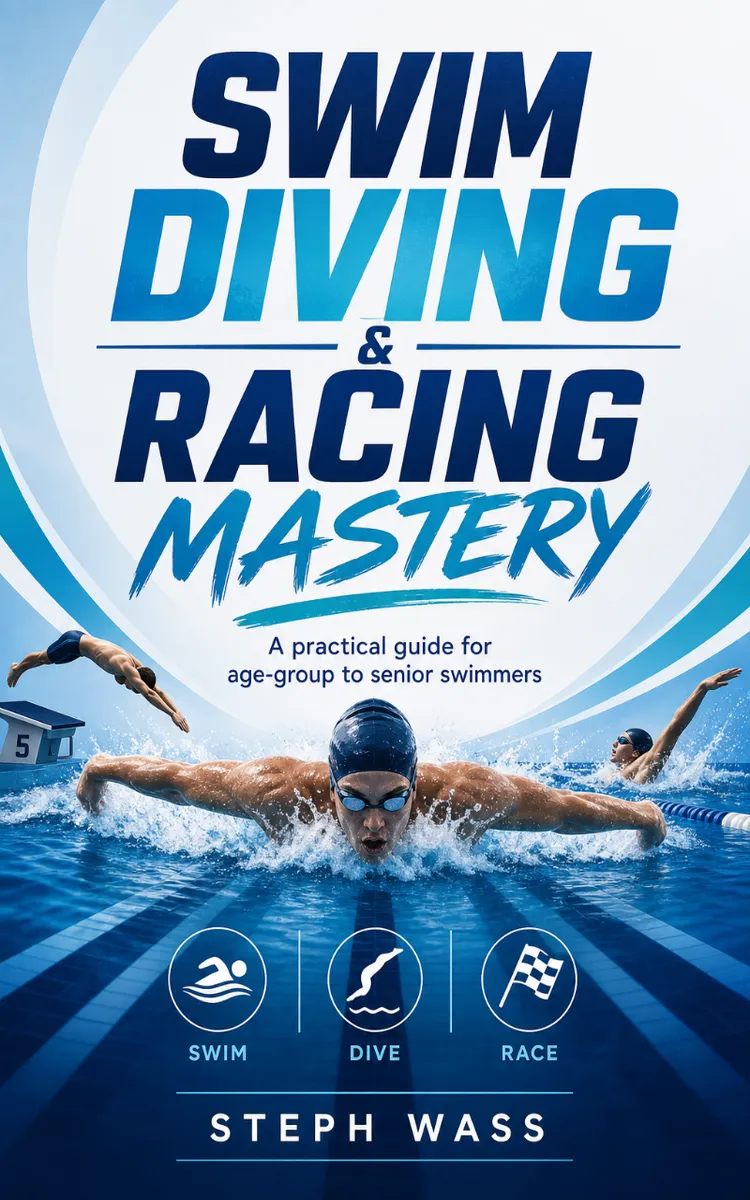
Swim Diving & Racing Mastery
Created with Inkfluence AI
Swim diving off blocks, racing all strokes, entries, underwater, breakouts, relays
Table of Contents
- 1. Block Starts: Streamline to Entry
- 2. Freestyle Underwater: Kicks and Timing
- 3. Backstroke Underwater: Rotation and Glide
- 4. Breaststroke Entries: Hands, Head, and Line
- 5. Butterfly Underwater: Dolphin Kick Efficiency
- 6. All-Stroke Breakouts: Distance and First Stroke
- 7. Race Execution: 50/100/200 Plans by Stroke
- 8. Relay Takeovers: Timing, Exchange, and Finish
Preview: Block Starts: Streamline to Entry
A short excerpt from “Block Starts: Streamline to Entry”. The full book contains 8 chapters and 16,089 words.
A clean block start is the fastest way to steal speed without stealing effort. When you leave the blocks with a tight line, you reduce drag before your first stroke even starts - so your body spends less time fighting the water and more time moving through it.
Most swimmers don’t lose the race on the first stroke. They lose it in the first second: a late hip pop, feet that hit too flat, or an entry that breaks into a splash. That’s why this chapter focuses on one job only: set up, explode, and enter the water cleanly from swim diving off blocks (not a board) for maximum speed and minimal drag.
After you finish, you’ll be able to dial your block position, time your “push-then-fly” moment, and build a repeatable entry that stays streamlined through the waterline. You’ll also know what to check when it feels fast on dry land but goes wrong in the first 5 metres underwater.
Set the context: why this block-to-waterline entry matters (and what problem it fixes)If your start feels “fine” but your 15-metre split doesn’t match your effort, the culprit is usually the same: you create drag during the transition from block to water. Drag starts early. The block-to-water moment includes three separate phases - setup, explosion, and entry - and small errors in any one phase show up as bigger problems once you’re underwater and trying to hold your streamline.
Here’s the problem you’ll fix: swimmers often practice the dive itself but not the entry. They’ll chase a bigger kick or a longer underwater, yet their body hits the water at a messy angle. That angle forces you to adjust - head up, hips drop, arms separate - so you break the line just when you need to stay tight.
You’ll also get a practical way to diagnose what’s happening. Use the Block-to-Waterline Map: treat the start like a single line from your block position to your waterline (the moment your head and shoulders pass under the surface). Your goal is simple: reduce wasted movement and keep your body aligned so your underwater phase starts from a strong, stable shape.
Ask yourself a quick, honest question before you read the steps: when you watch your starts on video, does your entry look like a “needle” (quiet, straight, minimal splash) or a “plunk” (wide splash, hips sag, head pops)? This chapter will help you turn the “plunk” into a “needle,” one controllable adjustment at a time.
Practical takeaway: If you can improve your block-to-waterline line, you’ll usually improve your underwater without adding more training time.
How it works: set up, explode, and enter cleanly using the Block-to-Waterline MapThe Block-to-Waterline Map works because it forces you to check the right details in the right order. You don’t guess - your job is to set your body to travel straight, then enter so your streamline survives the surface.
Start by defining your streamline line for this race moment: head stays neutral (not cranked up), shoulders stay level, hips stay high, and your arms stay in a “track” position close to your ears. If you break that line at the water, you create drag and you lose speed before your first underwater kick even finishes.
Use the following steps every session. Don’t change everything at once; change one piece, then repeat it until it feels automatic.
Set your block position for repeatable angles
Place your feet so you can push straight without twisting your hips. Use the same toe pressure each time: press through the balls of your feet, not the heels.
Aim your body so you can leave the blocks with your chest slightly forward over your hands (not upright, not collapsed).
Expected outcome: your first movement feels like a single “forward drive,” not a scramble to get into position.
Build a tight pre-launch shape
Before the start, tighten your core and lock your head position. Look down in line with your neck - don’t lift your chin.
Keep your arms ready in line with your tracks: straight, close together, hands where you can reach them without widening your shoulders.
Expected outcome: you reduce the “flinch” that often causes a late hip pop.
Explode: push then fly (don’t just jump)
On the start signal, drive through the blocks with a strong push from your feet, then let your body “turn” into the flight line without bending at the waist.
Feel your hips rising with your chest, not lagging behind.
Expected outcome: your body stays long and you don’t fold, which helps you enter without a head-first splash.
Enter: aim for a quiet, straight waterline crossing
At the last moment before entry, think “reach forward and stay narrow.” Keep elbows tight, hands close, and shoulders streamlined.
Your entry should send you into the water on a single line: head and hands lead, hips follow, minimal splash.
Expected outcome: you keep your streamline through the waterline so you can start the underwater kick from a stable body position.
...
About this book
"Swim Diving & Racing Mastery" is a how-to guide book by Steph Wass with 8 chapters and approximately 16,089 words. Swim diving off blocks, racing all strokes, entries, underwater, breakouts, relays.
This book was created using Inkfluence AI, an AI-powered book generation platform that helps authors write, design, and publish complete books. It was made with the AI Ebook Generator.
Frequently Asked Questions
What is "Swim Diving & Racing Mastery" about?
Swim diving off blocks, racing all strokes, entries, underwater, breakouts, relays
How many chapters are in "Swim Diving & Racing Mastery"?
The book contains 8 chapters and approximately 16,089 words. Topics covered include Block Starts: Streamline to Entry, Freestyle Underwater: Kicks and Timing, Backstroke Underwater: Rotation and Glide, Breaststroke Entries: Hands, Head, and Line, and more.
Who wrote "Swim Diving & Racing Mastery"?
This book was written by Steph Wass and created using Inkfluence AI, an AI book generation platform that helps authors write, design, and publish books.
How can I create a similar how-to guide book?
You can create your own how-to guide book using Inkfluence AI. Describe your idea, choose your style, and the AI writes the full book for you. It's free to start.
Write your own how-to guide book with AI
Describe your idea and Inkfluence writes the whole thing. Free to start.
Start writingCreated with Inkfluence AI


