
Read the first chapter
The whole of chapter one, free. About 4 min. Turn the pages with the arrows, your keyboard, or a swipe.
Chapter 1
Zone 6 Frost Date Jam Sandwich
At a Glance Prep: 25 min | Cook: 20 min | Total: 45 min | Serves: 4 | Difficulty: Easy.
Introduction A Zone 6 Frost Date Jam Sandwich is the rare meal that connects your planting calendar to your cutting board: two slices of bread, a thick layer of jam, and a warm, jam-forward filling that uses what you grew (or preserved) when your frost dates told you it was time. The point isn’t just “sweet and good” - it’s building a repeatable zone plan where spring and fall harvests feed your pantry, and then your pantry feeds a fast, satisfying sandwich.
This chapter anchors on the practical difference between Zone 6a and Zone 6b timing by mapping frost dates into a four-season planting plan you can spread across beds. You’ll cook a jam sandwich that works whether your fruit comes from late spring, early summer, or late-season storage, and you’ll use those same timing cues to decide what to plant where - so your harvest doesn’t all hit at once and your jam supply stays steady.
Ask yourself as you read: are you planting “by calendar,” or planting “by frost date reality”? Once you switch to frost-date mapping, the rest of the plan - what goes into the beds, what gets preserved, and what shows up on a sandwich plate - starts behaving like a system instead of a scramble.
Ingredients - Bread - 8 slices sturdy sandwich bread (about 1-inch thick) - Jam (choose one base) - 2 cups fruit (fresh or thawed frozen): strawberry, raspberry, cherry, or mixed berries - 1/2 cup sugar - 2 tbsp lemon juice - 2 tbsp water - Pectin (for set) - 2 tbsp chia seeds (optional thickener) - OR 1 packet powdered fruit pectin (optional, use if your fruit is low-pectin) - Butter + finish - 4 tbsp unsalted butter, softened - 1/2 tsp vanilla extract (optional add-on) - 1/2 tsp ground cinnamon (optional add-on) - Optional serving add-ons (max 4) - 1/2 cup plain yogurt or whipped cream - 1/4 cup toasted chopped nuts (walnuts or pecans) - Flaky salt - Fresh mint leaves
Instructions 1. Map your jam timing (2 minutes, before you cook). Use your local frost dates to decide which fruit batch you’ll use: if your last frost date is closer to early spring (typical Zone 6a), prioritize early berries; if you’re closer to mid-spring (typical Zone 6b), you can lean slightly later crops and stretch summer harvest. 2. Cook the jam base. In a saucepan, combine fruit, sugar, lemon juice, and water. Bring to a steady simmer over medium heat. 3. Simmer to jam thickness (10-12 minutes). Stir often so it doesn’t scorch. When a spoon dragged through the jam leaves a brief track that fills in slowly, it’s ready. - Pro Tip: If you’re using chia seeds instead of pectin, stir them in during the last 3 minutes, then simmer 2 more minutes - chia sets as it cools. 4. Set test (1 minute). Spoon a small amount onto a cold plate. After 30 seconds, it should wrinkle slightly when you push it with a finger. 5. Cool briefly (5 minutes). Let the jam thicken off heat. It will keep setting while you assemble sandwiches. 6. Prep the bread (while jam cools). Spread 1 tbsp butter on one side of each slice. Keep the jam side unbuttered until assembly so it stays glossy and doesn’t soak into the bread. 7. Assemble and toast (8-10 minutes). Heat a skillet over medium-low. Place 4 slices butter-side down, add jam (about 1 1/2 to 2 tbsp per sandwich), top with remaining slices butter-side up. Toast until golden, then flip and toast again. - Note: Medium-low prevents “jam boil-over” - you want gentle heat to warm the jam without scorching the bread. 8. Finish and serve (2 minutes). If using vanilla or cinnamon, stir it into the jam before assembling (or dust lightly on the finished sandwiches). Serve warm, ideally with a quick cool contrast like yogurt or a pinch of flaky salt.
Chef Notes & Variations Storage matters because your frost-date plan depends on consistent pantry timing. Keep cooled jam in clean jars in the refrigerator; use within about 2-3 weeks. If you want longer storage for winter sandwiches, freeze portions in small containers so you can thaw what you need without re-cooking the whole batch.
Plating is simple: cut the sandwich diagonally and let the jam line show. For a practical four-season planting plan you can spread across beds, treat your jam fruit like “season slots.” Zone 6a growers typically get earlier access to spring crops; Zone 6b growers often have slightly more cushion before the last frost risk, which can shift your berry and early fruit timing by a week or two. That shift changes what you preserve first and what you save for later - so you aren’t forced into one fruit harvest wave. Ask yourself: do you have at least two jam bases stored (one for early-season fruit, one for late-season fruit)? That’s how you keep sandwiches tasting like you planned, not like you guessed.
Swap It: If your jam fruit is too watery (common with some early berries), switch to powdered fruit pectin for a firmer set instead of chia, and simmer only until the spoon-track holds. Your sandwiches will stay sliceable rather than runny.
Quick Version Cook fruit + sugar + lemon + water into a spoon-track jam (10-12 min), set-test on a cold plate, toast buttered bread, fill with jam, and toast again until both sides are golden and the jam is warm but not boiling over. Use frost-date mapping to decide whether you’re making your jam from early spring fruit (often Zone 6a) or slightly later fruit timing (often Zone 6b), then spread those preservation batches across the year for steady sandwich fuel.
End of chapter one. 4 more chapters in the full book.
Swipe or use the arrows to turn the page
What's inside: 5 chapters
- 1. Zone 6 Frost Date Jam Sandwich
- 2. Soil Recipe Potting Mix Omelet
- 3. Month-by-Month Garden Stir-Fry
- 4. 100-Herb Kitchen Tonic Salad
- 5. Medicinal Herb Oxymel First-Aid Stew
About this book
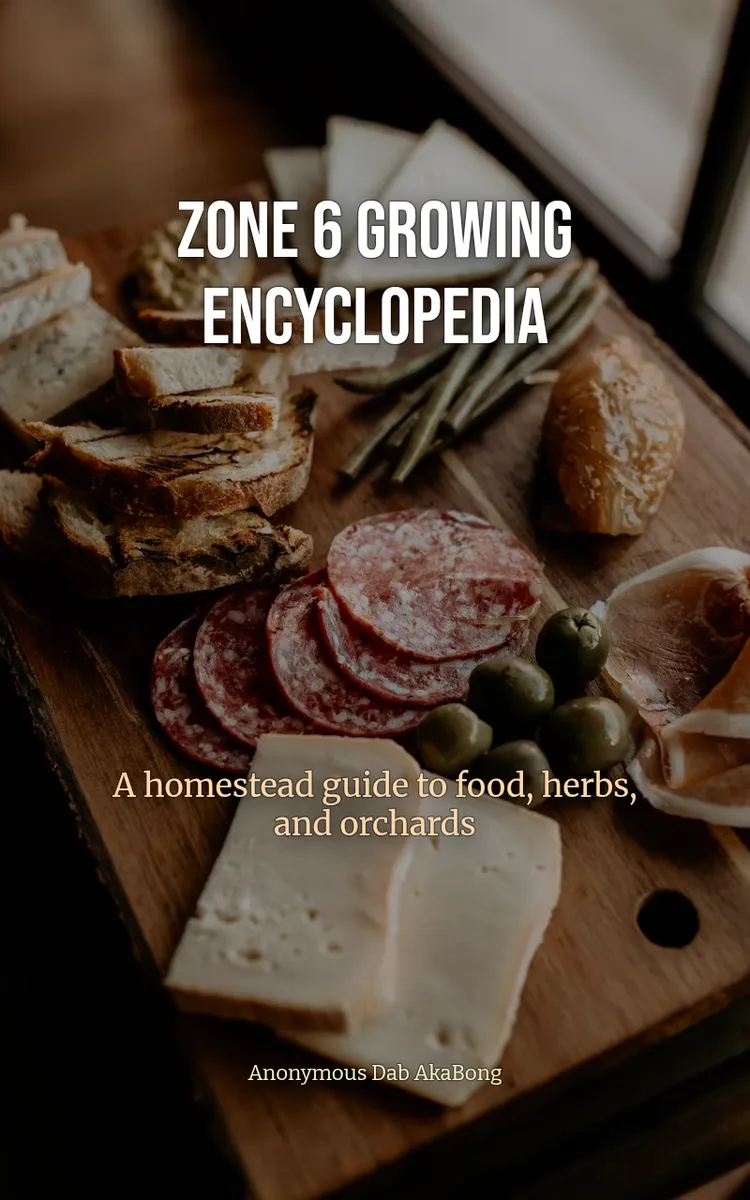
"Zone 6 Growing Encyclopedia" is a cookbook by Anonymous Dab AkaBong with 5 chapters and approximately 4,993 words. USDA Zone 6 plant growing guide for food and herbs.
This book was created using Inkfluence AI, an AI-powered book generation platform that helps authors write, design, and publish complete books. It was made with the AI Cookbook Generator.
Frequently Asked Questions
What is "Zone 6 Growing Encyclopedia" about?
USDA Zone 6 plant growing guide for food and herbs
How many chapters are in "Zone 6 Growing Encyclopedia"?
The book contains 5 chapters and approximately 4,993 words. Topics covered include Zone 6 Frost Date Jam Sandwich, Soil Recipe Potting Mix Omelet, Month-by-Month Garden Stir-Fry, 100-Herb Kitchen Tonic Salad, and more.
Who wrote "Zone 6 Growing Encyclopedia"?
This book was written by Anonymous Dab AkaBong and created using Inkfluence AI, an AI book generation platform that helps authors write, design, and publish books.
How can I create a similar cookbook?
You can create your own cookbook using Inkfluence AI. Describe your idea, choose your style, and the AI writes the full book for you. It's free to start.
Write your own cookbook with AI
Describe your idea and Inkfluence writes the whole thing. Free to start.
Start writingCreated with Inkfluence AI


