
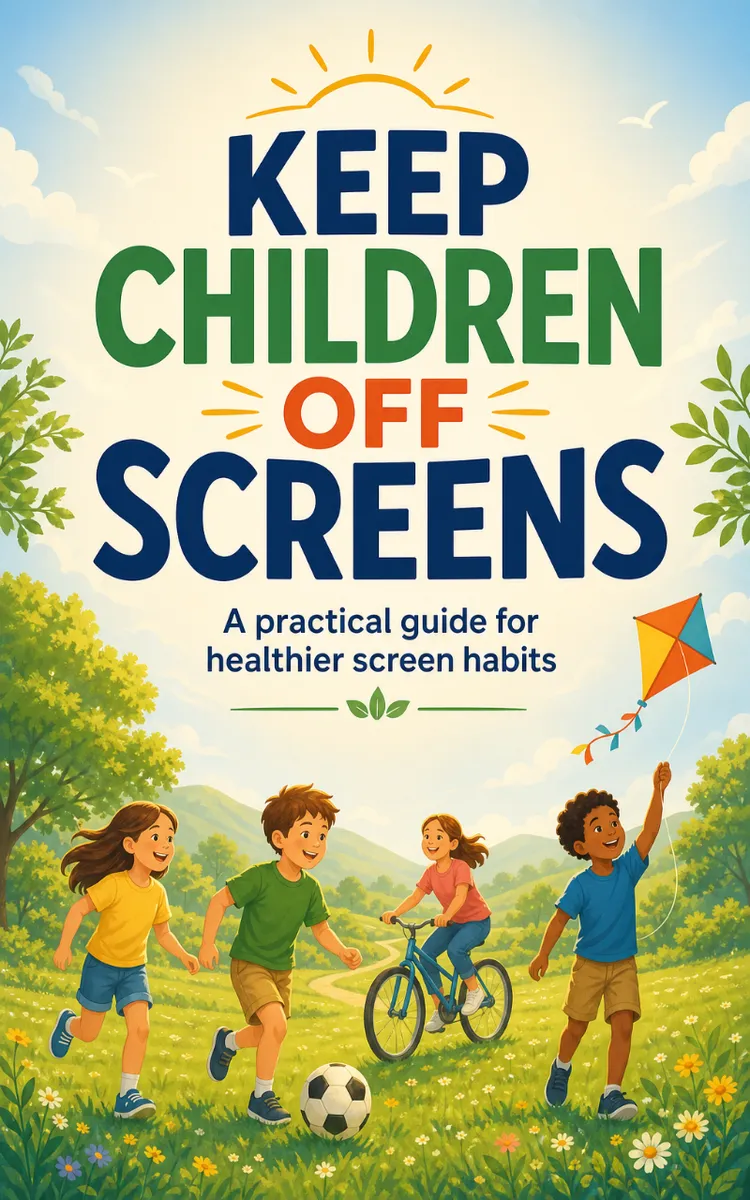
Keep Kids Off Screens
Created with Inkfluence AI
Reducing children’s screen time and improving routines
Table of Contents
- 1. Reclaiming Your Parenting Identity
- 2. Breaking the 'Just This Once' Belief
- 3. Designing Screen-Free Zones at Home
- 4. Replacing Scrolling With Real-World Wins
- 5. Building Boundaries Without Guilt
- 6. Handling Meltdowns With the Pause Protocol
- 7. Creating a Screen-Time Ladder for Progress
- 8. Rebuilding Purpose After the Glow Fades
Preview: Reclaiming Your Parenting Identity
A short excerpt from “Reclaiming Your Parenting Identity”. The full book contains 8 chapters and 12,693 words.
The Moment You Realize You’re Managing Screens (Not Parenting)
Last week, Talia, a pediatric nurse, caught herself doing the exact thing she swore she wouldn’t do - saying “Just two more minutes” while her kitchen buzzed with the kind of chaos that makes your shoulders creep up toward your ears. Her kid was melting down, not because anything was “wrong” exactly, but because the world felt too big and the next activity wasn’t clear. So she reached for what always worked: a screen. Fast. Quiet. Predictable.
The problem wasn’t that screens exist. The problem was what happened next. The minute the video started, she felt this tiny relief - then this prickly guilt. Not the gentle “I wish I’d handled that better” kind, but the deeper, identity kind. Like she’d slipped into a role she didn’t want: screen-manager. The one who solves conflict by handing over a device, then scrambles to justify it afterward.
Are you parenting… or are you running a screen-delivery system?
---
The Identity Anchor Method: From Screen-Manager to Confident Guide
Here’s the shift that changes everything: when screens tempt your child, your job isn’t just to remove the device. Your job is to become the person you want to be in that moment - so your child learns what you do when things get hard.
Old Belief: “If I don’t manage screens, I’ll lose control.”
New Reality: “If I anchor my identity, I can stay steady - and screens become optional, not necessary.”
Talia didn’t fix everything overnight. She didn’t suddenly become a calm zen parent who never negotiates. But she noticed a pattern: the more frantic she felt, the faster she reached for the screen. And the more she reached for it, the more her child learned, “When I’m upset, Mom has a button for that.”
So she practiced a new response - not by fighting her kid harder, but by changing what she told herself she was doing. When the request or meltdown hit, she repeated a simple inner statement: “I’m the guide, not the controller.” Then she matched her words with a predictable next step: offer a choice, set a boundary clearly, and move the moment forward with something physical and immediate (a snack, a quick game, a short walk to the front window - anything that pulled her child back into the real world).
One concrete example helped her more than any “perfect parenting” plan. After dinner, her child asked for a show. Instead of explaining for five minutes, Talia used a short script and followed it with action: “Screens after teeth. Right now we’re doing teeth and a story.” Then she took the toothbrushes and started. Not as a threat. As a rhythm. Her child protested - of course they did. But the protest didn’t turn into a negotiation marathon, because Talia wasn’t bargaining for peace anymore. She was guiding through the boundary.
That’s the heart of the Identity Anchor Method: you don’t just stop the screen - you anchor who you are when the temptation is loud.
---
Why Defining Your Parenting Identity Makes Screen Time Easier
Most families treat screen limits like a “willpower problem.” The parent wants it to be simple, the child wants it to be exciting, and the household becomes a tug-of-war. But tug-of-war is what happens when you’re trying to solve the moment with tactics while your nervous system is screaming, Don’t let this get worse.
Defining your identity is different. It’s not about being tougher. It’s about being clearer. When you know who you are in the hard moment - guide, not screen-manager - your brain stops spending energy on panic. You’re no longer improvising every time. You’re responding from a place of “this is what I do.” That steadiness gives your child something even more powerful than the device: a reliable parent.
In Talia’s case, the anchor wasn’t a magic phrase. It was a decision she returned to when she felt the urge to “just make it easier.” Her body learned the difference between reaction and guidance. And once she started acting like a guide more consistently, her child’s behavior shifted too - not because screens were “bad,” but because the pattern changed.
Signs This Pattern Is Running Your Life
1. You can predict your own bargain. “If I give in now, maybe it’ll be smooth later.” You already know where it’s going - yet you still step into it.
2. Your child’s emotions dictate your choices. When they melt down, you feel like you have only one tool. Everything else suddenly sounds harder.
3. You negotiate when you’re tired. The rules work during calm hours, but as soon as you’re depleted, the boundaries dissolve.
4. After the screen, you feel more drained than before. You get quiet now, but you pay later - in repeat requests, longer transitions, and a harder time getting back on track.
When you define who you are, boundaries stop feeling like fights.
---
Reflection & Self-Assessment: Who Are You When Screens Tempt You?
Let’s get honest in a way that actually helps....
About this book
"Keep Kids Off Screens" is a self-help book by Anonymous with 8 chapters and approximately 12,693 words. Reducing children’s screen time and improving routines.
This book was created using Inkfluence AI, an AI-powered book generation platform that helps authors write, design, and publish complete books. It was made with the AI Self-Help Book Writer.
Frequently Asked Questions
What is "Keep Kids Off Screens" about?
Reducing children’s screen time and improving routines
How many chapters are in "Keep Kids Off Screens"?
The book contains 8 chapters and approximately 12,693 words. Topics covered include Reclaiming Your Parenting Identity, Breaking the 'Just This Once' Belief, Designing Screen-Free Zones at Home, Replacing Scrolling With Real-World Wins, and more.
Who wrote "Keep Kids Off Screens"?
This book was written by Anonymous and created using Inkfluence AI, an AI book generation platform that helps authors write, design, and publish books.
How can I create a similar self-help book?
You can create your own self-help book using Inkfluence AI. Describe your idea, choose your style, and the AI writes the full book for you. It's free to start.
Write your own self-help book with AI
Describe your idea and Inkfluence writes the whole thing. Free to start.
Start writingCreated with Inkfluence AI


