

Read the first chapter
The whole of chapter one, free. About 4 min. Turn the pages with the arrows, your keyboard, or a swipe.
Chapter 1
Reprogramming Identity Through Habit Awareness
Picture This
You wake up, check your phone, and before coffee you’ve already scrolled through three feeds, answered an urgent message, and told yourself you’ll “get to” the plan you had last night. By noon you’ve rehearsed the same excuse about being too busy. The evening arrives and you’re surprised that the book you meant to read is still on the nightstand, unopened. The person you intended to be — disciplined, creative, present — feels like a character in someone else’s life.
What if the “you” who makes decisions isn’t really you at all but a collection of tiny routines that run on autopilot every day?
Which version of you are your habits programming right now?
The Mindset Shift
| Old Pattern | New Pattern | |---|---| | “I am either disciplined or I’m not” | “Small repeated actions create identity” | | Skipping a morning routine when busy | A 5-minute anchor routine that preserves progress |
Most people treat identity as a fixed label: “I’m not a morning person,” or “I’m bad at sticking to plans.” That belief traps you, because it makes change feel like an all-or-nothing battle. Instead, reframe identity as something you build with tiny, consistent actions. Your sense of self is less about big declarations and more about the small behaviors you practice repeatedly.
The habit shift is practical and measurable. Replace the all-or-nothing approach with an anchor routine — a deliberately short, non-negotiable action done daily (for example, five minutes of planning or one paragraph of writing). Over time, that tiny action rewires how you identify yourself: the person who writes daily, the person who plans the day, the person who reads before bed.
Going Deeper
Habits are identity shortcuts. Your brain loves efficiency and will use any reliable cue to decide who you are in a moment. If, for months, your cue has been “open phone first thing,” your brain labels you as “distracted.” But labels can change the moment you change the cue and reward cycle — that’s how habits reprogram identity.
Think of identity as software and habits as background processes. Update the processes and you update the software. The trick is to make the new processes tiny and automatic so they don’t trigger resistance. For example, commit to a 5-minute writing anchor at 8:00 a.m. tied to making coffee — the cue (coffee), the tiny routine (5 minutes), the reward (satisfaction + crossed-off item). After two weeks, the “I’m not a writer” belief begins to erode because your actions tell a different story.
Signs this pattern is running your life: 1. You make plans but rarely follow through, yet you still define yourself by the plan’s failure. 2. Your language uses fixed labels (“I’m lazy,” “I’m terrible with money”) without connecting them to repeated behaviors. 3. You feel stuck and assume one big change should fix everything instead of small, consistent adjustments. 4. You compare one-off achievements against your identity instead of counting daily wins.
The Bottom Line: Identity forms from repeated small actions, not from occasional big efforts.
Reflection & Self-Assessment
1. What small action do you do every single day that reinforces a self-label (like “I’m forgetful” or “I’m organized”)? - Notice a pattern: maybe forgetting keys each morning is tied to where you leave them. An honest answer names the behavior and a likely cue.
2. If you had to prove to someone you were a different person in one week, what two tiny habits could you reliably do daily? - Example: write 200 words each morning and plan tomorrow’s top 3 tasks; both are measurable and take less than 15 minutes.
3. When did a tiny change in your routine actually change how you felt about yourself? - Maybe starting a 10-minute walk three times a week made you feel healthier; write down specifics to see the pattern.
4. Which identity label do you say aloud that you’d like to retire, and what one-minute habit could contradict it immediately? - If you say “I’m disorganized,” a one-minute habit could be tidying your workspace each night.
5. How will you measure identity change in 14 days? Name the metric (days performed, minutes, pages, steps). - Choose a simple number: 14/14 days of a 5-minute routine, 10 pages read total, 7 morning plans completed.
Growth Challenge
Bold 7-Day Anchor Challenge - Instructions: - Pick one tiny anchor action (5 minutes max) tied to an existing cue (e.g., after coffee, do 5 minutes of focused planning or write one paragraph). - Set a visible reminder (sticky note on the coffee maker or a phone alarm labeled with the action). - Track it in a simple checklist each day for 7 days. - If you miss a day, note what interrupted the cue and course-correct the next morning. - Expected difficulty rating: Easy - You'll know it's working when... - You complete the anchor 5 of 7 days and feel a subtle change in self-talk (e.g., “I am someone who does X”). - You begin to notice fewer excuses and more automatic execution around that cue. - Your brain starts to prompt the action instead of resistance.
Key Takeaway
Your identity is the echo of your smallest, most consistent habits.
• Identity isn’t fixed; it’s built by repeated tiny actions you can design. - Small anchor routines (5–10 minutes) tied to existing cues shift self-perception faster than big, rare efforts. - Measure identity change with simple, time-bound metrics (days performed, minutes, or repetitions). - Replace fixed labels with habit-based evidence: “I am someone who [does X].”
Ready for the next step? In the next chapter we’ll map how to choose the right cues and rewards so your new identity habits stick — with a practical habit-mapping tool you can use today.
End of chapter one. 7 more chapters in the full book.
Swipe or use the arrows to turn the page


What's inside: 8 chapters
- 1. Reprogramming Identity Through Habit Awareness
- 2. Challenging Limiting Beliefs About Change
- 3. Designing Effective Habit Formation Strategies
- 4. Breaking Unwanted Habits with Replacement Techniques
- 5. Building Consistency Through Environmental Design
- 6. Communicating Habit Goals for Social Support
- 7. Cultivating Resilience to Overcome Setbacks
- 8. Aligning Habits with Life Purpose and Values
About this book
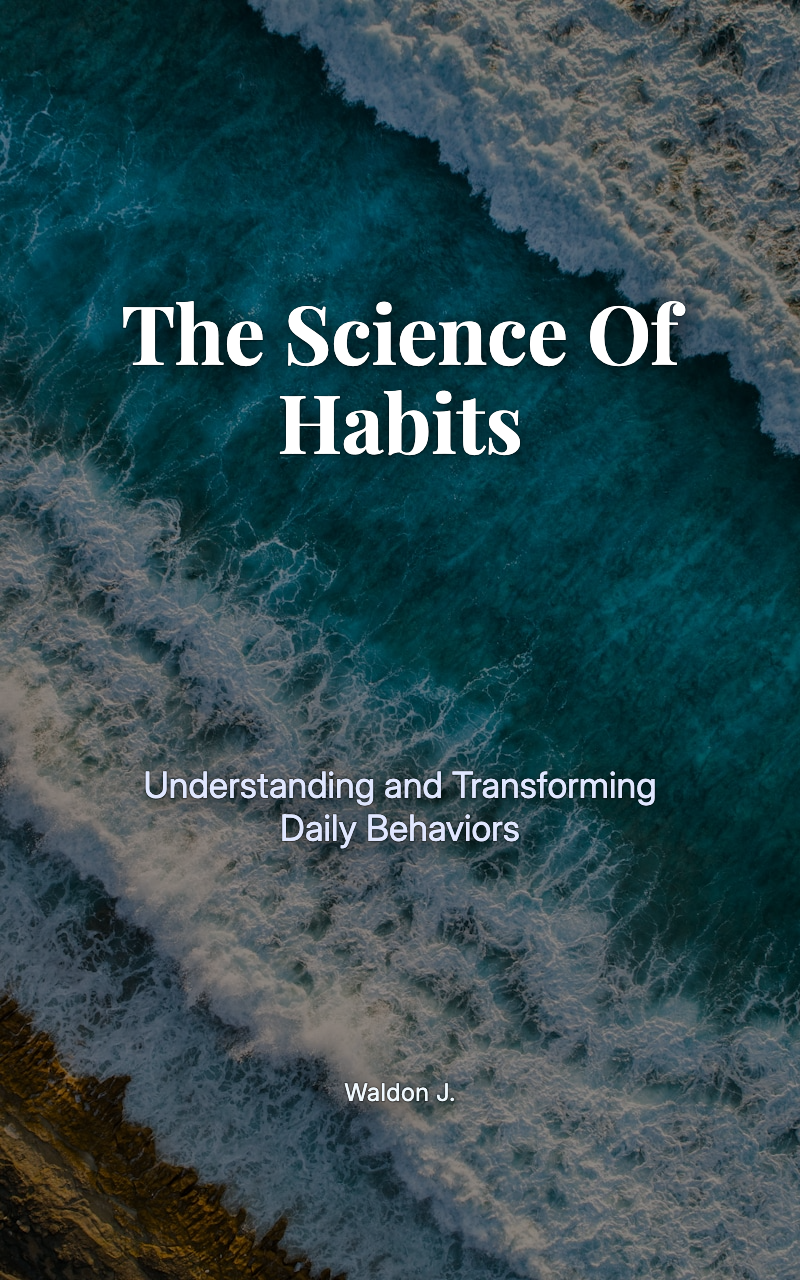
"The Science Of Habits" is a self-help book by Waldon J. with 8 chapters and approximately 8,185 words. Scientific principles behind habit formation and behavior change.
This book was created using Inkfluence AI, an AI-powered book generation platform that helps authors write, design, and publish complete books. It was made with the AI Self-Help Book Writer.
Frequently Asked Questions
What is "The Science Of Habits" about?
Scientific principles behind habit formation and behavior change
How many chapters are in "The Science Of Habits"?
The book contains 8 chapters and approximately 8,185 words. Topics covered include Reprogramming Identity Through Habit Awareness, Challenging Limiting Beliefs About Change, Designing Effective Habit Formation Strategies, Breaking Unwanted Habits with Replacement Techniques, and more.
Who wrote "The Science Of Habits"?
This book was written by Waldon J. and created using Inkfluence AI, an AI book generation platform that helps authors write, design, and publish books.
How can I create a similar self-help book?
You can create your own self-help book using Inkfluence AI. Describe your idea, choose your style, and the AI writes the full book for you. It's free to start.
Write your own self-help book with AI
Describe your idea and Inkfluence writes the whole thing. Free to start.
Start writingCreated with Inkfluence AI


