
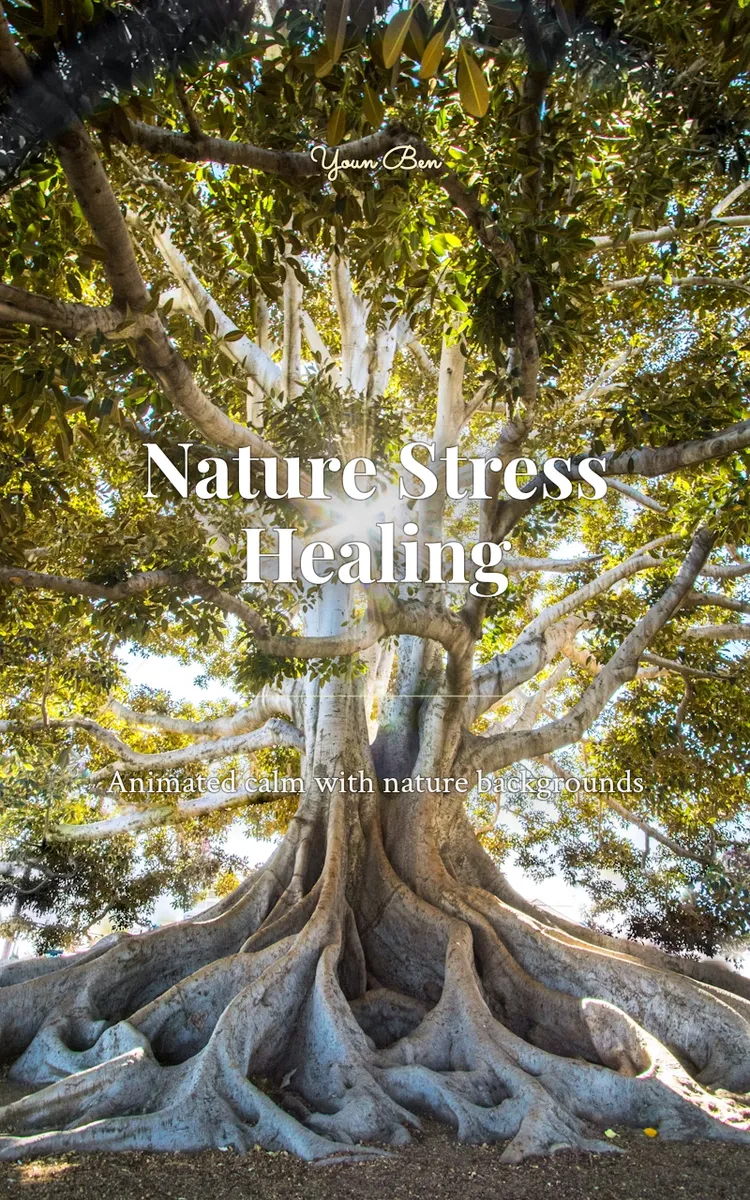
Nature Stress Healing
Created with Inkfluence AI
Stress relief practices using nature-themed guided content
Table of Contents
- 1. Reclaiming Your Calm Identity
- 2. Breaking the Rumination Loop
- 3. Turning Stress into Purposeful Resilience
- 4. Breathing for Nervous System Safety
- 5. Boundaries Without Losing Connection
Preview: Reclaiming Your Calm Identity
A short excerpt from “Reclaiming Your Calm Identity”. The full book contains 5 chapters and 7,395 words.
Picture This
Have you ever noticed how stress doesn’t just show up anymore-it starts running the whole house? Like, you wake up already braced. Your shoulders are up before your brain even finishes the morning “hello.” You catch yourself scanning for what might go wrong, even when nothing is on fire. And the wild part? It can start to feel normal. Like that’s just “you.”
Lena, 34 and an ICU nurse, described it like this: after long shifts, she didn’t feel tired in a normal way. She felt… wired. Not the “I had coffee” wired. More like her body kept insisting, Stay ready. Stay tight. Don’t soften. When she was off the unit, she tried to relax, but her mind treated calm like a trick. The moment she slowed down, the old alarm system kicked in-imagining worst-case outcomes, replaying conversations, tightening her grip on control. Stress wasn’t a visitor anymore. It was her identity’s bodyguard.
So here’s the tension that matters: What if stress isn’t who you are-and you can stop paying it rent inside your sense of self?
The Mindset Shift
Old Belief: Stress is my personality. If I’m not stressed, I’m not safe, not capable, or not “me.”
New Reality: Stress is a protective pattern. The Canopy Identity Reset helps you choose who you identify with-so safety can start to feel like home.
That shift sounds simple, but it hits deep because it changes ownership. When you believe stress is “you,” you stop questioning it. You don’t negotiate with it. You just manage it-maybe by pushing harder, staying tougher, or pretending you don’t need relief. But when you see stress as a protective pattern, you can relate to it. You can say, “I see you,” without handing it the steering wheel.
Here’s a concrete example from Lena’s world. On days off, her mind would replay ICU moments as if the replay itself was the job: scanning, preparing, preventing. If stress was her identity, she would think, This is just how I am-always on. But once she started practicing the Canopy Identity Reset, she treated those replays like weather-unwanted, uncomfortable, but not a prophecy. The inner story changed from “I’m stressed because I am me” to “I’m noticing a protective pattern doing its old job.” That one sentence-noticed vs identified-made space for calm to return without needing to “fight” the alarm.
The Canopy Identity Reset is nature-themed on purpose. Not because nature magically fixes everything, but because it gives your nervous system an experience of steadiness you can remember. When you identify with calm, you start training your brain to link “stillness” with safety instead of danger. Stress loses its power when it no longer gets to define your identity.
Going Deeper
Your mind loves labels. Labels help you predict what happens next. If stress has been your label for years, your brain gets efficient at it. It doesn’t just produce feelings-it produces meaning. That’s why stress can feel like “motivation,” “focus,” or “being responsible,” even when it’s draining you.
The Canopy Identity Reset works by interrupting that meaning loop. In simple terms, you’re teaching your system: this pattern is not my identity; it’s a signal. And when you treat it like a signal, you can respond differently. You’re not trying to erase stress in the moment (that usually backfires). You’re learning to step back and choose a calmer identity you can stand behind-even when stress is loud.
That’s also why nature cues matter. Outdoors, your body has fewer reasons to stay braced. Leaves don’t demand you solve every problem. Wind doesn’t run scenarios in your head. When you use nature-themed guided cues, you’re giving your inner world a different “default”-one that says, You can be here and still be okay.
Signs this pattern is running your life
1. You feel more like yourself when you’re under pressure. Even when it’s harming you, stress feels familiar-like it’s proof you’re doing the right thing.
2. Relaxation triggers suspicion. The calmer you get, the more your mind hunts for “what’s coming next.”
3. You treat stressful thoughts like commands. Instead of “a thought,” they become “a must”-like you have to replay, fix, or control.
4. Your body carries stress like gear. Shoulders tight, jaw clenched, breath shallow-then you call it “just being busy.”
En résumé: When you stop identifying with stress, you stop feeding it as your “self,” and your nervous system can relearn safety.
Reflection & Self-Assessment
1. When you say “I’m stressed,” what do you mean by “I”?
Be honest: are you describing a feeling, or an identity? If you catch yourself saying “that’s just me,” try finishing the sentence with “because I’m afraid that…”-that fear is usually the real engine.
2. What does your stress protect you from losing?
Lena noticed her stress protected her from feeling helpless. It kept her alert so she didn’t feel like she couldn’t handle things....
About this book
"Nature Stress Healing" is a self-help book by Youn Ben with 5 chapters and approximately 7,395 words. Stress relief practices using nature-themed guided content.
This book was created using Inkfluence AI, an AI-powered book generation platform that helps authors write, design, and publish complete books. It was made with the AI Self-Help Book Writer.
Frequently Asked Questions
What is "Nature Stress Healing" about?
Stress relief practices using nature-themed guided content
How many chapters are in "Nature Stress Healing"?
The book contains 5 chapters and approximately 7,395 words. Topics covered include Reclaiming Your Calm Identity, Breaking the Rumination Loop, Turning Stress into Purposeful Resilience, Breathing for Nervous System Safety, and more.
Who wrote "Nature Stress Healing"?
This book was written by Youn Ben and created using Inkfluence AI, an AI book generation platform that helps authors write, design, and publish books.
How can I create a similar self-help book?
You can create your own self-help book using Inkfluence AI. Describe your idea, choose your style, and the AI writes the full book for you. It's free to start.
Write your own self-help book with AI
Describe your idea and Inkfluence writes the whole thing. Free to start.
Start writingCreated with Inkfluence AI


