
Read the first chapter
The whole of chapter one, free. About 5 min. Turn the pages with the arrows, your keyboard, or a swipe.
Chapter 1
Preparation and Planning
Overview If you wait until the first loud knock on the door to start thinking, you’ll be reacting with shaking hands and a half-packed bag. This chapter gets you ready before you’re in the middle of it: how to plan your moves, make your body dependable, and calm your mind enough to follow your own steps.
You’ll cover Tips #1–#4, focused on mental readiness, physical setup, supplies you can actually use, and a simple plan you can run under stress.
Practical takeaway: By the end of this chapter, you should be able to list your “next 10 minutes” actions—and name what you’ll do when your head starts racing.
The Breakdown
#1: Build a “72-Hour Go-Bag” That You Can Use Blindfolded Problem: In war situations, the first failure is usually not courage—it’s fumbling. People pack “important stuff” that’s heavy, messy, or missing the basics, and then they waste 30–60 minutes searching when conditions are noisy, dark, or chaotic. If your bag works only when things are calm, it won’t work when you need it most. Solution: Pack one go-bag you can grab fast (prefer a single backpack or duffel with one clear top pocket). Include: 3 days of water (at least 6–9 liters total if you can carry it, or smaller bottles plus purification tablets), basic first aid, one set of clothes for layering, rain protection, a headlamp (define it as a light you wear on your head), cash in small bills, and any personal medicines with at least a 7-day buffer if possible. Do a “hands-only test” at home: close your eyes and locate water, meds, headlamp, and first aid in under 60 seconds. Replace anything that’s expired, and keep a small checklist inside a zip bag. Result: When the moment comes, you move on autopilot instead of hunting for items—your stress drops because your plan is already practiced.
#2: Train Your Body for Movement and Cold/Heat—Not for a Gym Problem: War zones punish weak routines. Without practice, people get exhausted from carrying loads, walking uneven ground, or dealing with cold nights and hot days—then they can’t keep pace or think clearly. A body that’s unprepared turns every decision into a drain. Solution: Start a simple daily routine for 2–3 weeks before you need it: (1) Carry practice: walk 20–30 minutes with a loaded bag (start light, increase gradually until you can comfortably hold a weight you’d actually carry). (2) Foot care: wear your planned boots/shoes and break them in; keep moleskin or blister tape in your first aid. (3) Weather readiness: practice layering—base layer, insulating layer, outer shell—and pack a hat and gloves even if your area is usually mild. Quick comprehension check: ask yourself, “If I have to walk 1–2 km today with my bag, can I do it without getting a blister or breathlessness?” Adjust before you’re forced to. Result: You’ll arrive where you’re going with more energy and fewer injuries, which means you can help others instead of becoming a burden.
#3: Set Up Communication and Information Checks (So You Don’t Get Lost or Misled) Problem: During conflict, rumors spread faster than help. People lose time by chasing “updates” in the wrong place, or they follow bad directions because they didn’t confirm routes and contacts. One wrong assumption can cost hours—hours you might not get back. Solution: Choose one primary contact method and one backup. For example: primary = SMS/text, backup = calling at set times (define SMS as short text messages) or using a messaging app that works offline where possible. Write down: local emergency numbers, names of 2–3 trusted contacts, and addresses of two meetup points (a primary and a backup) within walking distance. Then schedule “check-in windows” you’ll actually use—like morning and evening, even if signal is weak. Store everything on paper and in your phone, because batteries fail. If you have a radio (define it as a device that receives broadcasts), include it in your plan and practice tuning to known frequencies when conditions are calm. Result: You spend less time guessing and more time moving, because your information system is built to survive poor signal.
#4: Use a Simple Stress Script to Stop Panic From Breaking Your Plan Problem: Panic doesn’t just feel bad—it breaks steps. When people get overwhelmed, they forget checklists, grab the wrong items, or freeze when they should move. In the first minutes of danger, your mind can turn normal decisions into chaos. Solution: Create a short “stress script” and rehearse it once a day for a week. Example script (keep it written): 1) Breathe: 3 slow breaths (in for 4 seconds, out for 4). 2) Look: check surroundings for immediate hazards (fire, smoke, blocked exits). 3) Act: perform your top priority from your go-bag checklist (water, meds, headlamp, first aid). 4) Move: head to your primary meetup point only if it’s safe; otherwise switch to backup. Then do a timed drill at home: set a timer for 5 minutes and practice the sequence without rushing. Ask yourself: “If I’m scared, can I still follow these four steps?” If not, shorten it until you can. Keep the script on the inside of your bag and on your phone lock screen note. Result: Panic becomes a signal to follow steps, not a reason to stop—so you act with clarity instead of reacting blindly.
Quick Scanning Table: What to Check Today | Area | Minimum you should have | Quick test | |---|---|---| | Go-bag | 72-hour essentials + headlamp | Find water/meds/first aid in < 60 seconds (eyes closed) | | Body | Broken-in footwear + carry practice | Walk 20–30 minutes with loaded bag | | Info | 2 contacts + 2 meetup points + check-in windows | Confirm you can read it without your phone | | Mind | 4-step stress script | Do the 5-minute drill without skipping steps |
Practical takeaway: If you only do one thing after reading this, do the timed go-bag test—then adjust what you missed.
What Comes Next Next, you’ll need more than gear and calm breathing—you’ll need smart movement choices when sounds, visibility, and routes change fast. Chapter 2 focuses on how to move, hide, and travel with less risk when the situation stops being predictable.
End of chapter one. 3 more chapters in the full book.
Swipe or use the arrows to turn the page
What's inside: 4 chapters
- 1. Preparation and Planning
- 2. Safety and Survival Techniques
- 3. Resource Management and Communication
- 4. Chapter 4
About this book
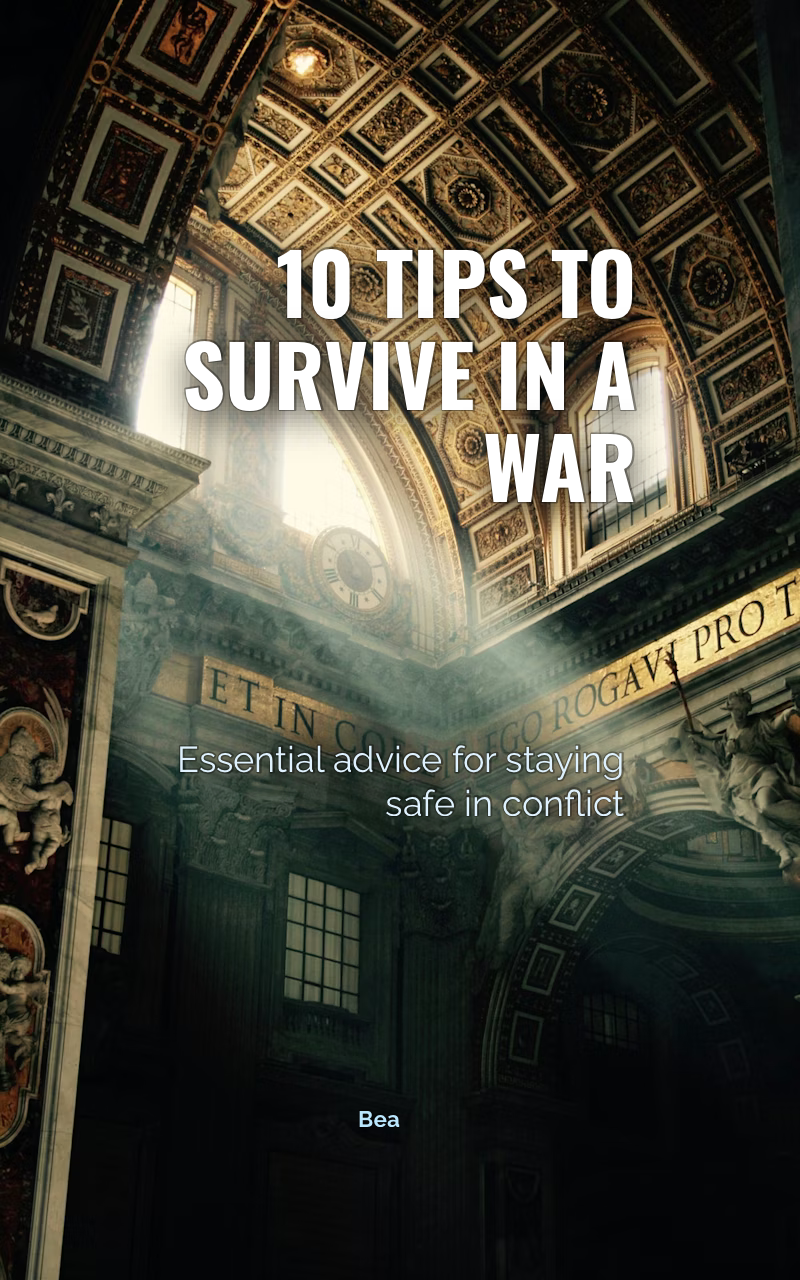
"10 Tips To Survive In A War" is a list book by Bea with 4 chapters and approximately 2,908 words. Practical survival tips and strategies during wartime.
This book was created using Inkfluence AI, an AI-powered book generation platform that helps authors write, design, and publish complete books.
Frequently Asked Questions
What is "10 Tips To Survive In A War" about?
Practical survival tips and strategies during wartime
How many chapters are in "10 Tips To Survive In A War"?
The book contains 4 chapters and approximately 2,908 words. Topics covered include Preparation and Planning, Safety and Survival Techniques, Resource Management and Communication, Chapter 4.
Who wrote "10 Tips To Survive In A War"?
This book was written by Bea and created using Inkfluence AI, an AI book generation platform that helps authors write, design, and publish books.
Write your own list book with AI
Describe your idea and Inkfluence writes the whole thing. Free to start.
Start writingCreated with Inkfluence AI


