
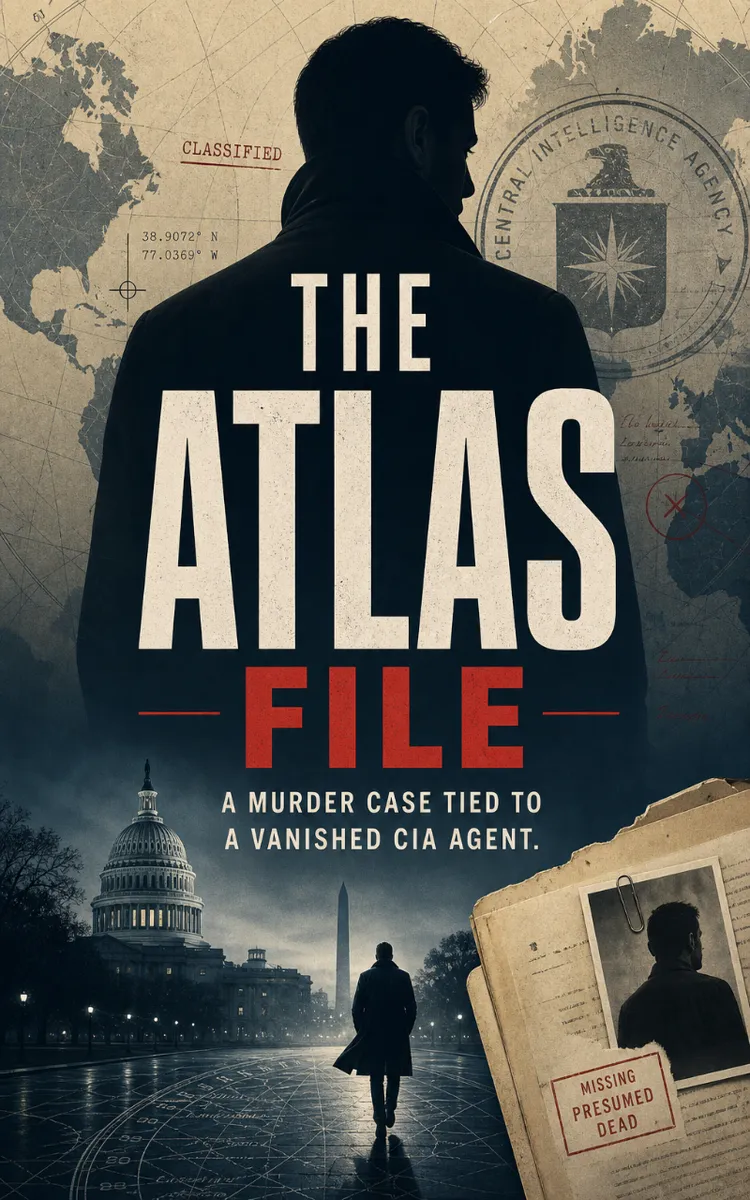
The Atlas File
Created with Inkfluence AI
An FBI consultant investigates a murder linked to a presumed-dead CIA agent.
Table of Contents
- 1. The Fingerprints on the Body
- 2. The CIA Death Certificate’s Loop
- 3. Why the Print Match Feels Wrong
- 4. The Lab Keycard That Didn’t Scan
- 5. Mara’s Past Case Comes Back
- 6. The Codename That Matches a Warehouse
- 7. The Witness’s Phone That Auto-Deleted
- 8. The Metadata Leads to a Safehouse
- 9. The Tail That Isn’t Trying to Hide
- 10. The Fiber Matches a Private Lab
- 11. When the Authorization Number Vanishes
- 12. The Unofficial File in Mara’s Bag
- 13. The CIA Officer’s Offer to Trade
- 14. The Atlas File Name Surfaces
- 15. A Fingerprint That Still Belongs
Preview: The Fingerprints on the Body
A short excerpt from “The Fingerprints on the Body”. The full book contains 15 chapters and 41,659 words.
The body was already on its side when Mara Kincaid pushed through the Baltimore Field Office morgue doors, the fluorescent lights bleaching everything into a sickly, even white. The air had that hard, clean cold that never warmed no matter how many people walked in and out. A gurney squealed somewhere down the hall, metal on rubber, and the sound carried farther than it should have in a place built for quiet.
A uniformed tech looked up from a clipboard as if he’d been waiting for her specifically. “Agent Kincaid? They said you’d be here fast.”
Mara didn’t ask who “they” were. She kept her coat on even indoors, fingers already numb inside her cuffs, and moved past the tech toward the slab. The victim lay under a sheet pulled to mid-chest, the edges tucked with the kind of care that pretended the dead were still manageable.
“Where’d you pull him from?” she asked.
“Bay intake. Dumped off a side dock. No ID on-scene.” The tech swallowed, then gestured at a stainless-steel cart beside the gurney. “Evidence came with him. Wallet was empty. Phone was wiped.”
Mara leaned closer as the sheet was lifted. The man’s face was bruised in a way that suggested a struggle more than a fall - jaw swollen, a cut above the brow stitched too quickly, the needle marks like tiny punctuation. His hands were what caught her first: palms up, fingers slack, the skin stretched smooth over knuckles. Someone had bagged the rest of him. Someone hadn’t bothered to make sure the hands stayed pristine.
A thin strip of gauze covered one finger where a latex glove had snagged. Mara’s eyes found the gloved tech’s notes on the clipboard. “Prints taken?”
“Just now.” The tech nodded toward the evidence intake bay through a half-open door. “They’re sending the cards to your unit for comparison. But - ” His voice thinned. “The first run came back… weird.”
Weird was what people said when they didn’t want to hand you the truth directly. Mara walked toward the adjacent bay, the cold air changing texture as she crossed the threshold. In the morgue, everything was sterile; in intake, everything smelled faintly of cardboard, plastic, and old paper.
At the table, a latent print examiner had set out a set of inked cards and a magnifier that made the room look busy even when no one moved. A badge with no name patch hung from a lanyard near the examiner’s chest. CIA liaison, Mara thought without needing the label to tell her.
The liaison stood with his hands folded as if he expected to be photographed. He wore a dark suit too clean for a building like this, the kind of fabric that didn’t wrinkle under fluorescent light. His hair was iron-gray and combed flat, his expression composed in the way of people who believed their paperwork could outlive reality.
“You’re the FBI consultant,” he said.
Mara didn’t offer her hand. “I’m here to confirm the match and understand why it exists.”
The examiner looked relieved that the argument had a target. “Agent Kincaid - these are the victim’s fingerprints. They were lifted from the inside of the right hand’s palm. You can see the ridge detail even with the swelling.”
The liaison’s gaze flicked briefly to the evidence cards, then back to Mara. “The prints belong to a CIA officer who was reported dead ten years ago.”
Mara stopped beside the table. “Reported dead by whom?”
“By this agency,” he said, and the certainty in his tone made her irritation feel like something physical. “The record is complete. The officer is unrecoverable.”
“Records can be incomplete,” Mara said. “Especially when someone rebuilds them.”
The liaison’s jaw tightened, just a millimeter. “You’re making assumptions.”
Mara pulled on a pair of nitrile gloves from a dispenser on the cart. The gloves fit too tight over her fingers, making every movement precise. She didn’t need to announce what she planned to do; she slid the inked card closer and studied the whorls and ridges under the magnifier. The lines looked clean in the way only a good print could be. Not smudged. Not forced. Not a bad copy.
But the skin around the ridges told a story too - micro-creases that didn’t match the bruising on the knuckles, subtle pressure patterns that suggested the hand had been manipulated before it was photographed and bagged. The bruises on the face said one kind of violence. The hand said another kind of handling.
The examiner cleared his throat. “The algorithm hit a twelve-year-old exemplar set. We pulled the archived standards. The ridge flow is consistent.”
Mara’s eyes didn’t leave the card. “Consistent isn’t the same as genuine.”
“It’s genuine,” the liaison said, finally stepping closer. “The officer’s identity is verified.”
Mara looked up at him. “Verified by a system? Or verified by chain of custody?”
The liaison’s mouth tightened again. “Chain of custody is maintained.”
“Then you won’t mind showing it.” Mara set her fingertips on the edge of the card without touching the print surface....
About this book
"The Atlas File" is a fiction book by Barton Patterson with 15 chapters and approximately 41,659 words. An FBI consultant investigates a murder linked to a presumed-dead CIA agent..
This book was created using Inkfluence AI, an AI-powered book generation platform that helps authors write, design, and publish complete books. It was made with the AI Novel Writer.
Frequently Asked Questions
What is "The Atlas File" about?
An FBI consultant investigates a murder linked to a presumed-dead CIA agent.
How many chapters are in "The Atlas File"?
The book contains 15 chapters and approximately 41,659 words. Topics covered include The Fingerprints on the Body, The CIA Death Certificate’s Loop, Why the Print Match Feels Wrong, The Lab Keycard That Didn’t Scan, and more.
Who wrote "The Atlas File"?
This book was written by Barton Patterson and created using Inkfluence AI, an AI book generation platform that helps authors write, design, and publish books.
How can I create a similar fiction book?
You can create your own fiction book using Inkfluence AI. Describe your idea, choose your style, and the AI writes the full book for you. It's free to start.
Write your own fiction book with AI
Describe your idea and Inkfluence writes the whole thing. Free to start.
Start writingCreated with Inkfluence AI


